How Do Laser Rangefinders Measure Distance?
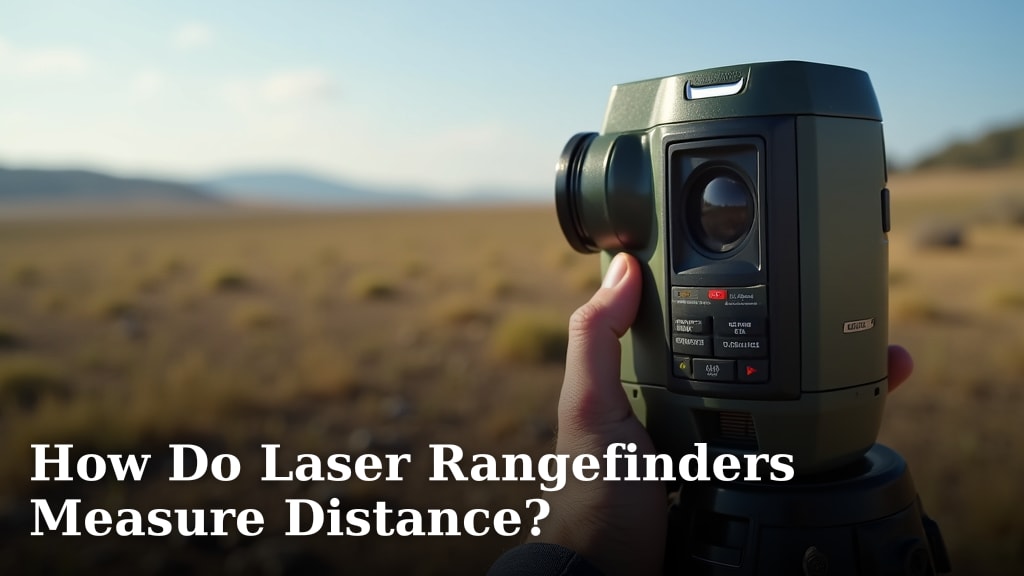
Laser rangefinders measure distance using a simple principle: they send out a light pulse and time how long it takes for the reflection to return. The device then calculates the distance based on the speed of light. This makes them incredibly handy for getting quick, accurate measurements.
These devices are a step up from traditional measuring tapes. They use advanced optics and electronics to get the job done. Many models are built for specific uses, like golfing or hunting, offering features tailored to those activities. We found they can be a real time-saver.
- Laser rangefinders work by timing light pulses.
- A laser beam is sent out and bounces off an object.
- The device measures the time for the light to return.
- Distance is calculated using the speed of light.
- This provides a fast and accurate measurement.
Let’s walk through exactly how this technology works, step by step, so you can understand what’s happening inside your handy device.
Understanding Your Laser Rangefinder’s Distance Measurement
You might be curious about how that little device in your hand can tell you the exact distance to a tree, a flag, or even a deer. It’s not magic, though it can feel like it sometimes! Laser rangefinders use a very clever and **scientific method** to get their measurements.
At its core, the technology relies on a fundamental physics principle: the speed of light. We’ll break down exactly how your rangefinder uses light pulses to give you those quick, accurate readings you depend on.
The Science Behind the Shot: How It Works
Your rangefinder works by sending out a **tiny, invisible pulse of light**. This pulse travels incredibly fast, straight to whatever you’re aiming at. Once it hits the target, the light bounces back. Your rangefinder then catches that returning light and times how long the entire trip took.
Think of it like shouting a really loud “Hello!” at a distant wall and timing how long it takes for the echo to come back to your ears. The longer it takes for the echo, the farther away that wall must be, right? A laser rangefinder does the same thing, but with light, which is much, much faster.
Step 1: Emitting the Light Pulse
Inside your rangefinder, there’s a **laser diode**. This is the component that actually creates the light pulse. When you press the button to take a measurement, this diode fires off a very brief burst of light. Don’t worry, this laser is **safe for your eyes** when used as intended.
It’s usually an infrared laser, which means you can’t see it. This ensures it doesn’t interfere with your vision when you’re trying to aim. The pulse is also very narrow, like a super-focused beam, so it hits exactly where you’re pointing it.
Step 2: The Journey to the Target
Once the light pulse is sent out, it travels at the **speed of light**. This speed is constant and incredibly fast – approximately 186,282 miles per second (or about 299,792 kilometers per second). This is why the process feels instantaneous to you.
The light beam travels in a straight line until it encounters an object. This object could be anything: a tree, a golf flag, a deer, or even a building. The **surface of the object** acts as a mirror, reflecting the light back towards your rangefinder.
Step 3: The Return Trip and Timing
As soon as the light hits the target, it begins its journey back. Your rangefinder has a **sensitive sensor** waiting to detect this reflected light. It’s like a tiny camera focused on the path the laser just took.
The very moment the sensor picks up the returning light pulse, the rangefinder stops its internal timer. It has now recorded the **exact duration** of the light’s round trip. This might be just a few nanoseconds (billionths of a second) for close objects, or a bit longer for farther ones.
Step 4: The Calculation
Now comes the clever part. Your rangefinder’s internal computer uses a simple formula. You know the speed of light, and you know the time it took for the light to travel to the object and back. The formula is: Distance = (Speed of Light × Time) / 2.
Why do we divide by two? Because the time measured was for the light to go there and back. So, to find the distance to the object itself, we just need half of that total travel time multiplied by the speed of light. Many experts confirm this is the standard method (National Institute of Standards and Technology).
Step 5: Displaying Your Measurement
Finally, the calculated distance is converted into your preferred unit (feet, yards, meters) and displayed on the **clear LCD screen** of your rangefinder. This whole process happens in less than a second, often much faster. It’s a remarkable piece of engineering that makes getting precise measurements so easy.
Factors Affecting Accuracy
While laser rangefinders are generally very accurate, a few things can influence their readings. Understanding these can help you get the best results every time you use yours.
Target Surface Properties
The reflectivity of the target plays a big role. Shiny, smooth surfaces reflect light very well, making them easy for the rangefinder to detect. Dark, matte surfaces absorb more light, making them harder to get a strong return signal from.
This is why you might find it easier to get a reading off a white flag than a dark, wet rock. Some rangefinders have special modes or sensitivity settings to help with trickier targets.
Environmental Conditions
Weather can also be a factor. Fog, heavy rain, or snow can scatter the laser beam. This scattering can prevent enough light from returning to the sensor for an accurate measurement. You might notice the rangefinder struggles or returns an error message in these conditions.
Visibility is key. If you can see the target clearly, the rangefinder usually can too. It’s like trying to see a distant car through thick fog – it’s difficult for both your eyes and the device.
Obstructions in the Path
Anything blocking the laser’s path between you and your target will interfere. This includes branches, leaves, or tall grass. The laser might bounce off the obstruction instead of the intended target.
For example, if you’re trying to measure the distance to a tree but there’s a bush in front of it, your rangefinder might measure the distance to the bush. It’s always best to ensure a clear line of sight for the most accurate readings.
Types of Laser Rangefinders and Their Uses
The basic principle of operation remains the same across different types, but they are often designed with specific users in mind. This means they have features tailored to those activities.
Golf Rangefinders
These are built for golfers. They often feature modes to help you get distances to the flagstick, even if there are other objects on the course. Many can even compensate for slope, giving you the “playing distance” rather than just the straight-line distance (Golfweek).
Some golf rangefinders have **pin-seeking technology**. This helps ensure the laser locks onto the flagstick rather than trees or other objects behind it. This can be a huge help when you’re trying to pick the right club.
Hunting Rangefinders
Hunters often need to measure distance in varying light conditions and over longer ranges. These rangefinders might have higher magnification than golf models, helping you spot game more easily.
Many hunting rangefinders also include angle compensation. This is crucial for bowhunters and rifle hunters, as the effective shooting distance changes significantly with the angle of the shot. They are built to be rugged and withstand outdoor elements.
General Purpose Rangefinders
These are versatile and can be used for a variety of tasks, from construction and real estate to outdoor recreation. They typically offer good accuracy and a straightforward display.
They might not have the specialized modes of golf or hunting models, but they are excellent for general measurement needs. You can use them for anything from measuring a room to checking the distance to a landmark.
Quick Checklist for Using Your Rangefinder
To make sure you’re getting the best possible readings from your laser rangefinder, keep these simple tips in mind:
- Ensure your rangefinder is **powered on** and has fresh batteries.
- Hold the rangefinder **steady** when taking a measurement.
- Make sure you have a **clear line of sight** to your target.
- Check that the target is **reflective enough** for the laser to bounce back.
- Confirm the rangefinder is set to your preferred **unit of measurement**.
- Be aware of **environmental conditions** that might affect accuracy.
Conclusion
You now understand the science behind your laser rangefinder: it uses light pulses and precise timing to measure distance. This technology, relying on the constant speed of light, offers quick and accurate readings for various tasks. Remember that target reflectivity, environmental conditions, and clear sightlines all play a part in getting the best results. Armed with this knowledge, you can confidently use your rangefinder for golfing, hunting, or any other application where precise measurement is key. Take your rangefinder out and practice with it to become even more familiar with its capabilities!
Frequently Asked Questions
How accurate are laser rangefinders?
Laser rangefinders are generally very accurate for their intended purposes. Most consumer models can provide readings within a yard or meter. However, accuracy can be affected by the target’s surface, environmental conditions like fog, and obstructions. Always aim for a clear, solid target for the best results.
Can a laser rangefinder see through trees?
No, laser rangefinders cannot see through solid objects like trees or dense foliage. The laser beam needs a clear, unobstructed path to the target and back. If the beam hits leaves, branches, or other obstacles, it will likely measure the distance to that obstruction instead of your intended target.
What does “angle compensation” mean on a rangefinder?
Angle compensation is a feature found on some rangefinders, particularly those for hunting or golf. It measures the angle of your shot and calculates the true horizontal distance to your target, accounting for uphill or downhill shots. This is important for accurate aiming, as the ball or bullet will travel differently depending on the slope.
Why would my rangefinder give me an error message?
An error message typically means the rangefinder couldn’t get a reliable reading. This can happen if the target is too far away, the surface is too dark or reflective (like glass or water), or if there’s significant interference like heavy fog or rain. Try re-aiming at the target or waiting for clearer conditions.
Do I need to calibrate my laser rangefinder?
Most consumer laser rangefinders do not require user calibration. They are factory-calibrated for accuracy. If you suspect your rangefinder is consistently giving inaccurate readings, check the battery, ensure a clear target and line of sight, and consult your user manual for troubleshooting tips. For critical applications, professional calibration might be an option, but it’s rarely needed for typical use.