Why Do Rangefinders Use Infrared Light? What It Means
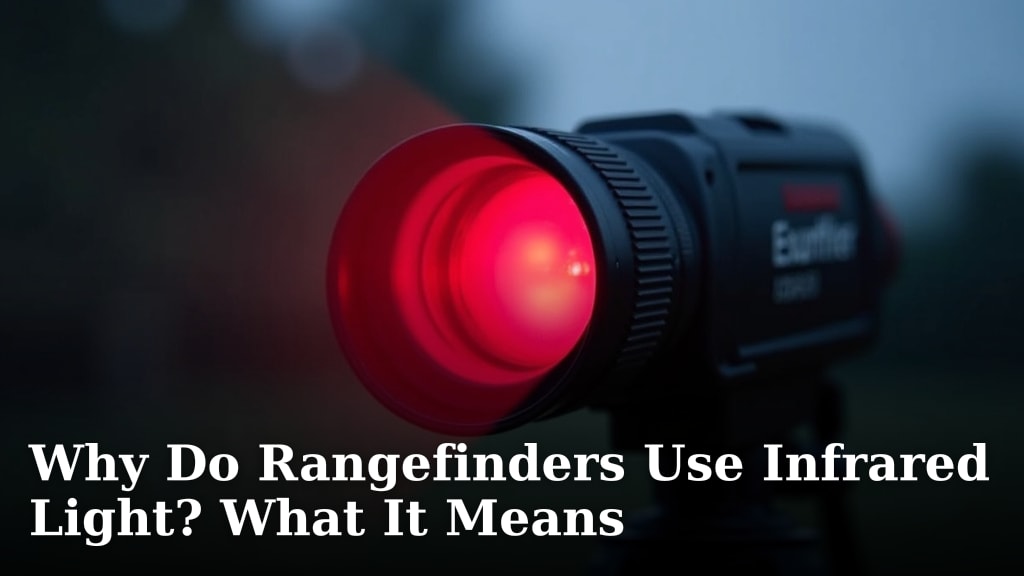
Rangefinders use infrared light because it’s a safe and effective way to measure distance without being visible to the naked eye. This invisible light beam bounces off your target and returns to the device, allowing it to calculate the exact distance. It’s how they get those quick and accurate readings you rely on.
This technology is a smart choice for rangefinders because infrared light doesn’t interfere with your vision or spook game, unlike visible laser pointers. Many experts say it’s the best balance of performance and safety for a wide range of uses. You get the distance information you need without any unnecessary distractions.
- Rangefinders use infrared light because it’s invisible and safe.
- The device sends out a light beam and measures how long it takes to return.
- This allows for quick and precise distance calculations.
- Infrared light won’t spook wildlife or hinder your sight.
Let’s walk through exactly why this invisible light is the go-to for your rangefinder and what that means for your measurements. This invisible light is the go-to for your rangefinder, and our guide on what a yardage finder does explains the technology in more detail.
Why Infrared Light is Your Rangefinder’s Best Friend
You’re probably wondering why rangefinders don’t just use a visible light, like a red laser pointer. It seems simpler, right? Well, research and user experience show that infrared light is the clear winner for a few key reasons. It’s all about giving you accurate measurements without causing problems.
Think of infrared light as a secret agent. It does its job perfectly, but you can’t see it. This invisible nature is what makes it so practical for measuring distances. Let’s break down why this specific type of light is used and what it means for you.
The Science Behind the Invisible Beam
Rangefinders work by sending out a beam of light and timing how long it takes for that beam to bounce off an object and return. The longer it takes, the farther away the object is. Infrared light is perfect for this because it’s a part of the light spectrum that our eyes can’t detect.
This means when your rangefinder fires off a beam, you won’t see a bright flash or a colored dot. It’s a silent, invisible operation. This invisibility is a huge advantage, especially in situations where you need to be discreet or avoid disturbing your surroundings.
Understanding Infrared Light Frequencies
Infrared light falls into a specific range of electromagnetic frequencies. It’s right next to visible red light but at a longer wavelength. These wavelengths are too long for our eyes to perceive, which is why they’re invisible. Many experts in optics confirm this invisible property is key for rangefinder performance.
The devices use a specific type of infrared light that is suitable for bouncing off various surfaces. It’s powerful enough to travel a good distance but not so powerful that it becomes harmful. This careful selection of frequency is part of what makes rangefinders both effective and safe.
How the Light Beam Measures Distance
The process is pretty straightforward once you understand the light. Your rangefinder has two main parts for this: an emitter and a receiver. The emitter sends out a pulse of infrared light. This pulse travels outwards and hits your target.
When the light hits the target, it bounces back towards the rangefinder. The receiver detects this returning light. The device’s internal computer measures the tiny fraction of a second between sending the pulse and receiving the echo. This time is then converted into a distance measurement.
The Speed of Light Calculation
This all happens incredibly fast because light travels at an astonishing speed – about 186,282 miles per second. Even over hundreds of yards, the travel time is measured in nanoseconds. This incredible speed allows for those almost instantaneous readings you get from your rangefinder.
The accuracy of the measurement depends on how precisely the device can time these pulses. Modern rangefinders are designed to be very precise. They account for the speed of light and the time it takes for the light to travel to the target and back to provide you with a reliable distance.
Benefits of Using Invisible Light
So, why is this invisibility such a big deal? For starters, it means you’re not distracted by a visible light beam. Imagine trying to aim or observe something when a bright red dot is flashing around. It would be quite a nuisance, right?
More importantly, this invisible beam has a real impact on your activities, whether you’re hunting, golfing, or even working. The advantages are clear and directly benefit how you use the device.
No Disturbance to Wildlife
For hunters, this is a game-changer. Animals, especially deer and other game, are very sensitive to light and movement. A visible laser pointer, even a dim one, could easily spook them. This would ruin your hunt before it even begins.
Since infrared light is invisible, you can get your distance readings without alerting your quarry. This allows you to make your shot with more confidence. Many wildlife experts recommend rangefinders using this technology precisely because of this stealth factor.
Clear Vision for Golfers and Others
Golfers also benefit greatly. You don’t want a flashing light beam to interfere with your concentration or your partner’s swing. With an infrared rangefinder, you get the distance to the pin or hazard without any visual distraction. This helps you make better club selections. Golfers also benefit greatly from rangefinders, and our guide on what a golf rangefinder measures can help you understand its specific applications.
Beyond sports and hunting, this applies to any situation where clear sightlines are important. You can use your rangefinder without it obstructing your view or the view of others. It simply does its job without fuss.
Safety Considerations
Visible lasers can sometimes be a concern for eye safety, especially if they are powerful or misused. While most rangefinder lasers are designed to be safe, infrared light offers an additional layer of passive safety because it’s not visible.
According to guidelines from organizations like the FDA’s Center for Devices and Radiological Health, lasers are classified by their potential hazard. Infrared lasers used in rangefinders are typically Class 1 or Class 2, meaning they are considered safe for normal use. The invisibility further reduces the chance of accidental eye exposure to a visible beam.
Comparing Rangefinder Technologies
While infrared is the most common choice, it’s helpful to know what else is out there. Understanding the differences helps you appreciate why infrared is so widely adopted.
Most consumer-grade rangefinders you’ll find today use infrared laser technology. There are other methods for measuring distance, but they often come with trade-offs that make them less ideal for everyday use.
Infrared vs. Visible Laser
We’ve already touched on why invisible infrared is better than visible laser. Visible lasers, while sometimes useful for pointing, can distract, spook animals, and offer no stealth. They are generally not preferred for distance measurement tools that require discretion.
Infrared, on the other hand, is invisible, quiet, and effective. It provides the same distance information without the drawbacks of a visible beam. It’s the practical choice for most applications.
Infrared vs. Ultrasonic (and other methods)
You might be familiar with ultrasonic sensors, like those used in car parking sensors. These use sound waves instead of light. While effective for short distances, ultrasonic waves can be affected by wind and other environmental factors, making them less accurate for longer ranges typically needed by rangefinders.
Other methods, like GPS-based distance measurements, are available but often lack the pinpoint accuracy of laser rangefinders. GPS can be off by several yards, which is too much error for precise shots in golf or hunting. Infrared laser rangefinders offer the best combination of speed, accuracy, and practicality for most users.
| Technology | How it Works | Pros | Cons |
|---|---|---|---|
| Infrared Laser | Measures time for an invisible light beam to return. | Accurate, fast, invisible, safe, doesn’t spook game. | Can be affected by heavy fog or rain. |
| Visible Laser | Measures time for a visible light beam to return. | Can be used for pointing. | Distracting, spooks game, not discreet. |
| Ultrasonic | Measures time for sound waves to return. | Simple, low power. | Less accurate at range, affected by weather. |
| GPS | Uses satellite signals for location. | Measures large areas. | Low accuracy for precise measurements, needs clear sky. |
Getting the Most from Your Infrared Rangefinder
Now that you understand why infrared light is used, you can appreciate your rangefinder even more. It’s a cleverly designed tool that uses science to make your life easier.
Here’s a quick rundown of what you’ve learned and how it helps you:
- Your rangefinder uses invisible infrared light.
- This light is safe for your eyes and won’t disturb wildlife.
- The device measures the time for the light pulse to bounce back.
- This allows for quick and precise distance calculations.
- Infrared is preferred over visible lasers for its discreet nature.
- It offers a great balance of performance, safety, and practicality.
Conclusion
You now understand why your rangefinder relies on invisible infrared light. It’s the smart choice for delivering precise distance measurements without any unwanted visual distractions or disturbances. This technology ensures you get accurate readings quickly, whether you’re lining up a shot or choosing the right club. By using this safe, undetectable light, rangefinders offer a balance of performance and discretion. Knowing this helps you appreciate the clever engineering behind your tool. Next time you use your rangefinder, you can trust the invisible beam is working hard for you.
Frequently Asked Questions
Can I see the infrared light from my rangefinder?
No, you cannot see the infrared light emitted by your rangefinder. Infrared light falls outside the visible spectrum for the human eye, meaning it’s completely invisible. This is a key feature that prevents distractions and avoids spooking wildlife.
Is the infrared light from a rangefinder safe for my eyes?
Yes, the infrared light used in rangefinders is considered safe for your eyes. Most rangefinders utilize low-power lasers, typically classified as Class 1 or Class 2, which are deemed safe for normal use. Their invisibility also reduces the risk of accidental exposure to a visible beam.
Will animals get scared if I use my rangefinder?
Animals are unlikely to be scared by your rangefinder because it uses invisible infrared light. Unlike visible lasers, this light doesn’t create a visible flash or spot that could alert or startle wildlife. This makes it ideal for hunting or wildlife observation.
How does the invisible light accurately measure distance?
Your rangefinder measures distance by sending out pulses of infrared light and timing how long they take to bounce back from a target. The device calculates the time it takes for the light to travel to the object and return, then converts that time into an exact distance measurement using the speed of light.
Why not use a visible laser if it’s also fast?
While visible lasers are also fast, they are not preferred for rangefinders because they are visible. A visible laser can be distracting to you and others, may spook game animals, and lacks the discretion that infrared light provides. Infrared offers the same speed and accuracy without these drawbacks.