What Is a Distance Measuring Laser Sensor?
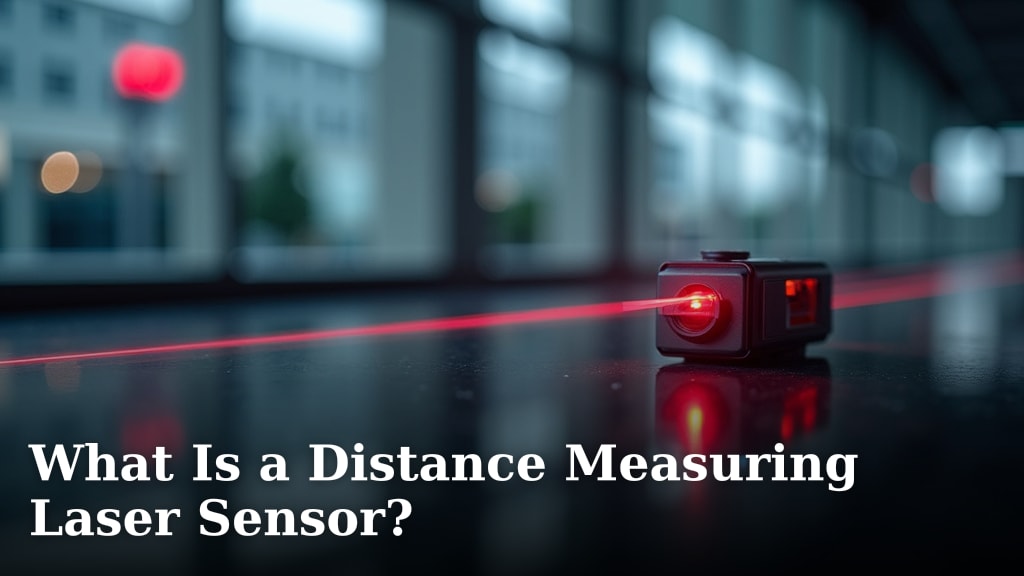
A distance measuring laser sensor is a device that uses laser light to accurately measure the distance to an object. Think of it like a super-precise tape measure that uses a beam of light. It’s a handy tool for many applications, from industrial automation to home improvement projects.
These sensors work by emitting a laser pulse and timing how long it takes for the light to bounce off an object and return. The faster the light comes back, the closer the object is. This technology offers a quick and reliable way to get measurements without physical contact, which is a huge advantage in many situations.
TL;DR:
- A distance measuring laser sensor uses a laser beam to measure distance.
- It calculates distance by timing the light’s travel.
- These sensors are known for their accuracy and speed.
- They’re used in everything from factories to surveying.
- Get precise measurements without touching anything!
Let’s break down exactly how these amazing little gadgets work and what makes them so useful for your projects.
How a Laser Distance Sensor Measures Up
Ever wondered how those gadgets can tell you the exact distance to an object without you needing to pull out a tape measure? It’s all thanks to a distance measuring laser sensor. Think of it as a high-tech eye that uses light to gauge how far away something is. These devices are becoming more common because they offer a quick, accurate, and often contactless way to get precise measurements.
The core idea is simple: send out a beam of light and see when it bounces back. The faster the light returns, the closer the object. It’s a principle that has been around, but modern sensors make it incredibly precise and useful for all sorts of tasks, big and small.
The Science Behind the Beam: How It Works
So, how does a laser sensor actually measure distance? It boils down to timing. These sensors send out a pulse of laser light. This light travels to an object, bounces off it, and then returns to the sensor. The sensor has a very precise internal clock. It measures the exact time it takes for the light to complete this round trip.
Since the speed of light is a known, constant value (about 186,282 miles per second!), the sensor can use this timing information to calculate the distance. It’s like shouting in a canyon and timing how long it takes for the echo to return – the longer it takes, the farther away the canyon wall is. The sensor simply does this with light, which travels millions of times faster!
Types of Laser Measurement Technologies
While the basic principle of timing light is the same, there are a few different ways laser sensors achieve this. The most common methods you’ll find involve:
- Time-of-Flight (ToF): This is the most straightforward method, just like we described. It sends a pulse and measures the time it takes to return. It’s great for longer distances and offers good accuracy.
- Phase Shift: Instead of sending a single pulse, this method sends a continuous laser beam that has a specific wave pattern. The sensor compares the wave pattern of the outgoing light with the returning light. Any shift in the pattern tells the sensor how far the light has traveled. This method is often used for very precise measurements over shorter distances.
- Triangulation: This method works a bit differently. The sensor emits a laser onto the object. Then, a separate light-sensitive element within the sensor detects the reflected laser light at an angle. By knowing the angle and the distance between the laser emitter and the detector, the sensor can calculate the distance to the object using geometry. This is excellent for precise, short-range measurements.
Key Components of a Laser Distance Sensor
No matter the specific technology, most laser distance sensors have a few common parts:
- Laser Emitter: This is where the laser beam originates. It generates a focused pulse or beam of light.
- Receiver/Detector: This part is sensitive to the returning laser light. It picks up the light after it bounces off the target.
- Timing Circuitry/Processing Unit: This is the “brain” of the sensor. It precisely measures the time the light takes to travel or analyzes the phase shift or angle. It then performs the calculations to determine the distance.
- Optics: Lenses and mirrors are used to focus the laser beam as it’s sent out and to gather the returning light efficiently onto the detector.
Why Choose a Laser Sensor? The Advantages You Get
You might be wondering, “Why use a laser sensor instead of a tape measure or a sonic sensor?” The answer lies in the benefits they offer:
Unmatched Accuracy and Precision
Laser sensors are renowned for their accuracy. Because light travels so incredibly fast and can be directed very precisely, these sensors can measure distances with a high degree of exactness. Many industrial-grade sensors can measure to within a millimeter or even less. This level of precision is vital in manufacturing, construction, and scientific applications where even tiny errors can cause big problems.
Speed and Efficiency
Measuring with a laser is incredibly fast. A measurement can often be taken in a fraction of a second. This speed is a huge advantage, especially when you need to take many measurements quickly or when you’re dealing with moving objects. Think about automated assembly lines or robotic systems – they need measurements that are instant and reliable. You get the data you need without waiting.
Contactless Measurement Capabilities
One of the biggest pluses is that laser sensors don’t need to touch the object they are measuring. This is a game-changer in many situations. You can measure hot, fragile, or hazardous materials without any risk to the sensor or the object. It also means you don’t have to worry about scratching or damaging surfaces. Imagine measuring the distance to a delicate piece of artwork or a molten metal object – contactless is the only safe way.
Versatility Across Many Industries
The applications for laser distance sensors are vast. They’re not just for factories. Here are just a few examples:
- Industrial Automation: Measuring product height on a conveyor belt, positioning robots, checking fill levels in tanks.
- Construction and Surveying: Measuring building dimensions, checking gradients, setting out points.
- Automotive: Parking assist systems, adaptive cruise control.
- Logistics: Measuring pallet dimensions for shipping, monitoring warehouse stock.
- DIY Projects: Some advanced DIYers use them for precise measurements in home renovations or woodworking.
Are There Any Downsides to Consider?
While laser sensors are fantastic, it’s important to be aware of potential limitations. Being informed helps you choose the right tool for your job.
Surface Reflectivity Matters
The ability of the laser beam to bounce back effectively depends on the surface of the object. Dark, matte surfaces absorb more light, making them harder for the sensor to “see.” Shiny or reflective surfaces can sometimes cause the light to scatter in unexpected ways, leading to inaccurate readings. Some sensors have settings or work better with specific surface types. Researching the sensor’s compatibility with your target material is a good idea.
Environmental Factors Can Play a Role
Things like dust, fog, smoke, or even strong sunlight can interfere with the laser beam. A thick fog can scatter the light, and bright sunlight might overwhelm the sensor’s detector. While many sensors are designed to filter out ambient light, extreme conditions can still pose a challenge. For very dusty environments, sensors with special filters or different technologies might be better suited.
Line-of-Sight is Required
Naturally, the laser beam needs a clear path to the object. If there’s anything blocking the way – a wall, a piece of equipment, or even a person – the sensor won’t be able to get a reading. You always need a direct line of sight between the sensor and your target.
Cost Can Be a Factor
Depending on the accuracy, range, and features, laser distance sensors can range in price. While simple ones for DIY might be affordable, high-precision industrial models can be a significant investment. For most everyday tasks, you can find very capable sensors at reasonable prices, but it’s worth checking your budget.
Choosing the Right Laser Sensor for Your Needs
So, you’ve decided a laser distance sensor might be the right tool. How do you pick one? Consider these points:
- What distance do you need to measure? Sensors have different maximum ranges.
- How accurate does it need to be? For woodworking, a few millimeters might be fine. For machine alignment, you’ll need much higher precision.
- What kind of surfaces will you be measuring? Consider reflectivity and texture.
- What are the environmental conditions? Dust, heat, and light can all affect performance.
- Do you need it to measure moving objects? Speed of measurement is key here.
By thinking through these questions, you can narrow down the options and find a sensor that truly fits your project’s requirements. It’s all about matching the tool to the job, ensuring you get the most reliable and accurate results possible.
Conclusion
You now have a solid understanding of what a distance measuring laser sensor is and how it works. These sensors are remarkable tools, offering speed, accuracy, and contactless measurement for a wide range of tasks. While surface reflectivity and environmental factors can pose challenges, knowing these limitations helps you choose the right sensor for your specific needs. By considering your project’s requirements for range, accuracy, and operating conditions, you can confidently select a sensor that will provide reliable results. Now, take a moment to think about your next project and see where a laser distance sensor could simplify your measurements.
Frequently Asked Questions
Can I use a laser distance sensor to measure through glass?
Generally, it’s not recommended to measure through glass. The laser beam can reflect inconsistently off the glass surface, or the glass itself might absorb or refract the beam. This can lead to inaccurate readings or no reading at all. For best results, ensure a clear, unobstructed path to your target object.
How do I know if a surface is too dark or too shiny for a laser sensor?
Dark, matte surfaces absorb more light, making it harder for the sensor to detect the reflection. Very shiny or mirrored surfaces can scatter the laser beam unpredictably. Many sensor datasheets will specify the ideal surface reflectivity. If you’re unsure, testing the sensor with your specific material in controlled conditions is the best approach.
Are laser distance sensors safe to use around people?
Most consumer-grade laser distance sensors use Class 2 or Class 3R lasers, which are generally safe for brief, accidental exposure. However, you should always avoid looking directly into the laser beam or pointing it at anyone’s eyes. Following the manufacturer’s safety guidelines is important for safe operation.
What’s the difference between Time-of-Flight and Phase Shift measurements?
Time-of-Flight (ToF) sensors send out a pulse of light and measure the time for it to return, making them good for longer distances. Phase Shift sensors use a continuous wave and analyze changes in its wave pattern. This method is often preferred for very precise measurements over shorter distances.
Can a laser distance sensor measure distance to a moving object?
Yes, many laser distance sensors are fast enough to measure moving objects. Their ability to take measurements in fractions of a second allows them to capture the distance of objects that are in motion, which is essential for applications like automated tracking or assembly lines. Check the sensor’s update rate or measurement speed specification.