What Is a Laser Diode? A Golfer’s Cheat Sheet

A laser diode is a small, semiconductor device that emits a focused beam of light. Think of it as a tiny, super-efficient light bulb that shoots out light in a straight line. These diodes are used in everything from barcode scanners to Blu-ray players because they are reliable and compact.
When you hear “laser,” you might think of science fiction, but laser diodes are practical tools we use every day. They work by passing an electric current through a semiconductor material. This process causes electrons to release energy as photons, creating a concentrated beam of light. You’ll find them in devices that need precise illumination or signaling.
- A laser diode is a compact semiconductor light emitter.
- It produces a focused beam of light.
- Common uses include scanners and optical storage.
- They are efficient and small.
Now, let’s get into the details of how these little wonders actually work and where you might encounter them. We’ll break it down so it’s easy to understand.
Understanding Laser Diodes: The Small Light Emitters
You’re probably wondering how those tiny little laser diodes actually work. It’s not magic, just some clever science packed into a small package. At its core, a laser diode is a semiconductor device. This means it’s made from materials that conduct electricity, but not as well as a metal. Think of silicon chips in your computer – they’re semiconductors too.
When you pass an electric current through a laser diode, something pretty neat happens inside. It uses a special junction, like a tiny sandwich of different semiconductor materials. This junction is where the light magic begins. It’s the heart of why these diodes are so useful for so many things.
How a Laser Diode Generates Light
The process starts with electricity. When you give a laser diode power, electrons inside the semiconductor material get excited. They jump to a higher energy level. Eventually, these excited electrons want to return to their normal, lower energy state. As they do, they release their extra energy in the form of tiny packets of light called photons.
Now, in a regular LED (Light Emitting Diode), these photons fly out in all sorts of directions. But in a laser diode, something special happens. The semiconductor material is designed to make these photons bounce back and forth. This bouncing amplifies the light. It also forces the photons to line up, creating a single, focused beam.
The Role of the Semiconductor Junction
The critical part is the p-n junction. This is where two types of semiconductor material meet. One side has an excess of positively charged “holes” (p-type), and the other has an excess of negatively charged electrons (n-type). When you apply voltage, electrons move from the n-side to the p-side. They meet in the junction and recombine, releasing energy as photons. This controlled recombination is key.
The material used in the junction determines the color and wavelength of the laser light. Different materials produce different colors, from red to infrared. This ability to tune the light is what makes laser diodes so versatile for various applications.
Key Components of a Laser Diode
Beyond the semiconductor junction, a laser diode has a few other important parts. There’s an optical cavity, which is like a mirror system. This cavity traps the photons and makes them bounce back and forth, amplifying the light. Think of it like a tiny echo chamber for light.
There’s also a window. This is a small opening that lets the laser beam escape the diode. It needs to be clear and precise so the light can exit without too much loss or scattering. These components work together to create that distinct laser beam.
Why a Focused Beam Matters
Unlike a regular light bulb that spreads light everywhere, a laser diode produces a tight beam. This beam has very little divergence, meaning it stays focused over long distances. This focused nature is what allows lasers to do things like read tiny details on a Blu-ray disc or scan a barcode accurately.
This focused light is also very intense. Even a low-power laser diode can concentrate its energy into a tiny spot. This intensity is useful for specific tasks. It’s why they are used in applications where precision and direct energy delivery are needed.
Where Do You Find Laser Diodes? Everyday Examples
You might be surprised by how many devices use laser diodes. They are everywhere, quietly doing their jobs. Many of these are in your home or workplace, helping with everyday tasks. You probably use them more than you realize!
Consumer Electronics and Entertainment
Optical drives in computers and game consoles are a prime example. CD players, DVD players, and Blu-ray players all use laser diodes to read the data stored on discs. The laser beam scans the tiny pits and lands on the disc’s surface.
The laser’s precision allows these devices to read information at incredibly high densities. A Blu-ray disc, for instance, holds much more data than a DVD because the laser used is finer and can read smaller tracks. This is a direct benefit of laser diode technology.
Scanning and Identification
Have you ever wondered how a barcode scanner at the grocery store works? It uses a laser diode! The scanner emits a red laser beam that sweeps across the barcode. A sensor in the scanner detects the pattern of black and white bars. This pattern is then translated into product information.
Beyond retail, laser diodes are in QR code readers and security scanners. They can quickly and accurately identify items or verify credentials. Their speed makes checkout lines move faster and helps manage inventory efficiently.
Communication and Technology
Fiber optic communication systems rely heavily on laser diodes. These systems transmit data using pulses of light through thin glass fibers. Laser diodes are used as the light source at the sending end. They can send data at incredible speeds over very long distances.
Think about internet data, phone calls, or streaming video. Much of that information travels through fiber optic cables powered by laser diodes. This technology forms the backbone of modern global communication networks.
Industrial and Scientific Uses
In industry, laser diodes have a range of applications. They are used in measuring tools for precise distance calculations. Laser levels, for example, project a straight laser line for construction and DIY projects. They help ensure things are perfectly aligned and level.
Scientists also use laser diodes in various experiments. They can be used for spectroscopy, alignment, and even in some types of medical equipment. Their ability to produce coherent light makes them ideal for precise scientific work.
Comparing Laser Diodes to Other Light Sources
It’s helpful to understand how laser diodes differ from other light sources you might be familiar with, like regular light bulbs or LEDs. This comparison highlights why laser diodes are chosen for specific jobs.
| Feature | Laser Diode | Standard LED | Incandescent Bulb |
|---|---|---|---|
| Light Type | Coherent, monochromatic, directional | Incoherent, polychromatic, diffuse | Incoherent, polychromatic, diffuse |
| Focus | Highly focused beam | Broad light spread | Very broad light spread |
| Efficiency | High energy to light conversion | Moderate energy to light conversion | Low energy to light conversion (mostly heat) |
| Size | Very small | Small | Relatively large |
| Applications | Scanners, pointers, fiber optics, data storage | General lighting, indicators, displays | Older lighting, heating elements |
The Uniqueness of Laser Light
The key difference lies in the nature of the light. Laser light is monochromatic, meaning it’s essentially one color or wavelength. It’s also coherent, meaning the light waves are in sync. This coherence allows it to travel long distances without spreading much.
A regular LED, on the other hand, emits light that spreads out and covers a wider range of wavelengths (colors). An incandescent bulb is even less efficient, producing light by heating a filament until it glows, which generates a lot of heat and less usable light.
Efficiency and Power Consumption
Laser diodes are generally very efficient. They convert electrical energy into light energy effectively. This means they don’t waste as much energy as heat compared to older technologies like incandescent bulbs. Even compared to standard LEDs, specific laser diode applications can be more power-efficient due to the directed nature of the light.
This efficiency is vital for battery-powered devices and for systems that need to operate reliably for long periods. You want your tools to work without draining power too quickly, and laser diodes help achieve that.
Choosing the Right Laser Diode (When Applicable)
While you might not be buying individual laser diodes for your home projects, understanding their properties can be helpful. If you are looking at products that use them, knowing a bit more can guide your choice.
Key Specifications to Consider
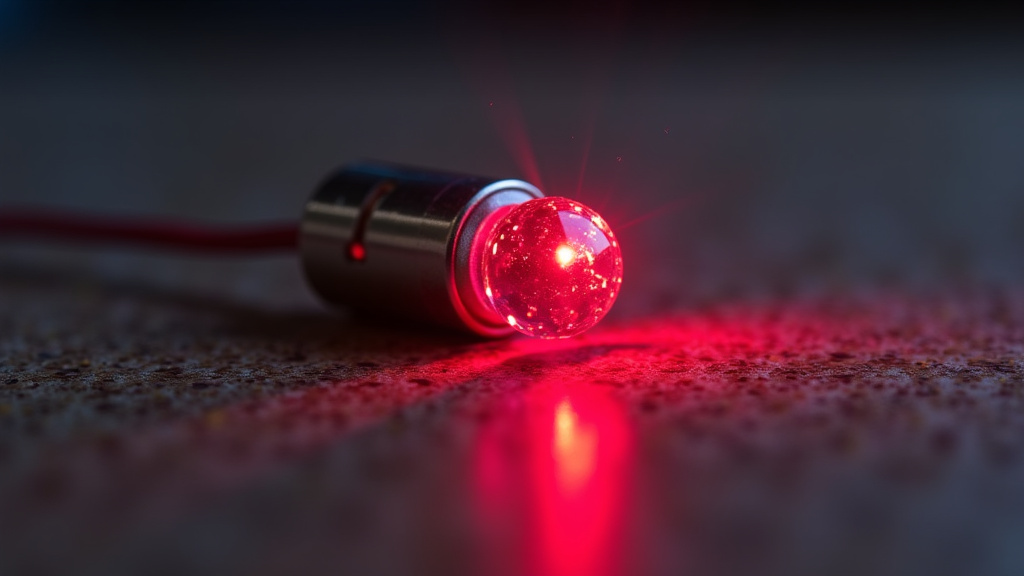
When looking at devices with laser diodes, some important specs might be mentioned. These include wavelength, which determines the color of the light. For example, a 650nm laser is red, while a 780nm laser is infrared (invisible to the human eye).
Another spec is power output, often measured in milliwatts (mW). This indicates how strong the laser beam is. For safety, it’s important that the power output is appropriate for the intended use. Regulatory bodies often set limits for consumer products (FDA in the US).
Safety First with Laser Diodes
It’s important to remember that lasers, even low-power ones, can be harmful if misused. Never point a laser beam directly into anyone’s eyes. The focused light can cause eye damage very quickly. Always follow the manufacturer’s safety guidelines for any device containing a laser diode.
Many consumer devices use Class 1 or Class 2 lasers, which are considered safe for momentary viewing. However, caution is always advised. Understanding the potential risks helps you use these devices responsibly and safely.
Quick Checklist for Laser Diode Basics
- Laser diodes are semiconductor devices.
- They emit a focused, coherent beam of light.
- Electricity causes electron transitions that release photons.
- Optical cavities amplify and direct the light.
- Found in scanners, players, and fiber optics.
- Safety precautions are essential when using laser devices.
Conclusion
You’ve learned that a laser diode is more than just a component; it’s a tiny light emitter that makes many everyday technologies possible. From reading discs to scanning items, its focused beam is incredibly useful. We’ve seen how electricity creates photons, and how the diode’s design turns them into a precise laser beam.
Understanding these diodes helps you appreciate the tech around you. When you encounter a device with a laser, remember its semiconductor heart and focused light. Next time you buy electronics, you’ll have a better idea of what’s inside!
Frequently Asked Questions
What’s the main difference between a laser diode and a regular LED?
A regular LED produces light that spreads out in many directions and contains various colors. A laser diode, however, creates a focused beam of light that is essentially one color and travels in a straight line with very little spread. This focus is what makes laser diodes ideal for tasks requiring precision.
Are all laser diodes red?
No, laser diodes come in different colors depending on the semiconductor material used. While red lasers (around 650nm) are common in pointers and scanners, other materials can produce green, blue, or even infrared light, which is invisible to the human eye. The material choice directly affects the light’s wavelength and color.
Can I use a laser diode for general room lighting?
Generally, no. Laser diodes produce a very narrow, focused beam. While this is great for pointing or scanning, it’s not suitable for illuminating a broad area like a room. Standard LEDs or incandescent bulbs are designed to spread light out, making them appropriate for general lighting.
Why are laser diodes so efficient?
Laser diodes are efficient because they convert electrical energy directly into light energy with minimal loss as heat. The process of stimulated emission, where photons trigger the release of more identical photons, is very controlled. This means more of the input power becomes usable light compared to older technologies like incandescent bulbs.
Is it safe to look directly into a laser diode beam?
You should never point a laser beam directly into anyone’s eyes, even low-power ones. The concentrated light can quickly cause damage to your retina. Always follow the safety instructions provided with any product that uses a laser diode to ensure responsible use.