How to Choose a Stabilized Golf Rangefinder
A golf rangefinder with image stabilization can make a distant target look steadier while you aim. Compare how the stabilizing system works, how you hold the device, and whether its other features fit your course routine.
On this page (9 sections)
- What does image stabilization do in a golf rangefinder?
- Is stabilization useful for golf?
- What should you compare when choosing a golf rangefinder with stabilization?
- How do target lock and scan modes relate to stabilization?
- What tradeoffs come with image stabilization?
- Should you choose laser, GPS, or a scope-style rangefinder?
- How can you tell whether stabilization is worth it for you?
- Which features should take priority in your final choice?
- Frequently asked questions
A golf rangefinder with image stabilization is designed to make the view steadier while you aim at a flag or other target. Before choosing one, find out what the maker means by stabilization, how the feature affects aiming, and whether you prefer a laser, GPS, or another viewing system.
A steadier view may help you keep a small target in sight, but it does not choose the right target or club for you. Check how the rangefinder handles slope, pin locking, display visibility, and storage alongside any stabilization claim.
What does image stabilization do in a golf rangefinder?
Image stabilization is a system intended to reduce visible movement in the view as you aim. That can make a distant flag easier to keep centered, especially when your hands move slightly or you are viewing through magnification.
The term can describe different designs, so check the exact feature rather than assuming every stabilized rangefinder works the same way. Some makers may describe optical or electronic stabilization, while other products may emphasize magnification, target lock, or a vibration signal without claiming image stabilization.
A rangefinder scope guide can help you understand the viewing tube and aiming process. The main question is whether you can acquire and hold your intended target comfortably.
Is stabilization useful for golf?
Stabilization is most useful when a moving view makes it hard for you to line up a distant flag. If you already aim quickly and steadily, the feature may add less value than clear optics, a comfortable grip, or a simple display.
Think about your usual shots and conditions. A narrow flag against trees, a long approach, or fatigue late in a round may make steadier viewing more appealing, but the feature cannot guarantee a correct reading.
Also consider how you carry the device between shots. If you keep it within reach on a cart, a mount or magnetic attachment may matter as much as the view through the eyepiece.
If you walk, consider where it will sit in your bag or on a push cart.
What should you compare when choosing a golf rangefinder with stabilization?
Compare the stabilizing method, target acquisition tools, viewing comfort, and practical carry features. These details affect how the device feels to use and whether it fits your course routine.
| Feature | What to check | Why it matters |
|---|---|---|
| Stabilization method | How the maker describes the system and when it operates | The name alone does not tell you how it behaves |
| Magnification | The stated magnification level | More magnification can make both the target and hand movement more noticeable |
| Target lock | Whether the unit has pin-locking or confirmation feedback | Helps distinguish the flag from objects behind it |
| Display | Contrast, visibility, and adjustment features | You need to read the measurement in the light you play in |
| Slope | Whether elevation is measured and whether slope can be disabled | Rules and personal preferences vary |
| Carry system | Case, magnet, strap, or another attachment | A device is easier to use when it is stored where you can reach it |
A rangefinder's beam and target area also affect how easily it picks up the intended object. Learn what beam divergence means in a rangefinder before comparing claims about narrow targeting.
How much magnification do you need in a stabilized golf rangefinder?
Choose magnification that lets you see the target clearly without making the view uncomfortable to hold. Higher magnification enlarges the view, but it can also make small hand movements more visible, which is one reason stabilization may appeal.
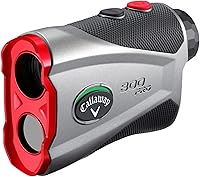
For example, the Callaway 300 Pro has 6x magnification, a stated range of 5 to 1,000 yards, and accuracy of plus or minus 1 yard. Its Pin Acquisition Technology is designed to lock onto a pin up to 300 yards away, and a short vibration confirms the distance.
The Blue Tees Golf Series 3 Max+ also has a stated 1,000-yard range and uses Flag Lock technology with vibration pulses. Its maker describes an auto-ambient display that changes text between red and black to contrast with lighting conditions.
Neither product's features describe image stabilization. Consider them as alternatives if target locking, vibration feedback, or display visibility matters more to you than a stabilization claim.
How do target lock and scan modes relate to stabilization?
Target lock and scan modes help you acquire or track a target; stabilization is about keeping the view steadier. These functions can work toward easier aiming, but one does not mean the device includes the others.
Scan mode lets you take readings while moving the view across targets. Read what scan mode does on a rangefinder to see when it may help you compare distances across a hole.
Continuous scanning can be useful when you want to check several objects without taking a separate reading for each one. Our guide to how continuous scan mode works explains the basic process.
When comparing a stabilized golf rangefinder, check whether the mode is designed for a single target or for repeated readings while you sweep the view. If you mostly measure flags, a clear pin-lock signal may be more useful than a scan feature you rarely use.
What tradeoffs come with image stabilization?
A stabilization system can add complexity, weight, or cost, depending on the design. Check the device's size, battery setup, controls, and handling before paying more for a steadier view.
A laser rangefinder still requires you to aim at the target and read the distance. Stabilization may help keep the view steady, but it does not verify that you selected the correct object or account for every course condition.
Also think about your carrying setup. A rangefinder that is comfortable to use but awkward to store may slow you down between shots.
The Stripebird 2.0 Slim Golf Rangefinder Magnetic Strap is an accessory, not a rangefinder, and its maker says it fits many rangefinder models with exposed buttons.
The strap does not add stabilization or include a rangefinder. Check button access and fit before choosing an accessory for your device.
Should you choose laser, GPS, or a scope-style rangefinder?
Choose a laser rangefinder if you want to aim at a visible target and measure its distance. A hybrid GPS and laser rangefinder combines that with course distances.
GPS devices use course-position information, while scope-style products describe a viewing setup that may use a different aiming approach.
A golf rangefinder's purpose is to help you make a distance decision; our guide to what a golf rangefinder is for covers the basic role. For more detail on common readings, see what a golf rangefinder can measure.
For a laser unit, compare target acquisition and feedback as closely as you compare stabilization. The Callaway and Blue Tees examples above offer pin or flag locking with vibration confirmation, while their features do not claim image stabilization.
How can you tell whether stabilization is worth it for you?
Stabilization is worth considering if hand movement regularly makes it hard for you to keep a distant target in view. If you can aim comfortably already, spend more attention on the rangefinder's target lock, display, controls, and carry options.
Use this decision check before buying:
- Notice whether you struggle to hold a flag in view through magnification.
- Confirm that the device explicitly describes image stabilization and explains how it works.
- Compare magnification and target-lock features with your normal distances.
- Check whether you prefer a laser measurement, GPS distance, or another system.
- Decide how you will carry the device during a round.
A steadier view can support aiming, but it does not replace a consistent routine. You still need to select the correct target, understand the measurement, and choose a club that suits your shot.
Which features should take priority in your final choice?
Prioritize the feature that solves the problem you actually notice on the course. Choose a stabilized model if hand movement interferes with aiming, and favor target lock, display visibility, or carrying convenience if those are the bigger obstacles.
For a laser rangefinder with pin locking and vibration confirmation, compare the Callaway 300 Pro and Blue Tees Golf Series 3 Max+ by their stated features. If keeping a compatible device close at hand is your concern, the Stripebird strap is a separate accessory option.
If you are also reviewing other golf gear, our guide on how to choose golf shoes covers fit, traction, and comfort considerations. For this purchase, choose stabilization only when a steadier view addresses a real aiming need.
Frequently asked questions
Does every golf rangefinder with stabilization use the same technology?
No. Stabilization can refer to different designs, and the term alone does not explain how a particular rangefinder steadies its view.
Check the maker's description for the method, when it operates, and any limits. Compare magnification and target-lock features as well, because those also affect how easy a device is to aim.
Does image stabilization make a rangefinder more accurate?
Image stabilization is intended to steady the view, not guarantee a more accurate distance. Reading accuracy depends on the device and your ability to aim at the intended target.
Check the stated accuracy, target-lock features, and measurement conditions, and confirm that you are reading the flag rather than an object behind it.
Is vibration confirmation the same as image stabilization?
No. Vibration confirmation signals that the device has locked onto a target or confirmed a reading, while image stabilization is intended to reduce movement in the view.
A rangefinder can offer vibration feedback without claiming image stabilization. Check each feature separately when comparing models.
Can I use a golf rangefinder with image stabilization in a tournament?
Tournament rules and device settings matter, especially for slope measurement. Check the event's rules and the rangefinder's controls before play.
Some models have a slope switch that can turn slope features off, but that does not answer whether a particular device is allowed in your event. To compare models, see our guide to the best golf rangefinders with slope.
Is a magnetic strap a stabilization feature?
No. A magnetic strap is a carrying accessory that helps attach a compatible rangefinder to a cart or metal surface.
It does not steady the image or measure distance. Check the strap's fit and button access for your rangefinder before buying.
Pick a stabilized golf rangefinder if hand movement makes aiming difficult, and pick a model with clear target lock or display features if those matter more. To understand how readings fit into your round, start with what a golf rangefinder can measure.