Hybrid Golf Rangefinders: GPS and Laser Together
A hybrid golf rangefinder is worth choosing when you want GPS course context and laser distance checks in one device. GPS can help you plan around mapped hazards and greens, while a laser can measure to a visible target.
On this page (8 sections)
- When does a hybrid golf rangefinder make sense?
- What does GPS add to a laser rangefinder?
- What does the laser add to GPS?
- Which features should you compare before buying?
- Can separate GPS and laser units be a better choice?
- Which laser rangefinders fit common needs?
- Is slope useful on a hybrid golf rangefinder?
- How can you decide between GPS, laser and a hybrid?
A hybrid golf rangefinder combines GPS course information with laser distance checks in one device. GPS can help you plan around mapped course features, while a laser can measure to a visible target such as a flag.
That combination can save you from carrying two tools, but it adds value only if you use both types of distance information. If you usually want a quick yardage to the green, a simpler GPS or laser may suit you better.
When does a hybrid golf rangefinder make sense?
Choose a hybrid golf rangefinder if you want mapped course context and direct target measurements during the same round. It can be useful when you plan a shot using course features, then confirm the distance to a visible target.
GPS and laser answer different questions. A GPS display can give distances to mapped points, such as the front, center and back of a green.
A laser measures the distance along its line of sight to the object you aim at.
That distinction matters near doglegs, blind shots and hazards. GPS can help when the target isn't visible, provided the course data includes the feature you need.
A laser is useful when you can see the flag, a tree or another target and want its measured distance.
You don't need both systems just because a hybrid includes them. Think about the situations that come up in your rounds, then decide whether both tools would be used often enough to justify the added cost, setup and charging or battery needs.
What does GPS add to a laser rangefinder?
GPS adds course-wide distance context, including mapped points that may be hidden from view. It can help you plan before you have a clear line to the flag.
Check what the GPS feature actually displays. Some devices focus on green distances; others may include mapped hazards or layouts.
Confirm that your regular courses are covered and find out how course data is updated.
GPS distances depend on accurate course maps and your position. A map may not show every temporary change, such as a moved tee box or a course feature that has changed since the map was made.
If you want to understand how a direct laser reading works, see how laser rangefinders measure distance. The reading depends on aiming at the intended target, which is why course context can still help.
What does the laser add to GPS?
A laser adds a direct distance to a visible target. Instead of relying only on mapped points, you can aim at the flag or another object and get a measurement along that line of sight.
The laser needs an unobstructed path. Trees, brush or a ridge can prevent a reading to the target you want, and an object behind the flag can be mistaken for the target if the device doesn't lock onto the flag.
Learn what affects a clear shot in What Is Line of Sight in a Rangefinder? Explained.
If you often play blind shots, GPS may be more useful there than repeated laser attempts.
Some golfers use both in sequence: check the GPS for the course layout, then use the laser when the target becomes visible. That works best when switching between displays is quick and doesn't interrupt your routine.
Which features should you compare before buying?
Compare GPS coverage, laser targeting, controls and power before choosing a hybrid. A feature list matters less than whether the device is easy to use during your normal pace of play.
| Feature | What to check | Why it matters |
|---|---|---|
| GPS course coverage | Whether your courses are mapped and how maps are updated | Unavailable or outdated maps limit course context |
| GPS distances | Which green points and hazards appear | Different displays support different shot decisions |
| Laser range and accuracy | Published range and accuracy | Helps you judge whether it suits your typical targets |
| Target lock | How the device confirms a flag or target | Can help separate a flag from the background |
| Display and controls | Readability, button layout and switching | A complicated interface can slow down a round |
| Power | Battery type, charging method and expected use | Helps you plan for a full round or multiple rounds |
| Slope control | Whether slope can be switched off | Relevant for competitions with restrictions |
| Carrying and mounting | Case, strap or cart attachment options | Affects how you'll keep it within reach |
Don't assume that a long maximum range means a device will read every flag at that distance. Target size, contrast, weather and steadiness can affect whether you get a useful reading.
Also check whether GPS and laser functions can be used without switching through several screens. A hybrid is most helpful when the two tools complement each other without adding friction.
Is a hybrid golf rangefinder accurate enough for your shots?
A hybrid golf rangefinder's usefulness depends on the accuracy and reliability of each system for the job you give it. Review published laser accuracy, then confirm how GPS positions and course maps are handled.
A laser measurement is a straight-line distance to the target, not an adjusted recommendation for which club to hit. GPS distances also describe mapped points, which may not be the exact place you intend to land.
If a device uses slope compensation, understand how that feature changes the displayed number. Our guide to golf rangefinder slope versus no slope explains the difference and when a switch matters.
Does a hybrid need target triangulation?
A hybrid doesn't necessarily need triangulation, but some devices use more than one signal or method to estimate position. Check what the manufacturer means by that term and whether the feature affects GPS, laser readings or both.
Don't treat a label alone as proof of better measurements. Our guide to golf rangefinder triangulation covers what to examine before buying.
Can separate GPS and laser units be a better choice?
Separate units can be better if you already own one tool, want different features in each, or prefer simpler devices. A hybrid's convenience comes from combining functions, but one device may not match the strongest option in each category.
Consider carrying a GPS watch or handheld alongside a laser if you want GPS on your wrist and a dedicated optical view for targeting. That setup means more devices to charge or carry, but you can choose each one for its specific job.
A hybrid may be the cleaner fit if you want one device in your bag and will use both functions. Compare its map coverage and laser controls with standalone alternatives before deciding.
Which laser rangefinders fit common needs?
These laser models illustrate different feature sets to compare with a hybrid. They are laser-focused options, so confirm whether you still want separate GPS information for your course planning.
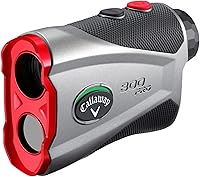
The Callaway 300 Pro offers 6x magnification, a stated range of 5 to 1,000 yards and accuracy of plus or minus 1 yard. Its external slope switch lets you turn slope off for tournament play, and the pin-locking feature can confirm a target with a short vibration.
The integrated magnet is designed to attach to a cart frame. Choose it if those laser and cart features fit your routine; it does not provide the GPS course context of a hybrid.
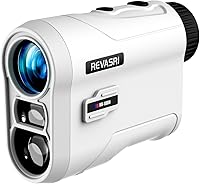
REVASRI gives a stated range of 5 to 1,000 yards and accuracy of plus or minus 1 yard. In slope-on mode, it displays angle, line-of-sight distance and a compensated distance; with the angle switch off, it displays line-of-sight distance.
The device includes a USB-C charging cable and weighs 4.3 ounces. It can suit you if you want slope control and a rechargeable laser, while GPS course maps remain a separate need.
Blue Tees states a range of up to 1,000 yards and accuracy of plus or minus 1 yard. Its display adjusts text color to lighting conditions, and the built-in magnetic strip can attach to a golf cart or another metal surface.
The Series 3 Max+ includes a USB-C to USB-A charging cable and a weather-proof carrying case. Consider it if those laser features matter most, and plan separately for GPS if you need mapped course distances.
Is slope useful on a hybrid golf rangefinder?
Slope can help you consider elevation changes between your position and the target, but it is a separate feature from GPS and laser. Some rangefinders calculate a slope-adjusted distance, while GPS may show mapped distances without that adjustment.
Competition rules may restrict slope-adjusted readings. Look for a physical switch or another clear way to disable slope, then check your event's rules and device requirements before play.
Don't assume that slope compensation tells you exactly which club to use. Wind, lie, temperature and your own shot pattern still affect club choice.
How can you decide between GPS, laser and a hybrid?
Choose based on the distance questions you face most often. A hybrid fits golfers who use mapped context and visible-target measurements; GPS or laser alone can be simpler if you rely on one method.
- Choose GPS if you mainly want mapped distances and course context, especially when targets are hidden.
- Choose laser if you prefer measuring directly to visible flags and other targets.
- Choose a hybrid if you will regularly use both and can confirm course coverage and controls.
- Choose separate devices if you want a specific GPS display and a different laser feature set.
Before buying, check the maps for courses you play, the laser's stated range and accuracy, battery needs, target-lock behavior and slope controls. A hybrid golf rangefinder is a sensible choice when both systems solve real problems in your rounds.
For slope-focused options, see our best golf rangefinder with slope.
Frequently asked questions
What is a hybrid golf rangefinder?
A hybrid golf rangefinder combines GPS course information with a laser distance tool. GPS can show distances to mapped course points, while a laser measures toward a visible target.
Check which GPS functions are included, whether course maps are available for your courses, and how the device handles updates before buying.
Is a hybrid rangefinder better than GPS or laser alone?
A hybrid can be more useful if you regularly want both mapped course context and direct measurements to visible targets. GPS alone may be simpler for front, center and back distances, while laser alone can suit players who prefer aiming at a flag or other visible point.
Your routine matters more than having both tools.
Can a golf laser rangefinder measure through trees?
No. A laser needs a clear line of sight to the target, so branches or other objects can block the beam or lead you to measure the wrong object.
GPS can still provide mapped distances when a target is hidden, if the course and relevant features are covered.
Do hybrid golf rangefinders need course maps?
The GPS part depends on mapped course information, so check coverage for the courses you play and how maps are added or updated. The laser part can measure visible targets without relying on a mapped point.
Confirm that the device's GPS features fit your needs before you pay for both systems.
Can you use slope mode in a golf tournament?
Tournament rules can restrict devices that measure elevation-adjusted distances. Some rangefinders include a switch that disables slope, but you should check the current rules for your competition and confirm that the slope function is clearly off when required.