Slope vs No Slope Golf Rangefinders: Which to Choose? (November 2026)
Choose slope if elevation changes affect your club choice; choose no slope for straight-line distance and simpler competition use. A golf rangefinder with a slope switch can serve both needs when you turn slope off for tournament play.
On this page (7 sections)
Choose slope if elevation changes affect your club choice; choose no slope for straight-line distance and simpler competition use. A golf rangefinder with a slope switch gives you both options, as long as you turn slope off when required.
Slope measures the angle of an uphill or downhill target and calculates an adjusted distance. No-slope mode shows the direct line-of-sight measurement, which is the distance most golfers use when slope compensation is disabled.
The right choice depends on your course, practice habits and competition rules. We compared the features and mode options of four rangefinders to show where each approach fits.
 Best for course-to-course flexibility
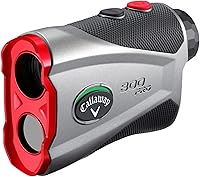
Callaway 300 Pro Golf Laser Rangefinder
What does slope add to a golf rangefinder?
Slope adds an elevation adjustment to the measured distance. That can help you consider whether a target plays longer uphill or shorter downhill than the straight-line number suggests.
A slope model measures the angle between you and the target, then calculates a compensated distance. The number is a guide for club selection, not a guarantee of where your shot will land.
Without slope, the device reports the line-of-sight distance. That can be enough on level ground or when you prefer to make elevation adjustments yourself.
Before comparing adjusted and straight-line readings, it helps to understand what line of sight means in a rangefinder. The two numbers answer different questions, so check which one is on the display.
When does slope help most?
Slope is most useful when elevation changes could affect how far a shot plays. An uphill approach may call for a different club than the same straight-line distance on level ground.
Downhill targets can also change your choice. Slope compensation gives you one more distance cue, but wind, lie, temperature and your own shot pattern still matter.
If most of your regular course is flat, slope may not change many decisions. You can still use it on occasional hills, but consider whether that feature is worth learning and checking before every round.
What does no slope show?
No-slope mode shows the straight-line distance to the target. It skips the elevation adjustment, leaving you to decide how the terrain should affect your shot.
That direct number can be easier to interpret when you already account for uphill and downhill shots on your own. It also avoids relying on an adjusted distance when you want one consistent measurement.
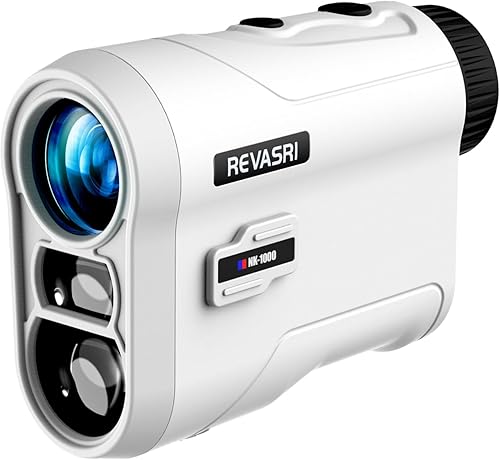
A rangefinder can have slope capability and still give a no-slope reading when the feature is switched off. Models such as the Callaway 300 Pro have an external switch, while the REVASRI has an external angle switch and shows line-of-sight distance in slope-off mode.
If you want to compare more devices with slope, see our guide to best golf rangefinders with slope. Look for a switch you can confirm at a glance if you expect to play competitions.
Can you use slope in tournament golf?
Tournament use depends on the rules for your event and whether slope is disabled. A switch alone doesn't guarantee that a rangefinder is allowed in every competition.
The Callaway 300 Pro has an external Slope On/Off Switch described as legal for tournament play when slope is off. REVASRI also describes a slope-off mode for tournament use, with only line-of-sight distance displayed.
Check the event's local rules before relying on any device. Then confirm the slope mode is off before play, especially if you used the adjusted distance during a practice round.
A model with a physical or external switch can make the setting easier to check. Still, build a quick mode check into your pre-round routine rather than assuming the rangefinder starts in the mode you need.
Which rangefinder features matter besides slope?
Choose a rangefinder that makes its active mode easy to verify and gives you the target information you actually use. A long feature list matters less if you have trouble finding the flag or reading the display.
Consider whether you want a pin-lock alert, vibration, multiple measurement modes, a rechargeable battery or a mount for your cart. For cart use, compare golf rangefinders with magnetic mounts.
These features don't replace slope, but they can affect how comfortably you use the device.
The REVASRI combines slope compensation, pin lock with vibration and a rechargeable battery. REDTIGER adds several measurement modes, including horizontal and height ranging, while Acer lists anti-shake technology and flag lock with vibration.
If you want both laser distance and satellite course information, a hybrid golf rangefinder combines GPS and laser approaches. That can suit golfers who want hole-wide context alongside a direct measurement.
How should you compare the four slope-switch models?
Compare the switch, mode display and target aids before focusing on maximum range. The useful choice is the one that fits your round and lets you read the right distance with confidence.
The Callaway 300 Pro measures incline or decline and calculates slope-adjusted distance. Its external switch and pin acquisition technology with vibration make the slope status and target confirmation central features.
REVASRI displays angle, line-of-sight distance and golf compensation distance in slope-on mode. With the angle switch off, it displays only line-of-sight distance while keeping flag lock and vibration.
REDTIGER offers slope switching plus horizontal and height ranging, speed measurement and continuous scanning among its six modes. Its rangefinder includes USB-C charging and a magnetic mount.
Acer includes slope compensation, vertical and horizontal distance, angle, speed and scanning modes. Its maker describes anti-shake technology and flag locking with vibration, which may be useful if a steady aim is a concern.
Does slope make a rangefinder harder to use?
Slope adds a mode to check, so choose a clear switch and make mode checking part of your routine. The adjustment itself can be helpful once you know whether the display shows a straight-line or compensated number.
Before a practice shot, confirm whether slope is on and note which distance appears. Before a competition round, check the event rules and switch slope off if required.
If a display shows angle, line-of-sight distance and a compensated figure together, take a moment to learn what each means. A quick read of the manual can prevent choosing a club from the wrong number.
Target acquisition also matters. A pin-lock vibration can help tell you when the device has recognized the flag, but it doesn't tell you whether slope is on.
Should you choose slope or no slope?
Choose slope for regular play on hilly courses if elevation changes affect your club choice; choose no slope if you want only the direct measurement. If you play both practice and competition rounds, a slope model with an easy-to-check switch offers flexibility.
A rangefinder without slope can still provide the distance you need on level holes. It may also suit players who prefer to estimate elevation themselves or want fewer settings to manage.
For a slope model, prioritize a switch that makes the disabled mode clear. The Callaway 300 Pro and REVASRI both describe external controls, while REDTIGER and Acer offer slope switching alongside other measurement modes.
If your main concern is how the device locates a target rather than how it adjusts distance, read about golf rangefinder triangulation. Pick the features that solve a real problem in your rounds, then check your event's rules before play.
Frequently asked questions
What is the difference between slope and no slope on a golf rangefinder?
A slope rangefinder measures the angle of incline or decline and calculates an adjusted distance. A no-slope reading gives the straight-line distance to the target.
Slope can inform club choice on uneven ground, while line of sight distance is the relevant display when slope is switched off.
Can you use a slope rangefinder in a tournament?
You can use a rangefinder with a slope switch in a tournament only when slope is turned off and the event rules allow distance measuring devices. Check the competition's current rules before play, and confirm that the device's slope setting is visibly disabled.
Is slope useful on a flat golf course?
Slope may add little on a nearly level hole because elevation changes are small. It can still be useful on uneven approaches, but compare the adjusted distance with your normal club selection instead of treating the number as a required shot.
Should a beginner buy a golf rangefinder with slope?
A beginner can benefit from slope when learning how uphill and downhill shots affect club choice. If you play events that require slope off, choose a model with a clear switch and practice checking its mode before each round.
Do you need slope if your rangefinder shows line of sight distance?
Line of sight distance gives the straight-line measurement, while slope compensation adds an adjusted distance based on elevation. If you only want the direct measurement, slope may not add value.
If elevation often changes your club choice, the adjusted number can be useful.