What Is the Point of a Golf Rangefinder?
On this page (10 sections)
- Understanding the Purpose of a Golf Rangefinder
- Why Precision Yardage Changes Your Game
- Key Features That Deliver the Value
- Strategic Course Management Becomes Easier
- Who Benefits Most from Using One?
- The Debate: GPS Devices vs. Laser Rangefinders
- Practical Tips for Using Your Rangefinder Effectively
- Final Verdict: Is It Worth It For You?
- Conclusion
- Frequently Asked Questions
Understanding the Purpose of a Golf Rangefinder
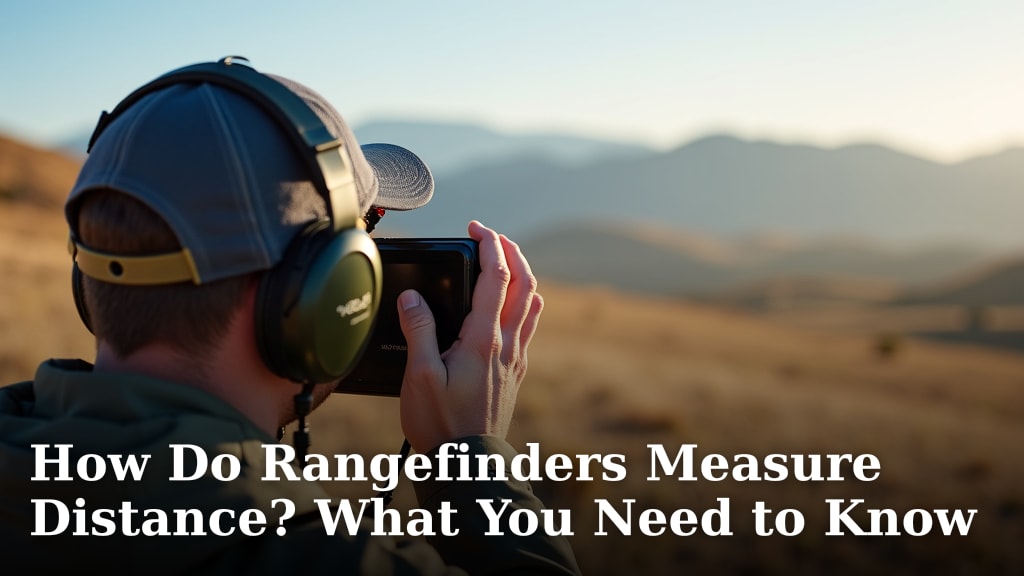
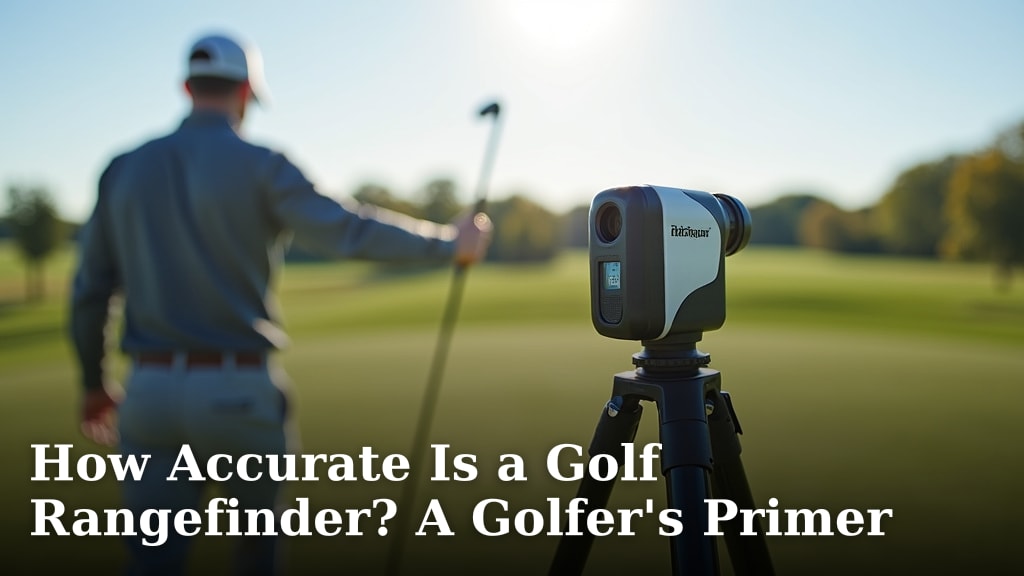
A golf rangefinder is a handheld device that uses a laser to calculate the exact distance from you to a target on the course. Its core purpose is to replace guesswork with precise numbers, helping you choose the right club with more confidence. We found that this simple act of knowing your yardages is the foundation for better scoring.
Why Precision Yardage Changes Your Game
You can’t control the wind or a tricky lie, but you can control the one thing that matters most: knowing how far you need to hit the ball. For more detail, read our handheld golf rangefinders guide.A rangefinder gives you that exact number. This isn’t about hitting perfect shots; it’s about starting with perfect information.
Eliminating Guesswork and Inconsistency
How many times have you thought, “That looks like a 150-yard shot,” only to come up short? Our eyes can deceive us, especially on hilly terrain or when looking at false fronts. A rangefinder removes that doubt. You get the true yardage to the pin, the front, or the back, allowing you to play the same shot confidently, hole after hole.
The Psychological Boost of Certainty
Knowing the exact distance does something powerful for your mental game. You stop second-guessing your club selection. This reduced mental chatter lets you focus entirely on making a good swing. Many experts, including PGA Tour coaches, point to this confidence as a major key to consistent performance.
Key Features That Deliver the Value
Not all rangefinders are created equal. The features directly support the core purpose of providing reliable, useful distance data. Here’s what to look for.
| Feature | Why It Matters for You |
|---|---|
| Pin Seeking / Flag Lock Vibration | The device locks onto the flagstick and often gives a short vibration. This confirms you’ve measured the correct target, not a tree behind it. |
| Slope Function | Adjusts the yardage for uphill or downhill shots. A 150-yard shot that plays uphill might really require a 165-yard club. This is crucial for scoring, though check local rules for tournament play. |
| Speed and Magnification | A faster processor and 6x or 7x magnification make it easier to quickly lock onto a target, especially in windy conditions or from long distance. |
| Scan Mode | Allows you to pan across the landscape and get continuous distance readings. Great for mapping out hazards and layup distances. |
Strategic Course Management Becomes Easier
With a rangefinder, you move from simply hitting shots to playing strategic golf. You have the data to make smarter decisions on every shot.
Planning Layups and Avoiding Trouble
See a water hazard or a fairway bunker? You can range the distance to it, and then range the distance to the safe landing area before it. This lets you know the exact yardage you need for your layup shot. It turns a scary decision into a calculated one.
Playing the Course Backwards
Start at the pin. Know it’s 142 yards to clear the bunker. Now, range to the front edge of that bunker. It might be 155 yards. Suddenly, you know you need a 156-yard carry to be safe. This level of planning was once only for pros with caddies; a rangefinder puts it in your pocket.
Who Benefits Most from Using One?
While any golfer can use a rangefinder, certain players gain a significant advantage. We found that mid-handicappers often see the most dramatic score improvements.
- Casual Golfers: Simplifies the game and speeds up play. No more debating yardages with your playing partners.
- Mid-Handicappers (10-20): This group struggles most with consistent distance control. A rangefinder directly attacks that weakness.
- Competitive Amateurs: In match play or stroke play tournaments (where slope is allowed), having precise yardages is a must.
- Senior Golfers: As distances naturally change with age, a rangefinder provides accurate, current numbers you can trust.
The Debate: GPS Devices vs. Laser Rangefinders
You’ll also see GPS watches and apps. They are useful, but they serve a slightly different purpose. GPS gives you distances to fixed points on a hole (front, middle, back of the green). A laser rangefinder gives you the exact distance to whatever specific point you aim at—the pin, a tree, the 150-yard marker.
Accuracy and Specificity
Lasers are generally more accurate for a precise point, often within one yard. GPS is fantastic for a quick, general overview. Many golfers we spoke with own both: a GPS for general course info and a laser for those critical approach shots.
Practical Tips for Using Your Rangefinder Effectively
Getting the tool is the first step. Using it well is how you unlock its point.
How to Get a Fast, Accurate Read
Hold the device as steady as possible. Use a tree or a fixed object behind the flag as a reference point. If it won’t lock on the pin, range the object behind it. Your reading will be a few yards longer, which is a safe club choice. Practice this at the driving range.
When NOT to Use It
During your actual swing prep, it can slow you down. Use it off the cart or after your approach shot to plan your next move. The goal is to make decisions faster, not to stand over the ball fiddling with buttons.
Final Verdict: Is It Worth It For You?
The point of a golf rangefinder is to give you control over the one variable you can most easily measure: distance. It’s a tool that provides clarity, builds confidence, and helps you make better decisions. For many golfers, we found it’s the single piece of equipment that most directly translates to lower scores and more fun on the course.
Checklist: Should You Get a Rangefinder?
- I want to stop guessing yardages and choose clubs with confidence.
- I often come up short or long on approach shots.
- I enjoy the strategic side of golf and want to plan shots better.
- I play competitively or in regular best-ball events.
- I’m looking for a way to improve my scores without overhauling my swing.
If you checked more than two of these, a rangefinder is likely a very smart investment for your game.
Conclusion
In short, a golf rangefinder provides accurate distance data to help you make smarter decisions on the course. We’ve seen how it cuts out guesswork, builds mental confidence, and simplifies your strategy. Whether you’re a casual player or competitive amateur, knowing exact yardages lets you choose clubs with more certainty. This clarity often leads to better shots and more consistent scoring. Your next step is to review the checklist in this article and decide if this tool fits your game. Give it a try on the course to see the difference for yourself.
Frequently Asked Questions
How does a golf rangefinder improve my score?
It gives you the exact distance to your target, so you can select the right club with confidence. This reduces common errors on approach shots, which often leads to more pars and fewer strokes over a round.
Can I use a rangefinder in tournament play?
It depends on the specific tournament rules. Most allow basic distance measurement, but slope-adjusted yardages are often restricted. Always check the local regulations before your round to avoid any penalties.