How Does a Rangefinder Calculate Yardage?
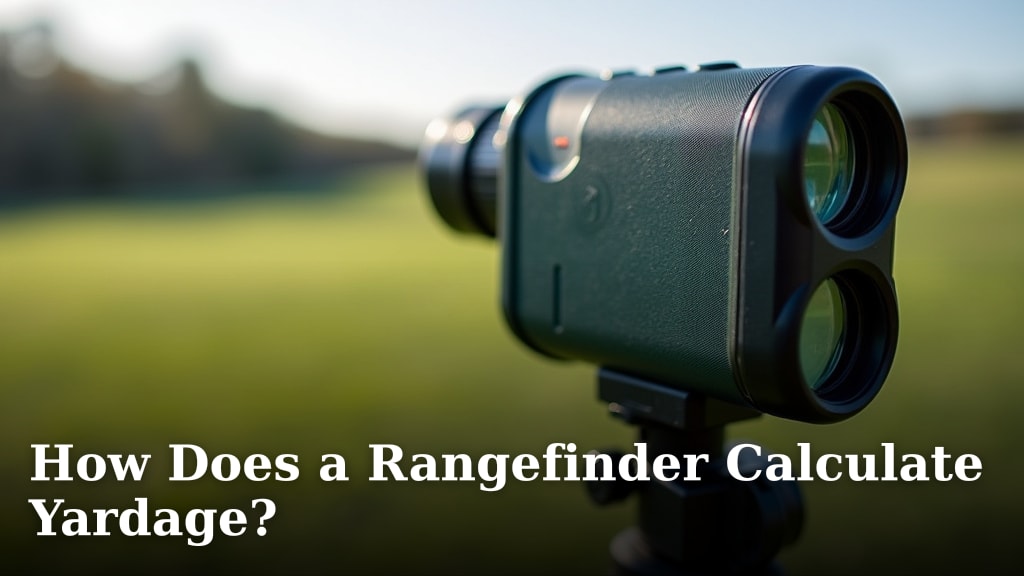
A rangefinder calculates yardage using a simple principle: it bounces a laser beam off your target and measures how long it takes for the light to return. This allows you to get an **accurate distance** almost instantly, typically within a **second or two**. Knowing the exact yardage is key for making confident shots in golf and hunting.
Think of it like shouting in a canyon and timing your echo. The laser rangefinder does this with light, which travels incredibly fast. This technology has become a **must-have tool** for many outdoor enthusiasts, helping them avoid guesswork and improve their game or hunt. It’s a smart way to get the **precise measurements** you need.
- Rangefinders use a laser beam.
- They measure the time for the beam to bounce back.
- This gives you an exact yardage reading.
- It’s a quick and reliable tool for distance.
Let’s walk through exactly how this technology works, step by step, so you can understand what’s happening inside that little device.
You’ve seen them. You’ve maybe even used one. But have you ever stopped to wonder how that little device in your hand magically tells you the exact yardage to that flag or that deer? It seems like science fiction, doesn’t it? But it’s really just clever physics. Let’s take a closer look at the science behind how a rangefinder calculates distance.
The Science of Measuring Distance with Lasers
So, how exactly does a rangefinder figure out how far away something is? It’s all about timing and a very fast beam of light. The core technology relies on a principle called time-of-flight measurement. This means the device sends out a signal and measures how long it takes for that signal to come back. Think of it like the echo you hear when you shout across a wide valley. The louder the echo and the faster it returns, the closer the walls are. A laser rangefinder works on a similar idea, but with light.
How the Laser Beam Works
At its heart, your rangefinder contains a laser emitter and a sensor. The emitter sends out a short, focused pulse of laser light. This pulse travels in a straight line towards whatever you’re aiming at. The light beam is so narrow and specific that it can hit a single target, like a golf flag or the antlers of a buck.
The Invisible Pulse
You won’t see the laser beam itself, as it’s typically in the infrared spectrum. This is a good thing! It means the laser is invisible to the human eye and won’t distract you or anything you’re aiming at. It’s like having a secret communication line with your target. This laser pulse is very quick, lasting only a tiny fraction of a second.
The Bounce and Return
When the laser pulse hits your target, it reflects off the surface. Some of that reflected light travels back towards your rangefinder. The rangefinder has a built-in sensor that’s ready to catch this returning light. The speed of light is a constant, and it’s incredibly fast: approximately 299,792 kilometers per second (or about 186,282 miles per second). That’s nearly 7.5 times around the Earth in a single second!
Calculating the Yardage
This is where the magic happens. The rangefinder’s internal computer is measuring the time between when the laser pulse was sent out and when the reflected light returns. Let’s call this the “round trip time.” Since the speed of light is known, the device can use a simple formula to calculate the distance.
The Formula
The basic physics involved is: Distance = Speed × Time. However, the laser pulse has to travel to the target and then back from the target. So, the total distance the light traveled is twice the distance to your target. Therefore, the formula your rangefinder uses is actually:
Distance to Target = (Speed of Light × Round Trip Time) / 2
Because the device is so precise and the speed of light is constant, it can calculate the yardage with remarkable accuracy. Many rangefinders can do this calculation in less than a second. That’s faster than you can blink!
Precision and Accuracy
The accuracy of the measurement depends on a few things. First, the quality of the laser and the sensor matter. Better components mean more precise readings. Second, the surface of your target plays a role. A highly reflective surface will send more light back, making it easier for the sensor to detect. Dark or angled surfaces can absorb more light, potentially leading to slightly less accurate readings.
What Makes a Rangefinder So Useful?
Why has this technology become so popular for golfers and hunters? It’s simple: confidence. Knowing the exact yardage removes guesswork. This leads to better decision-making and, ultimately, better results. Let’s break down why this is such a game-changer for outdoor enthusiasts.
For Golfers: The Edge on the Green
In golf, even a few yards can make a big difference between a perfect shot and one that lands in the sand trap or the rough. Before rangefinders, golfers relied on sprinkler heads, yardage markers on the cart path, or their own best guess. This was often inaccurate.
Club Selection Confidence
With a rangefinder, you can get the precise distance to the pin. This allows you to select the exact club you need. No more wondering if you should use a 7-iron or an 8-iron. You know the distance, and you know your clubs. This makes your approach shots more consistent and can significantly lower your scores.
Understanding the Course
Many modern rangefinders also offer features that can help you understand the course better. Some can measure distances to hazards like bunkers or water, or even to the front or back of the green. This added information helps you plan your entire shot, not just the final distance.
For Hunters: Accuracy in the Field
For hunters, accuracy is often critical, especially when taking shots at longer distances. A slight miscalculation could mean the difference between a successful hunt and a missed opportunity. Rangefinders provide hunters with the certainty they need.
Ethical and Effective Shots
Responsible hunting emphasizes making clean, ethical shots. This means ensuring you are within your effective range for the firearm or bow you are using. A rangefinder helps you confirm that your target is at an appropriate distance for a humane kill. It prevents taking shots that are too far, which can lead to wounded animals.
Planning Your Shot Placement
Knowing the exact distance also helps you account for factors like bullet drop or arrow trajectory. When you have a precise yardage, you can make the necessary adjustments for a more accurate shot placement. It takes the guesswork out of aiming and allows you to focus on making that critical shot.

Common Rangefinder Features and Their Impact
While the basic function of a rangefinder is measuring distance, many models come with extra features that can enhance your experience. Understanding these can help you choose the right one for your needs. We found that several features stand out for their practical use.
Slope Compensation
This is a big one for golfers. When you’re hitting uphill or downhill, the actual distance to the target is different from the horizontal distance displayed on the flag. Slope compensation technology measures the angle of elevation or depression and adjusts the displayed yardage to give you the “true” yardage you need to hit. This is incredibly helpful on undulating courses.
Scan Mode
Instead of taking a single reading, scan mode allows you to sweep your rangefinder across a scene. It will continuously update the distance to whatever is in your crosshairs. This is fantastic for tracking moving targets (like a deer) or quickly getting distances to multiple objects in a field.
Pin-Seeking or Target Priority Modes
These modes are designed to help you get a reading from your intended target, even if there are other objects closer by. For example, a golf rangefinder might ignore tree branches in front of the flag and lock onto the pin itself. A hunting rangefinder might prioritize larger game over distant brush.
Magnification
Most rangefinders offer some level of magnification, typically 6x. This helps you get a clearer, more focused view of your target, making it easier to aim accurately. Higher magnification can be helpful for very distant targets, but it can also make it harder to hold the device steady.
Water Resistance
Whether you’re out on a dewy golf course or in the unpredictable weather of a hunting trip, water resistance is a smart feature. It ensures your rangefinder can withstand rain, mist, or accidental splashes without damage. We found that models with IPX4 rating or higher generally offer good protection.
Here’s a quick checklist of what makes a rangefinder tick:
- A laser diode to send out the light pulse.
- A light sensor to detect the returning echo.
- A sophisticated timer to measure the travel time.
- A small computer to calculate distance using the speed of light.
- A display to show you the final yardage reading.
- A lens or scope for aiming at your target.
Conclusion
You now understand how your rangefinder turns light into precise yardage. It uses a laser pulse, measures its round trip time, and applies a simple physics formula. This technology removes guesswork, giving you the confidence for better golf swings or ethical hunting shots. Whether you’re on the fairway or in the field, knowing the exact distance is key. Consider the features like slope compensation or scan mode next time you’re choosing a device to help you make your next outdoor adventure more successful.
Frequently Asked Questions
Can I see the laser from a rangefinder?
No, you cannot see the laser beam emitted by a rangefinder. Most rangefinders use infrared light, which is invisible to the human eye. This ensures it won’t distract you or the target you’re aiming at.
What happens if the target is very dark or angled?
Dark or sharply angled surfaces can absorb more laser light, reflecting less back to the sensor. This might lead to slightly less accurate readings or require you to hold the rangefinder steadier for a better lock.
How fast does a rangefinder calculate distance?
Rangefinders calculate distance very quickly, often in less than a second. The speed of light is incredibly fast, allowing the device’s internal computer to perform the calculation almost instantly after the laser returns.
Does a rangefinder work on moving targets?
Yes, many rangefinders offer a “scan mode” that allows them to track moving targets. This mode continuously updates the distance as you sweep the device across the target, making it useful for hunting.
Why is the formula divided by two?
The formula is divided by two because the laser pulse travels to the target and then bounces back to the rangefinder. The device measures the total round trip time, so dividing by two gives you the accurate distance to the target itself.