9 Best Golf Rangefinders for Seniors (November 2026)
The best golf rangefinders for older golfers include the Callaway 300 Pro Golf Laser Rangefinder for a cart-ready laser, the REVASRI Range Finder for Golf for lightweight handling, and the GOLFBUDDY Voice 2S+ Talking GPS Rangefinder for spoken distances.
On this page (5 sections)
The best golf rangefinder for seniors is one that’s comfortable to hold, easy to read and simple to operate. The Callaway 300 Pro combines an external slope switch with a vibration pulse, while the GOLFBUDDY Voice 2S+ offers spoken distances without aiming a laser at the pin.
Age alone doesn’t determine which device will feel easiest. Think about whether you prefer looking through an eyepiece, reading a screen, hearing distances, or carrying the lightest possible device.
If you’re new to these tools, our guide to the best golf range finder for beginners explains basic choices. To understand when a distance reading helps, start with what is the point of a golf rangefinder.
Our picks at a glance
-
1
 Best for a cart-ready laser
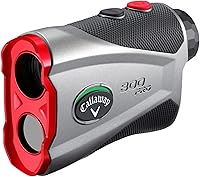
Callaway 300 Pro Golf Laser Rangefinder
9.7/10 our score
See it on Amazon -
2
-
3
 Best for spoken distances
GOLFBUDDY Voice 2S+ Talking GPS Rangefinder
9.5/10 our score
See it on Amazon
- 4
 Check it
REDTIGER Golf Rangefinder with Slope On/Off
Best for rechargeable use - 5
 Check it
Bushnell Golf Tour V6 Shift Laser Rangefinder
Best for visual and vibration alerts - 6
 Check it
Flagfront Golf Rangefinder with Slope
Best for a clear LCD readout - 7
 Check it
Acer Gadget Golf Rangefinder with Slope On/Off
Best for steadier pin aiming - 8
 Check it
Acer Pro Golf Rangefinder with Slope Switch
Best for anti-shake magnification - 9
 Check it
WOSPORTS Golf Rangefinder with Slope
Best for adjustable focus
Which golf rangefinders for seniors are easiest to use?
The easiest choice depends on what you find tiring: aiming, reading small numbers, holding a device steady, or managing several controls. These picks focus on clear feedback, simple operation, lighter handling and alternatives to laser aiming.
Callaway 300 Pro Golf Laser Rangefinder: Best for a cart-ready laser
- 6x magnification
- Pin lock up to 300 yards
- Vibration pulse confirms distance
- External slope switch
The external slope switch and short vibration pulse make the main functions easy to understand at a glance. Its integrated magnet can keep it within reach on a golf cart.
Pros
- Vibration confirms pin lock
- External slope on/off switch
- Integrated cart magnet
Cons
- Laser view requires looking through the eyepiece
- Uses a battery rather than USB-C charging
The Callaway 300 Pro is a good starting point if you want a laser with a straightforward measurement button and an external slope switch. Pin Acquisition Technology can lock onto the pin up to 300 yards away, and a short vibration pulse confirms the distance.
The built-in magnet can attach the unit to a golf cart frame, keeping it close between shots. At 8 oz, it sits between the very light REVASRI and heavier Bushnell in this group.
Its 6x magnification and stated range of 5–1,000 yards cover the basic distance-finding task. If slope compensation is not useful for a round, the external switch lets you turn it off.
Choose it if you want both a physical confirmation cue and cart access. If your hands tire quickly, compare its weight and grip with the smaller REVASRI before deciding.
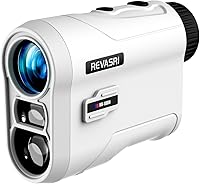
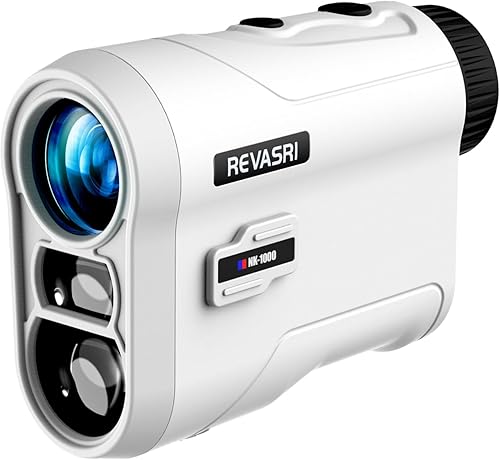
REVASRI Range Finder for Golf: Best for lightweight handling
- 4.3 oz
- Two-button operation
- Pin lock vibration
- Slope on/off
At 4.3 oz, this is the lightest laser pick here, and two buttons handle measuring and switching units. Pin lock vibration adds a confirmation cue.
Pros
- Lightweight body
- Simple two-button controls
- USB-C charging
Cons
- Still requires looking through a laser eyepiece
- Small body may be harder to hold for some golfers
The REVASRI is the lightest laser pick here at 4.3 oz, with a compact body measuring 3.8 x 2.6 x 1.3 in. Its two-button layout separates measurement from changing between yards and meters.
When the pin overlaps with the background, you can hold the measurement button to scan. The unit vibrates after it recognizes and locks onto the flag, giving you a physical confirmation.
It also has a slope mode and a switch for turning slope off. The lens is fully multilayer coated, which REVASRI says enhances light transmission and reduces reflected light.
Choose it if low weight and simple controls matter most. Its compact size may feel less secure if you prefer a larger grip, so compare it with our best compact golf rangefinder picks.
GOLFBUDDY Voice 2S+ Talking GPS Rangefinder: Best for spoken distances
- One-button distance update
- Audio and screen information
- Clip-on design
- Front, center and back green distances
The Voice 2S+ gives front, center and back distances through audio and a small screen. Its clip-on design and one-button update can reduce the need to hold and aim a laser.
Pros
- Spoken distances
- Clip-on, hands-free use
- Front, center and back green readings
Cons
- Uses GPS rather than a laser aimed at the pin
- Audio volume and screen are adjustable, but the display is only 1 inch
The GOLFBUDDY Voice 2S+ avoids the need to aim at the flag: press one button to hear distances to the front, center and back of the green. It also shows those distances on a 1-inch LCD, so you can choose audio or screen feedback.
The clip-on unit can attach to a hat or belt for hands-free carrying. You can adjust the voice volume from 0 to 5, and the device includes automatic course and hole recognition.
This is a GPS device, so its distance information is based on the course and green rather than a laser measurement of the exact pin position. Consider how you prefer to receive distance information before choosing it.
If spoken directions sound easier than reading a small screen, this is the clearest alternative in the group. Read our guide to what a golf rangefinder can measure to compare laser readings with other distance information.
REDTIGER Golf Rangefinder with Slope On/Off: Best for rechargeable use
- 7x magnification
- Slope switching
- Flag lock vibration
- USB-C charging
USB-C charging avoids replacing a disposable battery, while flag lock vibration confirms a target. The 6.4 oz weight is manageable for golfers who prefer a handheld laser.
Pros
- USB-C rechargeable
- Vibration flag confirmation
- Magnetic attachment
Cons
- Several measurement modes add choices
- Not recommended for rainy or foggy days
The REDTIGER pairs a vibration flag-lock alert with USB-C charging and a magnetic mount. Its 7x magnification and transflective LCD may appeal if you want a larger magnified view, while the 6.4 oz weight keeps it lighter than several other laser picks.
It offers six measurement modes, including slope compensation, flag locking, horizontal and height distance, speed and continuous scan. That range of options may be useful for golfers who want more than basic pin distance, but it adds functions to learn.
The slope switch turns slope off for tournament play. REDTIGER also says its water resistance is not intended for rainy or foggy days.
Choose it if rechargeable power and cart access matter. If multiple modes sound like extra work, the two-button REVASRI or one-button GOLFBUDDY may be a better match.
Bushnell Golf Tour V6 Shift Laser Rangefinder: Best for visual and vibration alerts
- 6x magnification
- Red visual ring and vibration confirm flag lock
- External slope switch
- Magnetic cart mount
A flashing red ring and vibration both confirm when the flag is locked. The 16 oz weight makes this a heavier choice, though its magnetic mount offers convenient cart access.
Pros
- Two kinds of flag-lock confirmation
- External slope switch
- Magnetic cart mount
Cons
- Heaviest laser in this group
- Requires looking through an eyepiece
The Bushnell Tour V6 Shift gives two confirmation cues when it locks onto the flag: a flashing red visual ring and a vibration. An external slope switch turns slope compensation on or off, and its magnetic mount lets you attach it to a cart or another metal surface.
Its 6x magnification and stated 5–1,300 yard range offer a wide measurement range. The tradeoff is weight: at 16 oz, it’s the heaviest laser in this roundup.
Choose it if you want both a visual and physical confirmation and expect to use a cart mount. If carrying weight matters more, the 4.3 oz REVASRI is a lighter option.
Flagfront Golf Rangefinder with Slope: Best for a clear LCD readout
- High-definition LCD display
- 6x magnification
- Flag lock vibration
- Rechargeable
Flagfront pairs an LCD readout with 6x magnification and vibration confirmation. Its rechargeable design avoids disposable batteries, though the controls and display still need to suit your eyesight and grip.
Pros
- LCD display
- Vibration confirms flag lock
- Rechargeable
Cons
- No exact dimensions provided here
- Slope switch details are not specified
Flagfront combines a high-definition LCD with 6x magnification and a vibration alert for flag lock. Its rechargeable battery means you can charge the unit rather than swap a disposable battery.
The feature list keeps attention on core distance finding, slope compensation and continuous scanning. The information doesn’t give exact dimensions or describe a separate slope switch, so check that the control layout suits your needs before choosing it.
This pick may suit someone who values an LCD and a vibration cue. Compare the physical size in person if grip comfort is a deciding factor.
Acer Gadget Golf Rangefinder with Slope On/Off: Best for steadier pin aiming
- Anti-shake technology
- Bright LCD display
- Flag lock vibration
- USB-C rechargeable
Anti-shake technology, a bright LCD and vibration on flag lock address common aiming and reading concerns. It weighs 11.2 oz, so compare that with what feels comfortable to hold.
Pros
- Anti-shake feature
- Bright LCD display
- USB-C rechargeable
Cons
- M button changes among multiple modes
- Heavier than the lightest laser picks
Acer Gadget’s anti-shake technology is designed to support steadier measurements, and its bright LCD aims to make readings easier to see. It also has flag lock vibration and USB-C charging.
The unit weighs 11.2 oz and offers six modes, switched with the M button. Those modes include slope compensation, vertical and horizontal distance, angle, speed and scanning, so the controls take more learning than a basic two-button model.
Choose it if anti-shake support and a bright display are priorities. If you want to explore other options for steadier aiming, see our guide to the best golf rangefinder for shaky hands.
Acer Pro Golf Rangefinder with Slope Switch: Best for anti-shake magnification
- 7x magnification with anti-shake technology
- Transflective LCD
- Pin lock vibration
- External slope switch
The 7x view, anti-shake technology and transflective LCD aim to make pin viewing steadier and clearer. The external slope switch turns slope compensation off while keeping pin lock and vibration active.
Pros
- Anti-shake technology
- External slope switch
- USB-C rechargeable
Cons
- Multiple measurement modes require learning
- Compact measurements may not suit every grip
The Acer Pro combines 7x magnification with anti-shake technology, a transflective LCD and vibration confirmation when it locks onto the pin. An external slope switch turns off slope information while keeping pin lock and vibration active.
Its 6-in-1 setup includes flag lock, slope, horizontal distance, vertical distance, speed and continuous scan. You change modes with the M button, and holding it switches between meters and yards.
Choose it if you want anti-shake support and an external slope switch. The multiple modes may be more than you need if your main goal is one clear distance reading.
WOSPORTS Golf Rangefinder with Slope: Best for adjustable focus
- Adjustable eyepiece
- 6x magnification
- Flag lock vibration
- Two-button operation
An adjustable eyepiece lets you focus the view, and two-button operation keeps the control layout simple. Its vibration alert confirms flag lock, and the magnetic mount keeps it accessible on a cart.
Pros
- Adjustable eyepiece
- Two-button operation
- Vibration confirms flag lock
Cons
- Laser view still requires aiming
- Slope mode is one of four measurement modes
The WOSPORTS rangefinder has an adjustable eyepiece for focusing, two-button operation and vibration confirmation when it locks onto the flag. It also supports slope compensation and has a built-in magnetic mount.
At 145 g, it is lighter than the Bushnell but heavier than the REVASRI. Four modes cover straight-line distance, angle, continuous scan and vertical distance, so it offers more choice than a basic distance-only device.
Choose it if you want to adjust the eyepiece and prefer two-button controls. Its magnetic mount can keep it within reach on a cart, and a carrying case and carabiner come with it.
Which features make a rangefinder easier for older golfers?
A readable display, clear confirmation cue and comfortable grip matter more than a long feature list. Check whether the device is easy to hold and operate before you focus on extra measurement modes.
Start with the display and view. A bright LCD, transflective screen or adjustable eyepiece may help, but screen size and contrast affect each golfer differently, so try to view the numbers at a normal playing distance.
Next, consider feedback. Vibration confirms a flag lock on several laser models here, while the GOLFBUDDY provides spoken distances and a screen.
If your hands shake while aiming, compare models with anti-shake features and browse our rangefinder guide for shaky hands.
Weight and shape matter during a full round. The REVASRI is 4.3 oz, the Callaway is 8 oz, and the Bushnell is 16 oz, giving you a useful range to compare by holding each model.
Finally, count the controls you’ll use. One-button or two-button layouts can be easier to remember than a device with six measurement modes, especially if you only need a distance to the pin.
Is a laser or GPS rangefinder easier for seniors?
A GPS unit can be easier if you want a button press or spoken yardages without aiming at the pin. A laser can provide a reading to a target you select, but you need to point it steadily and read the display.
The GOLFBUDDY Voice 2S+ announces front, center and back distances and clips to a hat or belt. A laser such as the Callaway 300 Pro measures to the target you aim at and gives a vibration pulse when it locks onto the pin.
For more context on the role these tools play, see what a golf rangefinder is for. If you’re comparing GPS and laser functions, our easy guide to golf rangefinder measurements explains common readings.
What should seniors check before choosing a golf rangefinder?
Check the control layout, display, weight, charging method and slope switch before choosing a model. Then consider whether its extra functions fit your game or add steps you won’t use.
- Display: Can you read the numbers without straining?
- Grip: Does the body sit securely in your hand?
- Weight: Would you rather carry a 4.3 oz unit or use a heavier model with a cart mount?
- Feedback: Do you prefer vibration, a flashing visual alert or spoken directions?
- Controls: Will you use the extra modes, or would fewer buttons suit you better?
- Power: Do you prefer rechargeable USB-C power or a replaceable battery?
- Slope: Can you switch slope compensation off if you play under tournament rules?
A few connected gear choices can also affect comfort on the course. If you’re planning footwear, compare best spiked golf shoes, and for a golf gift, see golf balls with designs and our guide to what a golf ball sleeve is.
Which golf rangefinder should seniors choose?
Choose the Callaway 300 Pro if you want a laser with an external slope switch, vibration confirmation and a cart magnet. Choose the REVASRI for a lighter body and simple controls, or the GOLFBUDDY Voice 2S+ if you’d rather hear green distances than aim at a pin.
For a steadier view, compare the Acer Gadget and Acer Pro, both of which feature anti-shake technology. The best golf rangefinder for seniors is the one you can read, hold and operate comfortably through a round.
Our top 3 picks at a glance
-
1
Best for a cart-ready laser
Callaway 300 Pro Golf Laser Rangefinder
9.7/10 our score
See it on Amazon -
2
-
3
Best for spoken distances
GOLFBUDDY Voice 2S+ Talking GPS Rangefinder
9.5/10 our score
See it on Amazon
Frequently asked questions
What should seniors look for in a golf rangefinder?
Prioritize a display you can read, controls you can operate without confusion, and a weight and shape that feel comfortable in your hand. A laser with vibration confirmation can help signal a pin lock, while a talking GPS can give distances without aiming through an eyepiece.
If possible, handle the device before choosing.
Is a golf GPS easier to use than a laser rangefinder?
A GPS device can be easier if you prefer a button press and spoken distances to aiming a laser at the flag. The GOLFBUDDY Voice 2S+ reports front, center and back green distances through audio and its screen.
A laser can give a direct distance to a selected target, but you need to aim and read its display.
Do vibration alerts help when using a rangefinder?
A vibration alert can confirm that a rangefinder has locked onto the flag, which gives you a physical cue without relying only on a screen message. Several laser picks here include that feature.
It doesn't replace a readable display, so consider both how you receive the confirmation and how you'll read the distance.
Should seniors choose a rangefinder with slope?
Slope compensation can account for uphill or downhill shots and show a slope-adjusted distance. Choose a model with a slope switch if you also play events where slope must be off, then follow the event's equipment rules.
A simpler model may be preferable if you don't need the extra mode.