Golf Rangefinder Triangulation: Buying Guide
Golf rangefinder triangulation measures a target from a known position, such as your cart, without walking to the ball. Check how the system finds your ball, how it handles line of sight, and whether its distance is clear enough to guide your next shot.
On this page (8 sections)
- What does golf rangefinder triangulation measure?
- How is triangulation different from a handheld laser?
- Which features matter before you buy?
- Which rangefinder features can help with cart play?
- How do triangulation and slope work together?
- What should you check before relying on a remote distance?
- Is golf rangefinder triangulation right for you?
- FAQs
Golf rangefinder triangulation measures a target from a known position, such as your cart, without walking to the ball. Before buying, check how the system finds your ball, whether it can see the target, and whether it reports the distance you need for your shot.
A standard laser measures from you to a visible target. A cart system that estimates ball-to-pin distance needs another position input, such as the ball's location, and a way to combine that with the pin measurement.
The word “triangulation” alone doesn't tell you how a device gets those positions. Compare the measurement method and display, then decide whether a remote estimate fits your pace of play.
What does golf rangefinder triangulation measure?
Golf rangefinder triangulation estimates the distance from your ball to the pin using measurements from a known location. A cart-based setup can be useful when you want a distance without walking over to the ball first.
The term may describe different systems, so focus on the inputs and result rather than the label. A typical setup needs to locate the cart, locate or identify the ball, and measure or map the pin.
| Measurement | What it tells you | What to check |
|---|---|---|
| Cart to pin | Distance from the cart's position to the flag | Whether the cart can see the pin |
| Cart to ball | Distance from the cart to your ball | How the system identifies or measures the ball |
| Ball to pin | Estimated distance between your ball and the flag | Whether the number is calculated from current position data |
| Slope-adjusted distance | A distance adjusted for elevation change | Whether slope can be switched off when needed |
A cart-to-pin reading is not automatically your ball-to-pin distance. If your ball is several yards ahead or to one side of the cart, the two readings can differ.
Ask what the screen calls each measurement. Clear labels help you avoid choosing a club based on a cart distance when you need the distance from your ball.
How is triangulation different from a handheld laser?
A handheld laser rangefinder measures the straight-line distance from its position to a target it can see. A triangulation system uses position information to estimate the distance between your ball and the pin, even when you measure from a cart.
With a handheld laser, you normally stand near your ball and aim at the flag. The device may help isolate the pin from objects behind it, but it still depends on a clear line of sight.
Our guide to What Is Line of Sight in a Rangefinder? Explained covers what can block or affect that measurement.
A remote estimate adds steps: the system needs to know where the ball is, know where the pin is, and calculate the gap between them. If one input is missing or out of date, the displayed estimate may not match your current shot.
If you prefer to aim from beside your ball, learn what a handheld golf rangefinder is and compare its direct measurement with a remote system.
Which features matter before you buy?
Choose a golf rangefinder with triangulation based on its position inputs, measurement labels, and ease of use from the cart. These details determine whether the calculated distance can help with the shot you are about to play.
How does a golf rangefinder with triangulation locate the ball?
Check whether the system needs you to mark the ball, use a tag, connect a separate device, or rely on mapped location data. The method affects setup time and how much you need to do after each shot.
Ask how the system responds when it cannot identify the ball. A useful device should make it clear when a reading is unavailable or uncertain, rather than leaving you to guess what the number represents.
Also check whether it updates the ball position during a round. A location from an earlier shot won't help if the ball has moved or you are measuring for a new shot.
Can the cart see the pin from your position?
A remote measurement still depends on a usable view or another way to locate the target. Trees, hills, buildings, and the cart's position can affect whether the system can identify the pin.
Think about the courses you play. If you often park behind a rise or under trees, compare a remote system with a laser you can carry closer to the ball.
A standard laser's line-of-sight limits also matter if you plan to use both approaches. Check whether the device can lock onto the flag when there are trees or other objects behind it.
Is the displayed number ball-to-pin or cart-to-pin?
Read the display labels and manual examples before you buy. The number should identify whether it measures from the cart, from the ball, or includes an elevation adjustment.
Look for separate, clear indications for the measured distance and any calculated distance. A simple label can prevent confusion when you move the cart between shots.
If GPS is part of the setup, compare how it determines location in our guide to how a GPS rangefinder works. GPS-based position and a laser reading solve different parts of the measurement.
Does it include slope compensation?
Slope compensation adjusts distance for elevation change, while triangulation estimates the gap between two positions. These are separate features, even if a device offers both.
If you want slope, check whether the adjustment can be switched off and how the device shows the current mode. Tournament rules can restrict slope functions, so confirm the rules for your event before playing.
See golf rangefinder slope versus no slope for help comparing those options.
Is a hybrid rangefinder a better fit?
A hybrid combines GPS information with a laser measurement, which may give you more than one way to get a distance. It can suit cart players who want mapped distances as well as a direct reading to a visible target.
Compare the extra setup and screen information with what you will use during a round. Our hybrid golf rangefinder guide explains what to check when choosing GPS and laser together.
Which rangefinder features can help with cart play?
For cart play, prioritize an easy-to-read distance, a clear target lock, and a way to keep the device close at hand. A magnetic mount can help with access, while vibration can confirm that a laser has locked onto a target.
These features do not create triangulation by themselves. They can make a conventional laser more convenient to use from the cart or when you step out to measure near your ball.
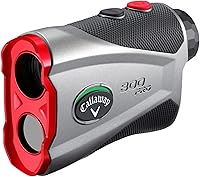
Callaway 300 Pro Golf Laser Rangefinder
The Callaway 300 Pro suits cart players who want a laser with a built-in cart magnet and a visible slope switch. It measures line-of-sight distance, so it does not by itself calculate a remote ball-to-pin position.
Its Pin Acquisition Technology can lock onto a pin up to 300 yards away, and a short vibration confirms the distance. The rangefinder has 6x magnification and measures in yards or meters.
Choose it if you want a direct laser reading and cart access. If you need a calculated ball-to-pin reading from the cart, confirm that the system you choose supports that measurement.
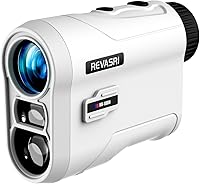
REVASRI Range Finder for Golf
The REVASRI suits golfers who want a laser with slope compensation, flag locking, and vibration confirmation. Its slope-off mode displays line-of-sight distance while keeping flag lock and pulse vibration available.
The rangefinder measures in yards or meters and has a built-in rechargeable battery with a low-battery indicator. Its stated measurement range is 5 to 1,000 yards, with ±1 yard accuracy.
Choose it if you want those features in a portable laser. It still measures from the device to the target, rather than locating a ball remotely and calculating the ball-to-pin gap.
Blue Tees Golf Series 3 Max+ Golf
The Blue Tees Golf Series 3 Max+ suits golfers who want a laser with a magnetic strip, slope switch, and display that adjusts text color to lighting conditions. Its flag lock uses short vibrating pulses to confirm a target.
It offers 6x magnification and a stated range of up to 1,000 yards, with ±1 yard accuracy. The rechargeable battery uses USB-C charging.
Choose it if convenient storage and its display features matter to you. Like the other lasers here, it measures to a visible target and does not provide remote triangulation on its own.
How do triangulation and slope work together?
Triangulation estimates distance between your ball and the pin, while slope compensation adjusts a distance for elevation change. If a device includes both, check which distance gets the slope adjustment and how the display marks it.
A remote system might first calculate a ball-to-pin gap, then apply an elevation adjustment. The device should make each result clear enough that you can distinguish a straight-line measurement from a recommended or slope-adjusted number.
Confirm how to turn slope off if you play in events where it is restricted. Our guide to the best golf rangefinder with slope compares the slope features that may matter to your choice.
What should you check before relying on a remote distance?
Check the measurement method, position updates, and target visibility before treating a remote number as your playing distance. A device is only useful when you know where its measurement starts and what target it uses.
Use this short checklist while comparing devices:
- Identify the source of the ball position. Confirm whether you mark the ball or the device detects it another way.
- Check how it finds the pin. Look for a direct laser reading, mapped location, or another clearly described method.
- Read the distance labels. Know whether the screen shows cart-to-pin, ball-to-pin, or slope-adjusted distance.
- Check the update process. Confirm that the device refreshes after each shot.
- Consider blocked views. Think about the trees, slopes, and cart paths on your regular courses.
- Confirm mode controls. Check how slope turns off and how the device shows that it is off.
- Check power and access. Consider battery charging or replacement, mounting, and how easily you can read the display.
If the method is vague, ask the manufacturer how the device locates the ball and calculates distance. The answer should explain what the unit measures and where the displayed number begins.
Is golf rangefinder triangulation right for you?
Choose triangulation if you want a cart-based estimate from your ball to the pin and are comfortable with how the system gets both positions. Choose a handheld laser if you prefer a direct reading while standing beside the ball.
Cart players who want both mapped and direct readings can compare a hybrid. Before buying, check line of sight, distance labels, position updates, battery needs, and slope controls against the way you play.
FAQs
What does triangulation mean on a golf rangefinder?
Triangulation means estimating a target's location from measurements taken at known positions. For golf, a cart-based system may combine a distance measurement to the ball with the ball's GPS position, then calculate the distance from the ball to the pin.
Check the device's method and supported setup before relying on that label.
Can a laser rangefinder measure from a cart to the pin?
A laser rangefinder can measure the straight-line distance from where you stand to a target it can see, such as the pin. It does not automatically know where your ball lies.
A cart-based triangulation system needs a way to identify or measure the ball's position before calculating ball-to-pin distance.
Is triangulation distance the same as slope-adjusted distance?
No. Triangulation estimates distance between two locations, while slope compensation adjusts a measured distance for elevation change.
A device can offer one, both, or neither. Check how it labels each number so you know whether the displayed distance is straight-line, ball-to-pin, or slope adjusted.
What should I check before buying a golf rangefinder with triangulation?
Confirm how it locates your ball, what equipment or setup it needs, and whether the measured distance is from the ball to the pin. Then check line-of-sight limits, unit choices, display readability, battery needs, and whether you can turn off slope compensation for tournament play.
Can I use a rangefinder with triangulation in a tournament?
Tournament use depends on the device's functions and the competition's rules. Slope compensation may need to be disabled, and local rules can restrict other distance features.
Check the event's current rules and confirm how the device signals that slope mode is off before play.
Frequently asked questions
What does triangulation mean on a golf rangefinder?
Triangulation means estimating a target's location from measurements taken at known positions. For golf, a cart-based system may combine a distance measurement to the ball with the ball's GPS position, then calculate the distance from the ball to the pin.
Check the device's method and supported setup before relying on that label.
Can a laser rangefinder measure from a cart to the pin?
A laser rangefinder can measure the straight-line distance from where you stand to a target it can see, such as the pin. It does not automatically know where your ball lies.
A cart-based triangulation system needs a way to identify or measure the ball's position before calculating ball-to-pin distance.
Is triangulation distance the same as slope-adjusted distance?
No. Triangulation estimates distance between two locations, while slope compensation adjusts a measured distance for elevation change.
A device can offer one, both, or neither.
Check how it labels each number so you know whether the displayed distance is straight-line, ball-to-pin, or slope adjusted.
What should I check before buying a golf rangefinder with triangulation?
Confirm how it locates your ball, what equipment or setup it needs, and whether the measured distance is from the ball to the pin. Then check line-of-sight limits, unit choices, display readability, battery needs, and whether you can turn off slope compensation for tournament play.
Can I use a rangefinder with triangulation in a tournament?
Tournament use depends on the device's functions and the competition's rules. Slope compensation may need to be disabled, and local rules can restrict other distance features.
Check the event's current rules and confirm how the device signals that slope mode is off before play.