Golf vs Hunting Rangefinder: Which Should You Choose? (October 2026)
Choose a golf rangefinder for flagsticks and a hunting rangefinder for field targets and scan modes. Some models can cross over, but target features and how you use them should guide the choice.
On this page (9 sections)
- Golf vs hunting rangefinder: what is the main difference?
- Which rangefinder suits golf course targeting?
- Which rangefinder suits hunting?
- Can you use a golf rangefinder for hunting?
- Can you use a hunting rangefinder for golf?
- Which cross-use rangefinder is the better fit?
- What should you compare before choosing?
- Which type should you choose?
- FAQ: golf and hunting rangefinder use
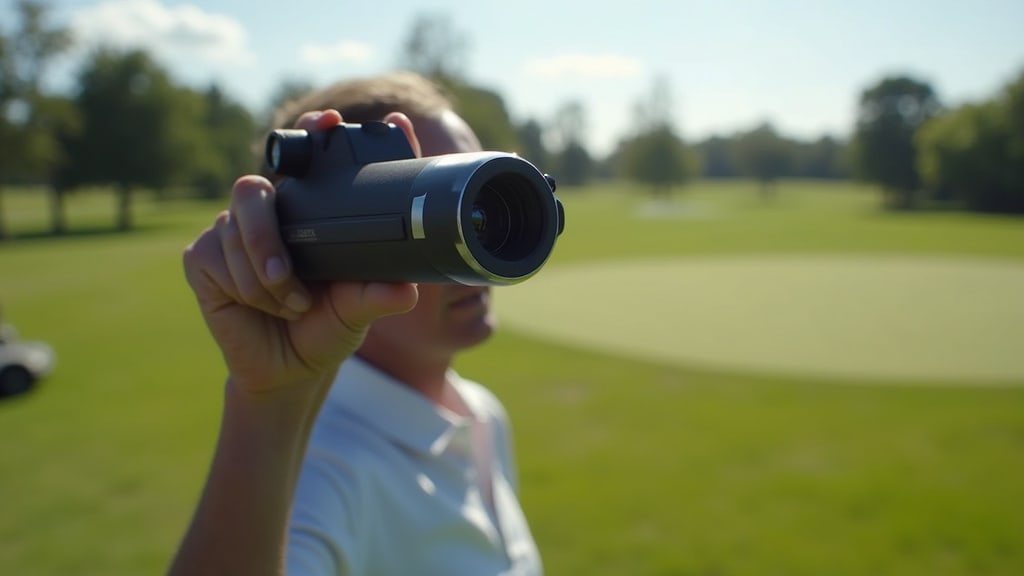
Choose a golf rangefinder for flagsticks and a hunting rangefinder for field targets and scan modes. The golf vs hunting rangefinder choice depends on what you need to target and which readings help you make a decision.
Golf models often make it easier to lock onto a flagstick. Hunting models may offer scan or terrain-related readings that help you assess an area before taking a shot.
Some devices bridge both uses. Compare the targeting method, measurement modes and rules for your activity before deciding whether one rangefinder can cover both.
 Best for golf course pin targeting
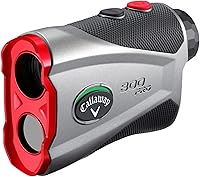
Callaway 300 Pro Golf Laser Rangefinder

Golf vs hunting rangefinder: what is the main difference?
Golf rangefinders focus on measuring course targets such as pins; hunting models often include modes for checking terrain and field targets. The labels suggest a main use, but the features matter more than the label.
On a golf course, the flagstick is a small target that can sit in front of trees or other objects. Pin-locking technology can help distinguish it from the background, and some devices signal when they lock on.
In a hunting area, you may want to measure more than the straight-line distance to one target. A scan function can help you check several points while aiming across a lane or terrain.
A handheld device still needs a clear line of sight to the target. Learn what a handheld golf rangefinder is and how it works if you want a closer look at aiming and reading distances.
Which rangefinder suits golf course targeting?
Choose a golf-focused model when flagstick lock, slope options or course access are your priorities. These features can make it easier to get a useful distance during a round.
The Callaway 300 Pro has Pin Acquisition Technology that can lock onto a pin up to 300 yards away. Its pulse feature emits a short vibration to confirm the distance, and an external switch turns slope measurement on or off.
The Acer Gadget golf rangefinder also offers flagpole locking with vibration. It has slope on/off and adds vertical and horizontal distance, angle, speed and scan modes, which gives it a broader feature mix.
A useful rangefinder supports a decision you already need to make. This guide to the point of using a golf rangefinder explains how golfers use distances to plan a shot.
How golf pin locking differs from scanning
Pin locking aims to help separate a flagstick from objects behind it. Scan mode, by contrast, lets you take readings across more than one target or point as you move the device.
Those functions can serve different needs, even when one rangefinder has both. Decide whether you mainly want a confirmed flag distance or repeated readings across an area.
Golf rules can also affect the choice. A model's slope switch doesn't guarantee that it is permitted in every event, so check the rules that apply to your round; our guide covers whether pros can use rangefinders.
Which rangefinder suits hunting?
Choose a hunting-focused model when field measurements, scan mode or speed readings matter to your use. These functions can help you assess distance and terrain before deciding what to do.
The TIDEWE Hunting Rangefinder measures straight-line, vertical and horizontal distance, as well as speed. Its continuous scan function is designed for ranging across trees, brush edges, trails and other points in the field.
The AOFAR HX-700N offers range and speed modes. It has a simpler set of stated functions than the TIDEWE, which may suit someone who wants basic distance checks without extra measurement modes.
Neither description makes a rangefinder suitable for every hunting situation. Consider the targets and conditions where you'll use it, and check applicable regulations and safe-use guidance.
Do scan and angle modes matter?
Scan mode is useful when you want to take readings across multiple points without repeatedly starting from scratch. Vertical and horizontal distance functions can offer different measurements from straight-line range.
The TIDEWE includes those measurements alongside speed and scan modes. The Acer also includes scan, speed, angle, and vertical and horizontal distance functions, making it a possible crossover option for someone who also plays golf.
Choose modes you understand and can use safely. Extra functions add little if you don't need them or can't read the display clearly in your usual conditions.
Can you use a golf rangefinder for hunting?
Yes, you can use a golf rangefinder for hunting if its range and target handling suit the situation. A golf model may work for a visible target, but it may lack field-oriented functions you'd prefer.
A pin-lock feature is designed to help identify a flagstick against a background. It doesn't automatically mean that the device will perform the way you want with every hunting target.
For occasional crossover use, compare the available range, display and modes first. The best rangefinders for golf and hunting can help you explore models intended to serve both activities.
For regular hunting, a dedicated model with scan or terrain measurements may be a closer fit. Also consider how the device will be carried and operated in the field.
Can you use a hunting rangefinder for golf?
Yes, a hunting rangefinder can measure a golf target, but it may not make flagsticks as easy to isolate as a golf-focused device. Look for flag or pin targeting if you want a clearer lock confirmation.
The TIDEWE provides distance, vertical, horizontal, speed and scan functions, but its stated features don't include a golf pin-lock function. The AOFAR has range and speed modes, without a stated flag-lock feature.
A hunting model may still give you a distance to a visible pin. The question is whether that reading is easy to acquire when the flag is near trees or other background objects.
Check whether the course or event allows your device and its modes. If the rangefinder has slope features, learn how to switch them off and confirm that this meets the applicable rules.
Which cross-use rangefinder is the better fit?
Choose a crossover model only if its course and field features cover the uses you actually have. A long feature list isn't a substitute for a target mode you need.
The Acer offers flagpole locking with vibration, a slope on/off switch, and scan and speed modes. That combination may suit golfers who also want field readings, though its stated features don't describe a dedicated hunting design.
The Callaway offers golf-specific pin acquisition and slope switching, while the TIDEWE offers a wider set of hunting-oriented readings. The AOFAR keeps its stated functions to range and speed modes.
If you regularly play and hunt, compare how you'll carry the device and which display and controls you can use comfortably. Consider a dedicated device for each activity if target acquisition or field modes are central to both.
What should you compare before choosing?
Compare target lock, measurement modes, usable range and event rules before choosing by category name. Those details reveal whether a model fits your actual use.
Start with the target. Golfers often benefit from a pin or flagpole lock, while hunters may value scan or terrain readings, depending on where they range.
Next, compare the functions you need. Slope measurement, horizontal or vertical distance, speed and scan mode are separate features, and each model offers a different mix.
The listed ranges in this group run from 3 to 1,000 yards. A larger maximum range doesn't guarantee an easy reading on every target, so match the device to the distances and targets you expect.
Finally, check the event rules, hunting regulations, controls and included carrying options. A feature is useful only if it suits your activity and you can use it correctly.
Which type should you choose?
Pick a golf rangefinder for flagstick targeting, a hunting model for field measurements, and a crossover model when you need both sets of features. Let your main activity decide where to compromise.
The Callaway 300 Pro is the clearest fit here for golf pin targeting, with Pin Acquisition Technology and a slope on/off switch. The TIDEWE fits buyers who want multiple hunting-oriented measurements and continuous scan.
The Acer spans both categories with flagpole locking, slope switching and several field-style modes. Choose it if that mix matches your uses; choose a dedicated model when one activity's targeting needs come first.
For a golf-only choice, start with flag-locking and course rules. For hunting, start with the field modes you need and the conditions where you'll use them.
FAQ: golf and hunting rangefinder use
Can a golf rangefinder measure a deer?
A golf rangefinder can measure distance to a visible target if it can acquire that target and the distance is within its range. Its pin-lock feature is designed around golf targets, so don't assume it will identify every field target well.
Check the model's functions and practice safe use.
Do hunting rangefinders have slope?
Some hunting rangefinders measure vertical or horizontal distance, while others focus on basic range or speed modes. Features vary by model.
Check which measurements are available and whether the device displays them in a way you can understand before relying on them.
Is one rangefinder enough for golf and hunting?
One rangefinder may cover both activities if it has the targeting and measurement features you need for each. A crossover model can save you from carrying two devices, but it may involve compromises in pin locking or field modes.
Compare the exact functions against how you plan to use it.
Does a golf rangefinder need a slope switch?
A slope switch is useful if you want slope-adjusted distances during practice and need to disable that function for certain rounds. It doesn't determine whether a device is allowed in every competition.
Check the rules for the course or event you plan to play.
What is more useful for hunting, scan mode or speed mode?
Scan mode helps you take readings across several points, while speed mode measures the speed of a moving target. Which matters more depends on your use and the device's instructions.
Learn the controls before field use and follow applicable safety rules.
Frequently asked questions
Can you use a golf rangefinder for hunting?
Yes, a golf rangefinder can measure distance to a hunting target if you can aim at it and the device's range covers it. Golf models may prioritize locking onto a small flagstick, while hunting models may add scan, angle or speed modes.
Check the exact functions and local hunting rules before using one.
Can you use a hunting rangefinder for golf?
You can use a hunting rangefinder to measure distances on a golf course, but it may not lock onto a flagstick as easily as a golf-focused model. Look for pin or flagpole targeting if that matters, and check course rules on slope features and rangefinder use.
What is the main difference between golf and hunting rangefinders?
Golf models often focus on locking onto a flagstick and may include slope measurement with a way to turn it off. Hunting models commonly offer field-oriented modes such as scan, horizontal or vertical distance, and speed.
Feature sets vary, so compare the controls and modes of the specific models.
Is a rangefinder with slope allowed in golf?
Rules and event policies can restrict distance devices that measure slope, even when a device can display slope-adjusted distances. A switch that turns slope off may help with compliance, but it doesn't decide whether a device is permitted in a particular event.
Check the applicable rules before play.