How Do Rangefinders Measure Distance? What You Need to Know
Rangefinders measure distance by bouncing a beam of light or laser off an object and timing how long it takes for the reflection to return. This technology is surprisingly straightforward. They use this travel time to accurately calculate the distance to your target.
Think of it like shouting and timing an echo. The faster the echo comes back, the closer the wall is. Rangefinders do this very precisely with light. This makes them handy tools for many activities where knowing precise distances matters.
- Rangefinders use light or laser beams.
- They measure the time for the reflection to return.
- This time tells them the exact distance.
- It’s a clever way to get quick, accurate measurements.
Ready to understand how these devices work in more detail? Let’s break down the science behind your rangefinder.
Understanding How Rangefinders Calculate Distance
So, how exactly does that little gadget in your hand tell you if that flag is 150 yards away? It’s pretty clever science. Rangefinders use a simple principle: measuring time. They send out a signal and wait for it to bounce back. The faster the return trip, the closer the target. This is the core of how they measure distance accurately.
The Basics: Light and Time
At its heart, a rangefinder is a sophisticated timer. It relies on the speed of light, which is constant and incredibly fast. Your rangefinder emits a focused beam. This beam travels to your target and reflects off it. The device then detects this reflected beam. It precisely measures the time elapsed from when the beam was sent to when it returned.
Think of it like a super-fast game of catch. You throw a ball, it hits a wall, and bounces back to you. If the wall is close, the ball gets back quickly. If it’s far, it takes longer. A rangefinder does this with light, which travels millions of times faster than a thrown ball. This speed allows for extremely precise measurements.
Laser Rangefinders: The Most Common Type
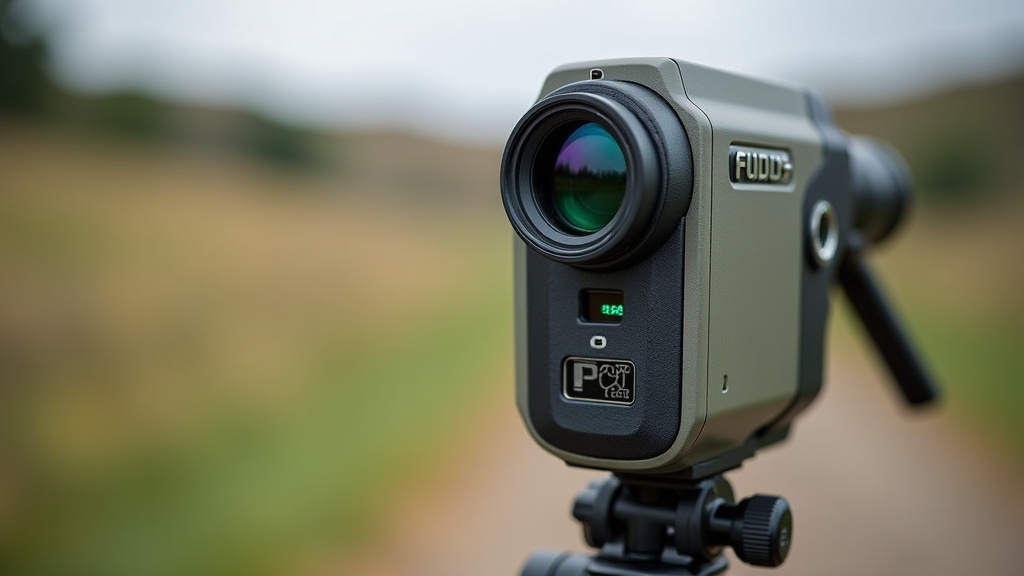
Most rangefinders you see today are laser-based. These devices use a pulsed laser beam. When you press the button, a short burst of laser light is sent out. This beam travels in a straight line to your target. It might be a tree, a deer, or a distant hill.
The laser light then bounces off the surface of that object. Some of this light travels back towards the rangefinder. The rangefinder has a sensitive detector that picks up this returning light. The accuracy depends on how well it can detect this faint echo of the laser beam.
The Calculation: Distance = Speed x Time
The rangefinder’s internal computer uses a well-known physics formula. It knows the speed of light. Let’s call this ‘c’. It also measures the total time the light took to travel to the object and back. Let’s call this ‘t’.
The formula is simple: Distance = (Speed of Light x Time) / 2. Why divide by two? Because the measured time ‘t’ is for the round trip—there and back. So, we only need half of that time to calculate the distance to the object itself. This math happens in milliseconds, giving you an instant reading.
Factors Affecting Laser Accuracy
While laser rangefinders are very accurate, a few things can affect their readings. The type of surface matters. Shiny surfaces, like a mirrored sign, might reflect the laser beam away from the rangefinder, making it hard to get a reading. Dark, matte surfaces tend to reflect light back better.
Weather conditions can also play a role. Heavy fog, rain, or snow can scatter the laser beam. This scattering can reduce the effective range of the device or make readings less reliable. Some advanced rangefinders have features to help compensate for these conditions, like slope compensation.
Other Types of Rangefinders: A Quick Look
While lasers dominate the market, other technologies exist. You might encounter optical rangefinders, though they are less common now. These use dual lenses and triangulation to estimate distance.
Optical Rangefinders: Triangulation in Action
Optical rangefinders work a bit like how your eyes perceive depth. They have two objective lenses, spaced apart. When you look through the viewfinder, you see two images. You adjust a dial until the two images align on your target.
The device then uses the known distance between the two lenses (the baseline) and the angle at which the lenses had to be set to achieve alignment. This triangulation method calculates the distance. It’s a mechanical process rather than electronic timing, and generally less precise than laser models for fine measurements.
Ultrasonic Rangefinders: For Closer Tasks
You might have seen ultrasonic rangefinders in some home improvement stores or for very specific applications. These devices send out a sound wave, not a light beam. The sound wave travels to the object and bounces back. The rangefinder measures the time it takes for the sound to return.
Sound travels much slower than light. This makes ultrasonic rangefinders less accurate for long distances. They are typically used for shorter ranges, like measuring room dimensions. You’ll also notice they can be affected by soft surfaces that absorb sound.
What Rangefinder Technology Means for You
Knowing how rangefinders work helps you choose the right one. Laser rangefinders are excellent for most outdoor activities. Think golf, hunting, or archery. They offer quick, accurate readings in yards or meters.
If you’re a golfer, a rangefinder can help you select the right club. For a hunter, it means confident shot placement. Even for casual hikers, it’s fun to know the distance to that interesting peak.
Key Features You Might Find
Many modern rangefinders offer features beyond basic distance measurement. Some can measure the slope of the ground. This is a big help in golf or hunting on hilly terrain. It tells you the “true” distance, compensating for uphill or downhill shots.
Other models might have a pin-seeking mode for golfers. This mode helps you lock onto the flagstick even if there are trees or other objects behind it. Magnification is another common feature. Higher magnification lets you see distant targets more clearly.
Understanding Limitations and Best Use Cases
It’s important to be realistic about what a rangefinder can do. Laser rangefinders are generally not ideal for measuring through thick fog or heavy rain. They also struggle with very soft surfaces that don’t reflect the laser well. Many devices have a maximum range, so check the specifications for your needs.
For example, a hunting rangefinder might be optimized for 500 yards, while a golf rangefinder might go up to 1000 yards. Always consider where and how you’ll be using it. This will guide you to the best type of rangefinder and its features.
Choosing Your Rangefinder: A Quick Checklist
To help you decide, here’s a simple checklist:
- Activity: What will you primarily use it for? (Golf, hunting, general use?)
- Range Needed: How far do you typically need to measure?
- Accuracy Requirements: How precise do your measurements need to be?
- Environmental Conditions: Will you use it in fog, rain, or bright sun?
- Extra Features: Do you need slope compensation, pin-seeking, or specific modes?
- Budget: How much are you looking to spend?
By understanding the technology and considering your specific needs, you can confidently select a rangefinder that will serve you well. It’s a tool that brings precision and confidence to many activities.
| Technology | How it Works | Pros | Cons | Typical Uses |
|---|---|---|---|---|
| Laser | Emits light pulses, measures return time. | Very accurate, fast, good for long distances, compact. | Can be affected by fog/rain, needs clear line of sight, shiny surfaces can be tricky. | Golf, hunting, archery, construction. |
| Optical (Triangulation) | Uses two lenses and angle alignment. | No batteries needed for some older models, can be durable. | Less accurate than laser, slower to use, bulkier. | Older surveying, some binoculars with rangefinders. |
| Ultrasonic | Emits sound waves, measures return time. | Good for short distances, can be inexpensive. | Limited range, affected by soft surfaces, slower than laser. | DIY home measurement, some industrial uses. |
Conclusion
You’ve learned that rangefinders are smart tools that use the speed of light to measure distance accurately. By timing a light or laser beam’s trip to a target and back, they provide instant readings. Laser rangefinders are the most common, offering great precision for golf, hunting, and more. Understanding their technology, from basic light pulses to features like slope compensation, helps you pick the best one for your needs. Now, consider your primary activity and required range to make an informed choice and add this useful gadget to your kit.
Frequently Asked Questions
Can fog or rain affect my rangefinder’s reading?
Yes, dense fog, heavy rain, or snow can scatter the laser beam. This scattering can reduce the maximum distance your rangefinder can measure accurately. Some advanced models offer features to help, but extreme conditions can still be challenging.
Why do I need to divide the time by two in the distance calculation?
The rangefinder measures the total time for the light beam to travel to the target and then reflect back to the device. This is a round trip. Since you only need the distance to the target itself, you take half of the total travel time for the calculation.
What’s the difference between a golf rangefinder and a hunting rangefinder?
Golf rangefinders often have modes like pin-seeking to help lock onto the flagstick. Hunting rangefinders might prioritize longer ranges and features like slope compensation for varied terrain. Both use similar laser technology but are optimized for their specific activities.
Can I use a rangefinder to measure distances indoors?
Laser rangefinders are best suited for outdoor use where they have a clear line of sight. For indoor measurements, especially shorter ones, ultrasonic or simple tape measures are often more practical and less prone to reflections from walls or furniture.
How do I know if a rangefinder is accurate enough for me?
Accuracy is usually measured in yards or meters and often stated as +/- a certain amount. For most recreational purposes like golf or general use, an accuracy of +/- 1 yard is more than sufficient. Always check the product specifications for the level of precision offered.