What Is a GPS Receiver? A Beginner’s Guide
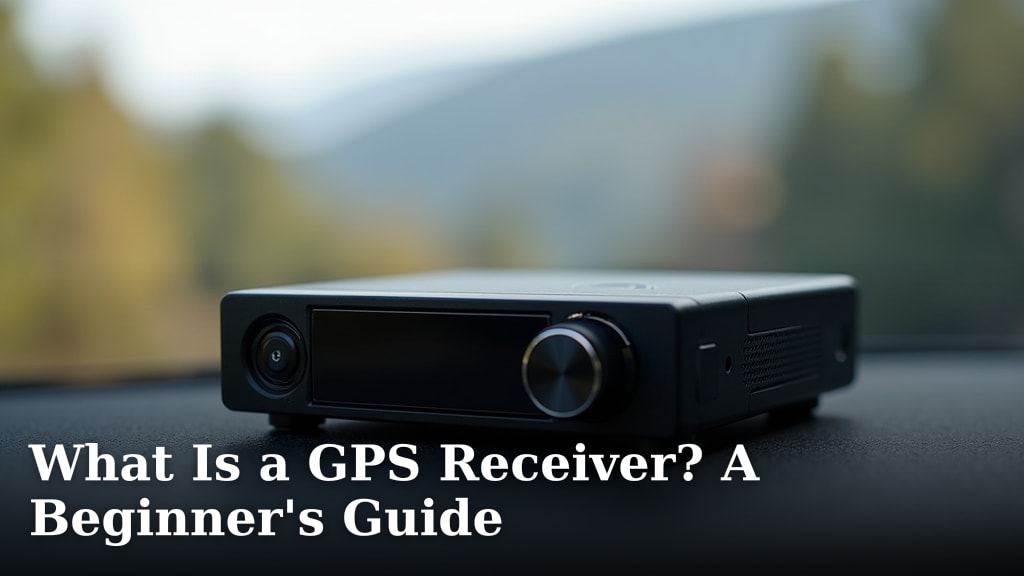
A GPS receiver is a device that can detect signals from GPS satellites. These signals allow it to calculate your exact location on Earth. It works by measuring the time it takes for signals to arrive from multiple satellites. This helps pinpoint your position with remarkable accuracy.
Think of it as your personal navigator. Modern phones and cars use this technology every day. It’s what powers your maps and helps you find directions. Many outdoor activities, like hiking or boating, rely on a dependable GPS receiver for safety and convenience.
TL;DR:
- A GPS receiver picks up signals from satellites.
- It calculates your precise location on the planet.
- Your smartphone and car likely have one built-in.
- Essential for navigation, mapping, and outdoor adventures.
Ready to learn more about how this amazing technology works? Below, we break down what a GPS receiver is and how it helps you find your way.
Understanding Your Location: How a GPS Receiver Works
So, what exactly is a GPS receiver? Simply put, it’s a clever piece of technology that acts like a tiny antenna for space. It listens for special signals sent out by a network of satellites orbiting our planet. These signals carry a lot of information. By “listening” to these signals from multiple satellites, your receiver can figure out where you are on Earth.
It’s a bit like playing a guessing game with distant friends. Each satellite sends a message saying, “I’m here, and this is exactly what time it is!” Your receiver compares the time the message was sent with the time it was received. The tiny difference tells it how far away that particular satellite is. Do this with at least four satellites, and you’ve got a precise fix on your location – your latitude, longitude, and altitude.
The Magic Behind the Location: Satellite Signals
The entire system is called the Global Positioning System, or GPS. It’s managed by the U.S. government, but it’s available for everyone to use, for free. Think of it as a public utility, but in the sky.
The Satellite Constellation
There are dozens of GPS satellites up there, orbiting the Earth. They are positioned so that at any given time, anywhere on Earth, your receiver can “see” at least four of them. This is crucial because you need signals from a minimum of four satellites to get a three-dimensional position (latitude, longitude, and altitude) and accurate time information. More satellites mean a stronger signal and often better accuracy.
What the Signals Tell Us
Each satellite broadcasts two main pieces of information. First, it sends its own precise orbital path, so your receiver knows exactly where the satellite is supposed to be at any moment. Second, it sends the exact time the signal was sent, down to fractions of a second. This timing is incredibly important for calculating distance.
Calculating Your Distance
Here’s where a bit of physics comes in. Light and radio waves travel at a constant speed – the speed of light. Your GPS receiver knows this speed. By measuring the time it took for the signal to travel from the satellite to your receiver, it can calculate the distance. It’s a simple formula: distance = speed x time.
Pinpointing Your Position: Triangulation, But Better
With the distance to one satellite, you know you’re somewhere on a giant sphere around that satellite. With two satellites, you narrow it down to where two spheres intersect – a circle. With three satellites, you narrow it down to two possible points. Because one of those points is usually impossible (like deep in space or underground), your receiver can often figure out which one is correct. However, to get your altitude and the most accurate fix, a fourth satellite is usually needed. This process is technically called trilateration, not triangulation, but the idea is similar: using known distances to find an unknown point.
Where You’ll Find GPS Receivers Today
You might be surprised at how many devices already have a GPS receiver built into them. It’s not just for dedicated navigation devices anymore.
Smartphones and Tablets
Your trusty smartphone is likely your most common GPS receiver. It’s what powers map apps like Google Maps or Apple Maps. When you ask for directions, your phone uses its built-in GPS receiver to find your current location and then calculates the best route. This makes getting around a whole lot easier, whether you’re driving, walking, or biking.
Vehicles
Most modern cars come with built-in navigation systems. These systems use GPS receivers to guide you to your destination. Even if your car doesn’t have a fancy built-in screen, many people use their smartphones mounted on the dashboard for navigation.
Wearable Technology
Smartwatches and fitness trackers often include GPS receivers. This is especially useful for runners, cyclists, and hikers who want to track their routes, distance, and pace without needing to carry a separate device. Some smartwatches can even help you find your way back home if you get lost.
Dedicated GPS Devices
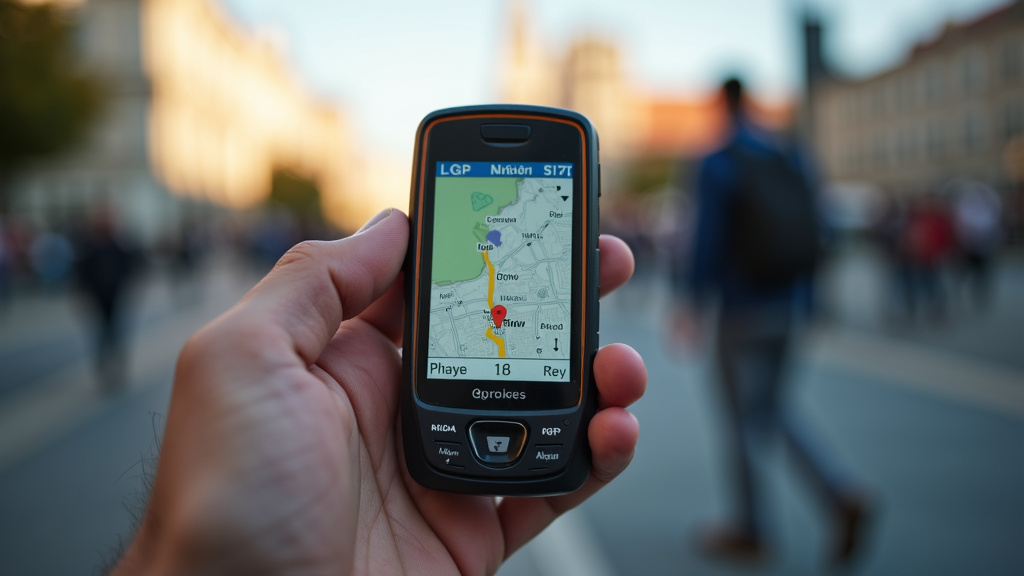
While smartphones are common, dedicated GPS units are still popular, especially for specific activities. Hikers, boaters, pilots, and geocachers often prefer these devices because they are built to be rugged, have longer battery life, and often offer specialized mapping features not found on a phone. We found that many experienced outdoor enthusiasts rely on these for their durability and specialized functions.
Other Applications
Beyond personal use, GPS receivers are used in a wide range of applications. Think about delivery trucks navigating their routes, airplanes landing in low visibility, or even precision agriculture where farmers use GPS to guide tractors for planting and harvesting. It’s a foundational technology for many modern systems.
What Makes a GPS Receiver Accurate?
While GPS is incredibly accurate, several factors can affect its performance. Understanding these can help you get the best possible location data.
Satellite Geometry (DOP)
The arrangement of the satellites in the sky matters. This is often referred to as Dilution of Precision (DOP). If the satellites are spread out widely across the sky, you’ll get a more accurate reading. If they are all clustered together in one part of the sky, the accuracy can decrease. Many GPS devices will show you a DOP value, with lower numbers being better.
Atmospheric Conditions
The Earth’s atmosphere can bend or slow down the satellite signals. This effect is usually small, but it can cause slight errors in your calculated position. The GPS system has built-in models to try and compensate for this, but extreme weather can sometimes have a minor impact.
Signal Obstructions
This is a big one for everyday users. Tall buildings, dense forests, and even heavy cloud cover can block or weaken the satellite signals. This is why you might notice your GPS acting up in a “urban canyon” (between skyscrapers) or under a thick canopy of trees. Without a clear view of the sky, your receiver might struggle to get enough good signals.
Receiver Quality
Not all GPS receivers are created equal. Higher-end receivers tend to have better antennas and more sophisticated processors, allowing them to pick up weaker signals and process them more effectively. This can lead to faster fixes and better accuracy, especially in challenging conditions. We found that dedicated GPS units often outperform smartphone receivers in signal acquisition speed.
Assisted GPS (A-GPS)
Many smartphones use a technology called Assisted GPS (A-GPS). This helps speed up the time it takes to get your first location fix. A-GPS uses cellular network data and Wi-Fi to quickly download satellite orbital information. This means your phone can often start showing your location much faster than a traditional GPS receiver that has to download everything from the satellites alone.
Choosing the Right GPS Receiver for Your Needs
Deciding which type of GPS receiver is best for you depends entirely on how you plan to use it. Here’s a quick rundown to help you think it through:
- For everyday use (commuting, finding restaurants): Your smartphone is likely all you need.
- For regular driving navigation: A car’s built-in system or your smartphone mount is great.
- For fitness tracking (running, cycling): A GPS-enabled smartwatch or fitness tracker works well.
- For serious hiking, boating, or off-roading: Consider a rugged, dedicated handheld GPS device.
- For aviation or specialized surveying: Professional-grade GPS equipment is required.
Think about where you’ll be using it, how much battery life you need, and what other features are important to you. Do you need something waterproof? Does it need to work without cell service? Answering these questions will guide you toward the right choice.
A Quick Checklist for Understanding GPS
To recap, here are the key things to remember about GPS receivers:
- They listen for signals from orbiting satellites.
- At least four satellites are needed for accurate 3D positioning.
- They calculate distance based on signal travel time.
- Accuracy can be affected by satellite spread, atmosphere, and obstructions.
- Smartphones, cars, and wearables are common places to find them.
- Dedicated devices offer specialized features and durability for outdoor use.
Conclusion
You’ve learned that a GPS receiver is your key to knowing your precise location anywhere on Earth. By picking up signals from orbiting satellites, it performs a clever calculation using timing and distance. While your smartphone likely handles most everyday needs, dedicated devices offer specialized benefits for outdoor adventures or specific tasks. Now that you understand the basics, you can better choose the right GPS technology for your own adventures and daily journeys. Consider where you’ll use it most and what features matter to you when making your next decision.
Frequently Asked Questions
Do I need a data connection for my GPS to work?
No, you generally do not need a cellular data connection for your GPS receiver to find your location. The core GPS functionality relies on signals from satellites, not your phone’s data plan. However, features like real-time traffic updates or downloading new maps usually require data.
How accurate is a typical GPS receiver in my smartphone?
Most modern smartphones offer a location accuracy within a few meters, often around 5 to 10 meters. This can vary depending on signal strength, satellite visibility, and whether Assisted GPS (A-GPS) is helping. For most everyday uses like navigation, this is more than sufficient.
Can my GPS receiver work indoors?
Generally, GPS receivers work best with a clear view of the sky. Indoor use can be very limited because walls, roofs, and even building materials can block or weaken the satellite signals. Some devices with A-GPS might get a rough indoor location from Wi-Fi, but true GPS accuracy is difficult indoors.
What’s the difference between GPS and other navigation systems like GLONASS or Galileo?
GPS is the U.S.-made system, but other countries and regions have their own satellite navigation systems, such as Russia’s GLONASS, Europe’s Galileo, and China’s BeiDou. Many modern receivers can use signals from multiple systems at once, which can improve accuracy and reliability, especially in areas with limited satellite visibility.
How can I improve my GPS accuracy?
To improve accuracy, ensure your device has a clear view of the sky with minimal obstructions like tall buildings or dense trees. Keep your device’s software updated, as updates often include improvements to GPS performance. For dedicated devices, sometimes using them in open areas before heading into challenging terrain can help them lock onto satellites more effectively.