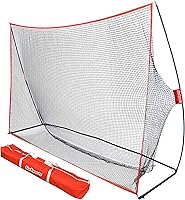
9 Best Indoor Golf Putting Mats (November 2026)
The best indoor golf putting mat include the Dachenus Putting Green Indoor Mat Outdoor Golf for full-length practice with ball return, the Perfect Practice Putting Mat & Golf Chipping for a light two-hole mat, and the YOUCZON Putting Green Indoor for practice distances from 2 to 7.5 feet.
On this page (11 sections)
- How we compared indoor putting surfaces
- The best indoor golf putting mats for home practice
- Best indoor golf putting mat: side-by-side comparison
- How these were compared
- What size indoor putting mat fits a home or office?
- Does a ball return help you practice more putts?
- How many holes should an indoor putting green have?
- What surface and backing should you look for?
- How do you set up and store a putting mat?
- Which mat is best for kids, gifts or large rooms?
- Verdict: best indoor golf putting mat for different needs
The best indoor golf putting mat for most rooms is the Dachenus, because its 118-inch lane, two hole sizes and magnetic wood return track cover distance, accuracy and fast reps in one set. The Perfect Practice and YOUCZON mats are close behind for different reasons.
One is lighter and simpler, and the other adds a storage box for a tidier practice area.
Our picks at a glance
-
1
 Best for full-length practice with ball return
Dachenus Putting Green Indoor Mat Outdoor Golf
9.7/10 our score
See it on Amazon -
2
 Best for a light two-hole mat
Perfect Practice Putting Mat & Golf Chipping
9.6/10 our score
See it on Amazon -
3
- 4
 Best for a 9.8-foot mat with two holesCheck it
- 5
 Check it
GimiYaa GimYaa Golf Putting mat Green Indoor
Best for two holes with a practice ball included - 6
 Check it
Kalramay Putting Green Indoor Golf Putting Mat
Best for two ways to return the ball - 7
 Check it
CHAMPKEY Golf Putting Green Indoor
Best for hazard-style practice and gates - 8
 Check it
GOTOSOBAY Putting Green Indoor
Best for three holes including obstacle holes - 9
 Check it
Ponsonbay Golf Putting Mat Indoor & Outdoor
Best for a simple anti-slip mat without a return
How we compared indoor putting surfaces
We compared roll quality, size, markings and storage across nine mats. We looked at the surface material, the rubber or TPR backing, the hole count and sizes, the distance markings and the return system.
Our score weighs specs, features and buyer feedback against what you're shopping for. A long mat with two holes and a return track scores higher than a plain mat, because it does more jobs in the same indoor space.
We also checked what is included in each set. Some sets include a practice ball, a baffle, a storage box or magnetic rails, and those parts change how fast you can start and how tidy you can finish.
The best indoor golf putting mats for home practice
Dachenus Putting Green Indoor Mat Outdoor Golf: Best for full-length practice with ball return
- 118-inch mat
- 2 holes at 2.5 in and 3.2 in
- Markings at 2, 4, 6 and 9.5 feet
- Solid wood magnetic return track
- Rubber base with high-pile velvet surface
A long mat with two hole sizes and a wood return track for daily reps at home or in an office.
Pros
- Longest mat in this group
- Two hole sizes for accuracy work
- Magnetic track snaps together for storage
Cons
- Wood track adds bulk when stored
- Narrow floor width needs a straight practice lane
The Dachenus suits golfers who want a full-length lane and fast reps without chasing balls across the room. Its 118-inch mat is the longest here, so you can work putts from about 2 feet out to 9.5 feet on one surface.
Two holes are built in, at 2.5 inches and 3.2 inches. The smaller hole works as a challenge target, while the larger hole feels closer to a course target for daily stroke work.
Markings at 2, 4, 6 and 9.5 feet help you check distance control. Guide lines help you line up the clubface and keep the swing path straight during practice.
The return system uses a solid wood frame with magnetic rails. When the ball drops, the track sends it back near your hitting spot, which saves time between putts.
Storage is simple in daily use. You roll the velvet pad, tuck the magnetic track away and keep the mat in a closet or beside a desk.
The rubber base with high-pile velvet should lie flat, and the maker calls it wrinkle-free.
The trade-off is bulk. A wood track and a 118-inch mat need a straight lane and a storage spot that a plain mat would not.
If space is tight, a shorter mat may fit better.
Perfect Practice Putting Mat & Golf Chipping: Best for a light two-hole mat
- 9.5-foot mat
- 2 holes with alignment guides
- Crystal velvet surface
- Magnetic ball-return track
- Foldable design
A foldable 9.5-foot mat with alignment lines and a return track for short and longer putts.
Pros
- Light and easy to fold
- Alignment guides and pace markers
- Supports both short and long putts
Cons
- No storage box at the end of the return
- Warranty window is shorter than some rivals
The Perfect Practice mat suits golfers who want a proven simple setup with alignment help. Its 9.5-foot length covers short putts and longer putts on one indoor lane.
Two holes are included, with a regulation-size hole and a reduced-size hole. Built-in alignment lines and pace markers help you check setup, stroke path and distance control.
The surface is crystal velvet, described as a true-roll turf for consistent speed. That matters indoors, because a slow or uneven surface teaches you to hit putts too hard on a real green.
An automatic magnetic return track keeps sessions moving. You can putt, let the ball come back and start again without walking to the hole each time.
The mat folds for storage, and the included parts are the mat, ball return rails and instructions. That keeps the set focused on putting rather than extra accessories.
The trade-off is fewer extras. There is no storage box at the end of the return and no included practice ball in the parts list.
If you want a tidier tail or included balls, compare the YOUCZON or FAFAMESO first.
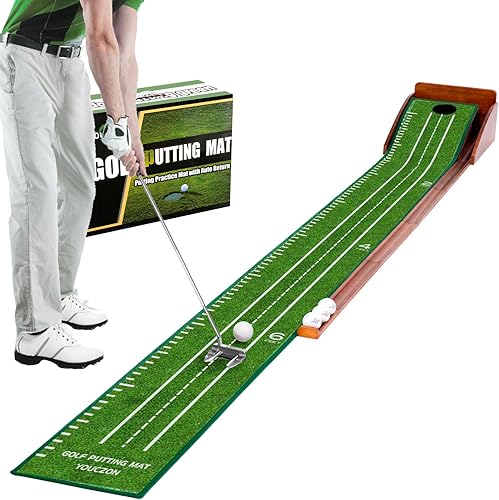
YOUCZON Putting Green Indoor: Best for practice distances from 2 to 7.5 feet
- Practice distances from 2 to 7.5 feet
- Crystal velvet surface
- Anti-wrinkle natural rubber mat
- Solid wood construction
- Ball storage box and four magnetic tracks
A wood-based mat with a storage box and return track for tidy, repeatable practice.
Pros
- Storage box keeps balls organized
- Anti-wrinkle rubber mat
- Solid wood build
Cons
- Single hole limits target variety
- Shorter practice range than 118-inch mats
The YOUCZON suits golfers who value a tidy setup and a wood-based build. Its crystal velvet surface on an anti-wrinkle natural rubber mat should give a smooth roll for daily practice at home or in an office.
Practice distances run from 2 feet to 7.5 feet. Gradient lines help with alignment, and the pad is made for indoor and outdoor use on flat ground.
The set includes a putting mat, a ball storage box, four magnetic tracks, a baffle and a solid wood practice device. Those parts help you set up the return and keep balls in one place.
An automatic return system sends the ball back after each putt. That keeps reps moving and makes a short session more useful than a mat without a return.
Solid wood construction is a clear step up from flimsy plastic in feel and stability. The wood base helps the set hold its shape during repeated use.
The trade-off is target variety. This mat has one hole, so accuracy work relies on that single target and the printed lines.
Golfers who want two or three holes for variety may prefer a two-hole model.
FAFAMESO Golf Putting Mat: Best for a 9.8-foot mat with two holes
- 9.8-foot length
- 2 holes at 3.5 in and 2.5 in
- Crystal velvet mat
- Solid wood base
- Automatic ball return with baffle plate
A long crystal velvet mat with two hole sizes and a baffle plate that sends balls back.
Pros
- Long practice lane at 9.8 feet
- Two hole sizes including a smaller challenge hole
- Wrinkle-free mat that folds for storage
Cons
- Return uses three auto return boards
- Heavier than the lightest mat here
The FAFAMESO suits golfers who want length and two hole sizes in a velvet mat. Its 9.8-foot length gives more room to practice different distances and check your pace on longer putts.
Two holes are included, at a regulation 3.5 inches and a smaller 2.5 inches. The smaller hole adds challenge, while the larger hole keeps daily practice realistic.
The mat uses crystal velvet with enough thickness to resist wrinkling or creasing. That helps the ball roll on a flatter surface from the first putt of a session.
A baffle plate and return track send the ball back after a made putt. You set the track beside the mat, and the ball returns so you can keep your stroke together.
The solid wood base gives the mat a firm foundation. It also means the set weighs more than the lightest mat here, so storage space matters.
The trade-off is the return setup. This set uses three auto ball return boards, so check your floor space before you choose it for a narrow room.
A plain anti-slip mat takes less space.
GimiYaa GimYaa Golf Putting mat Green Indoor: Best for two holes with a practice ball included
- 118 by 9.8 inches unfolded
- 2 holes at 3.2 in and 2.5 in
- Crystal velvet surface
- Solid wood base
- Rubber sole with non-slip design
A 118-inch crystal velvet mat with two hole sizes, distance lines and a wood return base.
Pros
- Full-length 118-inch lane
- Clear auxiliary and distance lines
- Non-slip rubber sole
Cons
- Wood base and track take storage space
- Brownish-green color may not match every room
The GimiYaa suits golfers who want a long mat with clear lines and a firm wood base. Its 118 by 9.8 inch unfolded size matches the longest lane in this group.
Two holes are included, at 3.2 inches and 2.5 inches. That pairing lets you practice a standard target and a smaller one without swapping mats.
The surface is crystal velvet, and the maker says it rolls flat with no folds when you hit the ball. Auxiliary and distance lines at 2, 4, 6 and 8 feet help you check face alignment and distance control.
The base is solid wood, and the bottom uses a rubber sole with a non-slip design. That helps the mat stay put on indoor floors during practice.
The set includes a practice device, four magnetic solid wood tracks, a baffle, a color box and a practice ball. Those parts make setup quick and give you an included ball for the first session.
The trade-off is stored bulk. The wood base and track take more room than a rolled plain mat.
If you need the lightest option for travel, the Ponsonbay is easier to carry.
Kalramay Putting Green Indoor Golf Putting Mat: Best for two ways to return the ball
- 98 by 8.66 inches extended
- Practice distances from 2 to 7.5 feet
- High-pile velvet surface on rubber base
- Solid wood construction
- Curved return tail and storage box
A 98-inch mat that offers a curved return or a storage box at the tail of the track.
Pros
- Two return options at the tail
- Wrinkle-free high-pile surface
- Solid wood frame
Cons
- Single hole for practice
- No practice ball included
The Kalramay suits golfers who want a choice at the end of the return. Its 98 by 8.66 inch mat gives a solid practice lane for distances from 2 feet to 7.5 feet.
The surface is high-pile velvet on a high-resilience rubber sole. The maker positions the speed as close to a real green, with a wrinkle-free mat that should lie flat for practice.
Two return options sit at the tail. You can use a curved return tail or a storage box, depending on how you want balls to finish after each putt.
The set includes the mat, four magnetic solid wood runway pieces, a return track, a storage box and a baffle. Assembly is magnetic, so you can set it up or pack it away without tools.
Solid wood construction helps the frame resist the flex you get from plastic models. The wood headstock has two practice ball placement holes for setup.
The trade-off is a single hole and no included practice ball. If target variety matters, a two-hole mat gives you more options.
If you want included balls, check the Dachenus or GimiYaa sets.
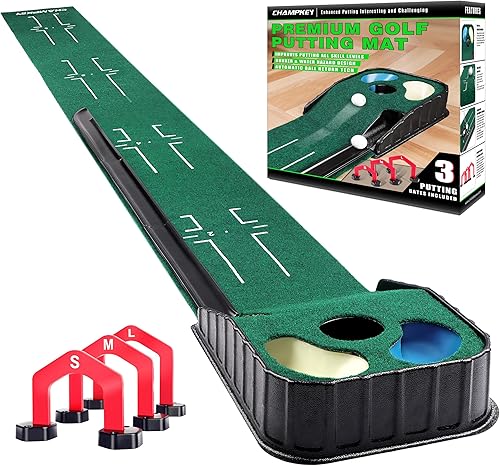
CHAMPKEY Golf Putting Green Indoor: Best for hazard-style practice and gates
- 8.9 ft by 1.28 ft size
- 3 putting gates or holes
- Automatic ball return
- Hazard putting mat design with bunker and water hazard
- Non-directional turf
A wider hazard-style mat with three gate sizes for accuracy drills and varied targets.
Pros
- Widest mat here for hazard practice
- Three gate sizes at 2.1, 2.7 and 3.3 inches
- Compact and lightweight structure
Cons
- Shorter warranty window
- Hazard design is less plain than a straight lane
The CHAMPKEY suits golfers who like drills with gates and hazards. Its 8.9 ft by 1.28 ft size is wider than most mats here, which helps hazard-style practice.
Three gate sizes are built in, at 2.1, 2.7 and 3.3 inches. Those sizes let you start with a larger gate and move to a smaller one as your stroke gets more consistent.
The design includes bunker and water hazard elements to make practice less plain. That can help with focus if you get bored on a straight lane.
An automatic ball return keeps reps moving without interruption. Keeping the ball coming back helps you maintain a steady stroke and tempo across a session.
The turf is non-directional, and the maker says it gives accurate practice outside a green. The mat uses a rubber backing and polyester material, with a foldable design for storage.
The trade-off is specialization. This is a hazard and gate mat first, not a plain full-length lane.
Golfers who want simple distance lines on a longer mat may prefer the Dachenus or Perfect Practice.
GOTOSOBAY Putting Green Indoor: Best for three holes including obstacle holes
- 98 by 8.66 inches extended
- 3 holes with a 3.2-inch practice hole
- Distances at 2, 4, 6 and 7.5 feet
- Solid wood frame
- Magnetic track with buffer slope and storage box
A 98-inch mat with a main hole plus two obstacle holes for arcade-style practice.
Pros
- Three holes for varied drills
- Storage box at the end of the return
- Auxiliary lines for straight and arc putts
Cons
- Obstacle holes may distract from pure stroke work
- Wood track adds to stored size
The GOTOSOBAY suits golfers who want arcade-style variety on one mat. Its 98 by 8.66 inch lane gives practice distances at 2, 4, 6 and 7.5 feet.
Three holes are included, with a 3.2-inch practice hole and two obstacle holes. That setup can make a session feel like a game while you work on start line and pace.
Auxiliary lines and inch scale lines support straight putts and arc practice. Those markings help you check alignment and distance control on each rep.
The return uses a magnetic track with a buffer slope and a storage box at the end. Setup takes a few steps, and the ball comes back so you do not need to bend for each putt.
The frame is solid wood, and the mat uses a high-rebound rubber sole with velvet fabric. That pairing aims for a flat surface with realistic texture.
The trade-off is focus. Obstacle holes add fun, but they can pull attention from a pure stroke routine.
If you want a plain lane, a two-hole mat is a simpler choice for daily work.
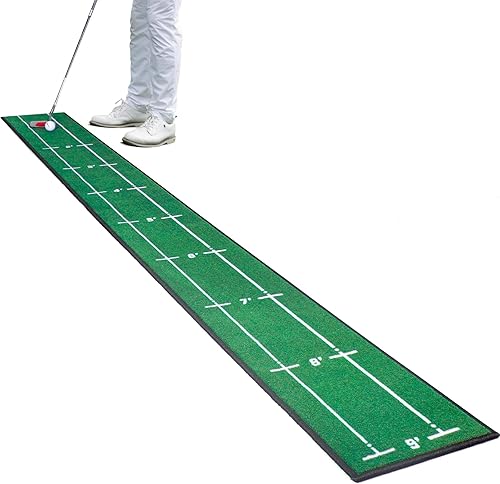
Ponsonbay Golf Putting Mat Indoor & Outdoor: Best for a simple anti-slip mat without a return
- 1 ft by 9.2 ft mat
- Distance markers
- Anti-slip TPR backing
- Polyester turf surface
- Lightweight and easy to roll up
A simple 9.2-foot polyester turf mat with distance markers and anti-slip backing.
Pros
- Lightest and simplest stored package
- Anti-slip backing for flat floors
- Easy to vacuum and clean
Cons
- No ball-return system
- No holes for target practice
The Ponsonbay suits golfers who want the simplest mat in this group. Its 1 ft by 9.2 ft size gives a long lane for distance and start-line work without a return track.
Distance markers are printed on the mat to help with technique, accuracy and distance control. That makes it useful for stroke basics even without holes.
The surface is polyester turf, and the backing is anti-slip TPR. The non-slip backing helps the mat stay on flat indoor floors during practice.
It is slim and lightweight, and it rolls up for quick storage. The package size is compact, which helps if you want to carry it to an office or a backyard.
Cleaning is simple with a vacuum, according to the maker. That matters if you practice daily and the turf collects dust or pet hair.
The trade-off is clear. There is no ball-return system and no holes listed, so you will walk to the end of the mat for each ball.
If fast reps matter, a return-track mat will suit you better.
Best indoor golf putting mat: side-by-side comparison
| Product | Best for | Mat length | Back material | Hole count | Our score |
|---|---|---|---|---|---|
| Dachenus Putting Green Indoor Mat Outdoor Golf | full-length practice with ball return | 118 inches | Solid wood frame; rubber base with high-pile velvet surface | 2 holes | 9.7 |
| Perfect Practice Putting Mat & Golf Chipping | a light two-hole mat | 9.5 feet | Velvet or similar material | 2 | 9.6 |
| YOUCZON Putting Green Indoor | practice distances from 2 to 7.5 feet | 1.38 feet floor length listed; 2 to 7.5 feet of practice distances | Wood plus velvet | 1 hole | 9.6 |
| FAFAMESO Golf Putting Mat | a 9.8-foot mat with two holes | 9.8 feet | Synthetic rubber | 2 | 9.5 |
| GimiYaa GimYaa Golf Putting mat Green Indoor | two holes with a practice ball included | 118 inches | Rubber sole plus velvet upper | 2 holes | 9.2 |
| Kalramay Putting Green Indoor Golf Putting Mat | two ways to return the ball | 98 inches | High-resilience rubber sole plus velvet surface | 1 hole | 8.7 |
| CHAMPKEY Golf Putting Green Indoor | hazard-style practice and gates | 8.9 feet | Rubber | 3 | 8.6 |
| GOTOSOBAY Putting Green Indoor | three holes including obstacle holes | 98 inches | High-rebound rubber sole plus velvet fabric | 3 holes | 8.4 |
| Ponsonbay Golf Putting Mat Indoor & Outdoor | a simple anti-slip mat without a return | 9.2 feet | Thermoplastic rubber (TPR) | No holes listed | 8.1 |
Use this table to narrow the field by the job you need done. Length matters first if you want longer putts.
Hole count matters next if you want target variety. Return type matters last, but it changes how many reps you get in 10 minutes.
The Dachenus, GimiYaa and FAFAMESO mats lead on length. The Perfect Practice mat is close at 9.5 feet with a lighter foldable design.
The Kalramay and GOTOSOBAY mats are shorter at 98 inches, but they add storage boxes and extra holes.
Surface and backing also differ. Crystal velvet appears on most return-track mats here.
Polyester turf with TPR backing appears on the Ponsonbay, which is the simplest and lightest option.
How these were compared
We compared roll quality, size, markings and storage for each mat. Roll quality came from the stated surface and backing, such as crystal velvet over rubber or polyester turf over TPR.
Size came from the unfolded mat length and width. Markings came from distance lines, alignment guides and gate sizes printed on each surface.
Storage came from how each set packs away. Foldable mats roll up, while wood return tracks need space for rails, baffles and boxes.
We also weighed included parts. A practice ball, baffle, storage box or magnetic rails can save you a separate purchase and speed up setup.
What size indoor putting mat fits a home or office?
A mat around 9 to 10 feet long fits most home practice lanes. That length lets you work short putts and longer putts without moving the mat.
How much floor space do you need?
Measure a straight lane that includes the mat and the return track. A 118-inch mat needs more clear floor than a 98-inch mat, especially with a 5.7 to 7 foot return track behind it.
If your room is narrow, a wider mat such as the CHAMPKEY at 1.28 ft wide may need more side space. A narrower mat fits a hallway or beside a desk more easily.
When is a shorter mat enough?
A shorter or plain mat works if you mostly practice short putts and stroke basics. The Ponsonbay at 9.2 feet still gives a long lane, but without holes or a return.
For full distance work, choose a mat with printed lines at several distances. That helps you check pace without guessing where each putt should stop.
Does a ball return help you practice more putts?
Yes, a ball return helps you get more reps in less time. You putt, the ball comes back and you start again without chasing it.
Which return systems do these mats use?
Most mats here use magnetic wood rails with a baffle plate. The baffle redirects the ball into the track, and the track sends it back near your hitting spot.
Some mats add a storage box at the tail. The YOUCZON, Kalramay and GOTOSOBAY mats include a box, which keeps balls together after a session.
What is the trade-off of a return track?
A return track takes floor space and storage space. Wood rails are sturdier than plastic, but they also make the stored package larger.
If floor space is very tight, a plain mat with anti-slip backing may be the better fit. You will walk for each ball, but setup and storage stay simple.
How many holes should an indoor putting green have?
Two holes give you the best mix for most golfers. One hole can be regulation size, and the other can be smaller for harder practice.
What do smaller holes do for your stroke?
A smaller hole rewards a centered strike and a steady pace. It can help you work on start line and distance control in a short session.
Our golf putting gate drill guide pairs well with a smaller hole or gate. You can alternate between the larger target and the smaller one to keep practice focused.
When do three holes make sense?
Three holes or gates make sense if you like drills and games. The CHAMPKEY uses three gate sizes, and the GOTOSOBAY adds two obstacle holes beside a main hole.
If you want plain stroke work, one or two holes is usually enough. Extra targets add variety, but they can also distract from a simple routine.
What surface and backing should you look for?
Crystal velvet is the most common surface here for return-track mats. It is paired with rubber backing to help the mat lie flat and resist wrinkling.
Why does backing matter indoors?
Backing keeps the mat from sliding on hard floors. Rubber, synthetic rubber and TPR backing all serve that job in different ways.
A non-slip backing matters more if you practice on tile or laminate. On carpet, a thinner mat may sit more firmly, but check that the ball rolls true.
How do you keep the surface flat?
Roll the mat in the direction it was stored and let it relax on a flat floor. Avoid folding it sharply or leaving it rolled for long periods if you can.
For a wider practice area, our best indoor putting green guide covers larger surfaces. For a simple lane, an indoor golf putting green style mat is usually enough.
How do you set up and store a putting mat?
Set up the mat on a flat floor with the hole end away from your hitting spot. Snap the magnetic rails together and place the baffle so balls drop into the track.
How do you store wood return tracks?
Roll the mat, stack the rails and tuck the baffle and storage box in the same spot. Magnetic rails help because they snap together and separate without tools.
If you want a lighter storage option, our golf practice net guide covers nets that fold for home practice. For swing work, our how to use sklz golf swing trainer guide helps you pair putting practice with a full routine.
What should you check before you order?
Check the unfolded mat length, the return track length and the stored size. Those three numbers tell you if the set fits your room and your closet or corner.
Also check the included parts. Some sets include a practice ball and some do not, and that changes your first session.
Which mat is best for kids, gifts or large rooms?
Smaller mats and hazard mats can suit kids and casual practice. A best golf putting mat with ball return style set keeps balls coming back, which helps younger players stay engaged.
For kids, our best indoor putting green for kids guide offers more ideas for safe indoor play. A shorter mat with a simple return is often easier for them to set up.
For a larger room, our best large indoor putting green guide covers bigger surfaces. For full swing practice at home, our best home golf practice nets guide pairs well with putting work.
Verdict: best indoor golf putting mat for different needs
Pick the Dachenus if you want the longest mat here with two holes and a full return track. Pick the Perfect Practice if you want a lighter 9.5-foot mat with alignment guides.
Pick the YOUCZON if you want a storage box and a wood build for tidy practice.
Pick the FAFAMESO or GimiYaa for a long velvet lane with two holes and included return parts. Pick the Kalramay or GOTOSOBAY if you want a storage box or extra holes for varied drills.
Pick the CHAMPKEY for hazard and gate practice, and pick the Ponsonbay for the simplest anti-slip mat without a return.
The best indoor golf putting mat is the one that fits your floor space and gets used daily. Measure your lane, check the return track length and choose the hole count that matches your practice goals.
Our top 3 picks at a glance
-
1
Best for full-length practice with ball return
Dachenus Putting Green Indoor Mat Outdoor Golf
9.7/10 our score
See it on Amazon -
2
Best for a light two-hole mat
Perfect Practice Putting Mat & Golf Chipping
9.6/10 our score
See it on Amazon -
3
Frequently asked questions
What size indoor putting mat should I buy?
A mat around 9 to 10 feet long gives room for short and longer putts in most rooms. Measure your clear lane first and leave space for the return track behind the hole, not just the mat itself.
Do I need a ball return on an indoor putting mat?
A ball return helps if you want fast reps without bending to pick up the ball each time. If you prefer a plain mat, an anti-slip backing and clear distance markers matter more than a return track.
Are two holes better than one hole?
Two holes give you a regulation-size target and a smaller challenge target in one mat. A single hole is fine for basic stroke and distance work, especially if you already use a gate drill.