9 Best Golf Balls for Slow Swing Speed (November 2026)
The best golf balls for slow swing speed include the Vice Drive Golf Balls for low to medium club head speed, the TaylorMade Golf Distance+ Golf Balls for distance with alignment aid, and the Vice Pro Plus Golf Balls for high swing speeds.
On this page (9 sections)
- Best golf balls for slow swing speed: the full ranking
- Best golf balls for low swing speeds: side by side
- How we compared golf balls for low swing speeds
- What compression means for slow swingers
- Which ball type should slow swingers choose?
- How do dimple design and cover affect distance?
- Which specific balls match which slow swingers?
- How should you test a new ball on the course?
- Verdict: best golf balls for slow swing speed
The best golf balls for slow swing speed are the Vice Drive Golf Balls, because Vice makes them for players with low to medium club head speed and pairs that aim with a tough soft core.
If you want the softest feel in this group, the TaylorMade Noodle Long & Soft has a 34 compression core. If you want distance plus an alignment aid, the TaylorMade Distance+ fits well.
Slow swingers lose distance at impact, where a firm ball does not compress fully, and in the air, where high drag slows the ball down. A soft, low compression ball helps with the first problem.
A clean dimple pattern helps with the second.
Our score weighs specs, features and buyer feedback against what you're shopping for. We compared construction, core, cover, dimple design, and stated swing speed fit.
For launch monitor practice, see our Rapsodo MLM2PRO ball guide. For a wider view of the market, start with our top 10 best golf balls guide.
Our picks at a glance
-
1

-
2
 Best for distance with alignment aid
TaylorMade Golf Distance+ Golf Balls
9.6/10 our score
See it on Amazon -
3

- 4
 Check it
Callaway Golf Supersoft Golf Balls
Best for soft feel and greenside control - 5
 Check it
TaylorMade Noodle Long & Soft Golf Balls
Best for ultra-soft 34 compression core - 6
 Check it
Callaway Golf Warbird Golf Balls
Best for maximum ball speed - 7
 Best for total performanceCheck it
- 8
 Check it
Srixon Q-Star Ultispeed Golf Balls
Best for fast swing speeds - 9
 Best for ultra-soft feelCheck it
Best golf balls for slow swing speed: the full ranking
The Vice Drive leads because it is the only ball here stated for low to medium club head speed.
The rest of the ranking mixes soft low compression balls, distance balls, and premium options that slower golfers can still enjoy. For a head-to-head on two other popular options, see our Bridgestone e12 vs e6 guide.
Understanding that mix matters before you pick a dozen.
A ball can be excellent for a fast swinger and still be the wrong match for you.
Firm cores need speed to work as designed.
Soft cores are built to work with less speed.
That single difference explains most of the gap between the top and bottom of this list.
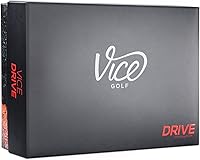
Vice Drive Golf Balls: Best for low to medium club head speed
- For players with low to medium club head speed
- Extremely tough and cut-resistant soft-core
- 368 dimple design
- Longer roll and softer feel
- 2 piece ball
A 2-piece ball built for low to medium club head speed, with a 368 dimple design and a softer feel.
Pros
- Made for low to medium club head speed
- Tough, cut-resistant soft core
- 368 dimple design
Cons
- 2-piece build limits greenside spin options
- Softer feel may not suit faster swingers
Vice Drive suits slower golfers first, and it is also a sensible pick for practice and casual weekend rounds.
Vice states it is for players with low to medium club head speed, which puts it at the center of this search.
Its 2-piece construction keeps the design simple and durable.
The core is described as extremely tough and cut-resistant, with a soft feel and longer roll.
The cover uses a DuPont Surlyn blend tuned to withstand high hitting loads.
That helps the ball survive repeated iron strikes and cart path contact.
The 368 dimple design works on flight stability.
In daily use, that means less harsh feedback on full swings and putts.
You get a dozen balls in the pack, in white, at 1.68 inches.
Trade-off: a 2-piece ball will not give you the greenside spin of a cast urethane multi-layer ball.
If wedge spin matters most, look at the Supersoft or Noodle below.
TaylorMade Golf Distance+ Golf Balls: Best for distance with alignment aid
- REACT Speed Core for high-velocity performance
- Extended Flight Dimple Pattern
- Plus Alignment Aid
- Two-layer construction, ionomer cover
A two-layer distance ball with a REACT Speed Core, Extended Flight dimples, and a Plus Alignment Aid for lining up putts and tee shots.
Pros
- Extended Flight dimple pattern for low-drag flight
- Plus Alignment Aid for aim
- Two-layer construction
Cons
- Ionomer cover feels firmer than soft urethane options
- Mid to high spin may add curve for some players
TaylorMade Distance+ suits slower golfers who want distance and help lining up shots.
It uses a REACT Speed Core for high-velocity performance on all shots.
The two-layer build keeps it in the distance ball family.
The Extended Flight Dimple Pattern fights through wind and stays airborne longer.
TaylorMade lists 342 dimples in that pattern.
That helps a slower swing keep carry going on drives and long irons.
The Plus Alignment Aid is a real plus on the putting green and tee box.
It helps you aim putts online and set up tee shots down the middle.
In daily use, the yellow color helps you track the ball in flight and find it in longer rough.
The ionomer cover is durable for regular play.
You get a dozen balls in the pack.
Trade-off: the ionomer cover feels firmer than soft urethane covers.
Mid to high spin can also add curve if your swing path needs help staying straight.
Vice Pro Plus Golf Balls: Best for high swing speeds
- 4 Piece Cast Urethane cover ball construction
- Extra-thin cover
- Designed for golfers with high swing speeds
- Closed alignment line
- Numbered 1-4
A 4-piece cast urethane ball designed for golfers with high swing speeds who want driver distance and spin control.
Pros
- 4-piece cast urethane construction
- Extra-thin cover for spin control
- Closed alignment line
Cons
- Designed for high swing speeds, not slow swingers
- Premium construction costs more than 2-piece balls
Vice Pro Plus is the honest outlier in this group. Vice designs it for golfers with high swing speeds with the highest performance requirements.
That makes it a poor first fit for slow swingers.
It is a 4-piece cast urethane ball with an extra-thin cover. That construction is aimed at outstanding driver distance and spin control from tee to green.
The closed alignment line helps with aiming. It comes numbered 1 to 4 in classic white, which helps you tell your ball apart in a group.
The 4-piece build gives more control than a 2-piece ball. In daily use, it targets players who already generate speed and want maximum response.
The polyurethane cover and layered core are tuned for that higher input. You get a dozen balls in the pack.
Trade-off: you pay for premium construction that a slow swing may not fully use. Most golfers in this guide will get more from the Vice Drive, Supersoft, or Noodle.
Callaway Golf Supersoft Golf Balls: Best for soft feel and greenside control
- HyperElastic SoftFast Core
- Faster driver and iron speed with soft greenside feel
- Hybrid Cover
- New cover system for greenside spin and control
A multi-layer ball with a HyperElastic SoftFast Core for faster speed and a Hybrid Cover for soft feel, control, and spin.
Pros
- SoftFast Core for faster speed with soft feel
- Hybrid Cover fuses distance and feel
- Greenside spin and control
Cons
- Yellow color may not suit every preference
- Multi-layer build is more complex than 2-piece options
Callaway Supersoft suits slower golfers who want speed plus a soft short game. Its HyperElastic SoftFast Core is engineered for faster driver and iron speed with soft greenside feel.
The Hybrid Cover combines distance with soft feel and durability. Callaway says a new cover system adds greenside spin and control on approach and short game shots, so chips and pitches check more.
You get a dozen balls in a box, in yellow. The multi-layer build gives you more options around the green than a basic 2-piece ball.
On irons, the soft core tends to feel less harsh than a firm distance core. On wedges, the cover is meant to grip more at impact.
Trade-off: color is fixed as yellow in this pack. If you prefer white, the Noodle or TruFeel may fit your eye better.
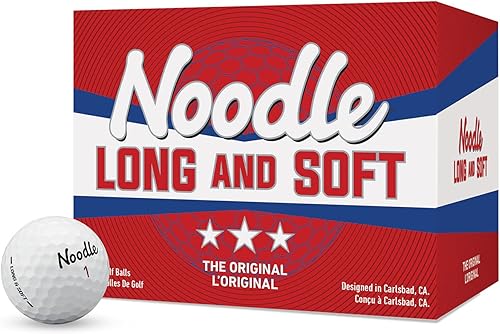
TaylorMade Noodle Long & Soft Golf Balls: Best for ultra-soft 34 compression core
- Ultra-Soft 34 Compression Core
- Durable and soft iothane cover
- Impact propulsion core for longer carry
- Patented dimple design for straighter flight
- 342 dimples
A multi-layer ball with an ultra-soft 34 compression core, a soft iothane cover, and 342 dimples for straighter flight.
Pros
- 34 compression core for soft impact
- 342 dimples to reduce air resistance
- Increased spin around the greens
Cons
- Very soft core may feel too soft for some players
- Plastic cover material differs from urethane options
TaylorMade Noodle Long & Soft suits golfers who want the softest impact in this group. Its 34 compression core is ultra-soft, so a slow swing can compress it more fully.
TaylorMade links that core to great feel and increased spin around the greens.
The cover is a durable and soft iothane. The impact propulsion core is aimed at longer carry.
The patented dimple design is aimed at straighter flight, with 342 dimples placed to reduce air resistance.
That helps keep a slower shot flying forward on drives and fairway shots. The soft core also gives responsive feedback on the green for putting, and the feel can help players who dislike a clicky impact.
It is aimed at recreational and senior golfers in particular.
Trade-off: very soft can feel too soft for some players on full swings. If you like a firmer feel, the Vice Drive or Distance+ will suit you better.
Callaway Golf Warbird Golf Balls: Best for maximum ball speed
- Extra-large, high-energy core, highly compressible
- HEX Aerodynamics reduces drag
- 2-piece construction
- Great greenside feel and control
A 2-piece distance ball with an extra-large, high-energy core and HEX Aerodynamics for launch and ball flight.
Pros
- Highly compressible core for more potential distance
- HEX Aerodynamics for ball flight
- 2-piece durability
Cons
- 2-piece build offers less greenside spin than multi-layer balls
- Distance focus may trade off short-game touch
Callaway Warbird suits slower golfers who chase maximum ball speed.
Its extra-large, high-energy core is highly compressible, which helps get more potential distance.
The 2-piece build keeps it durable.
HEX Aerodynamics reduces drag and promotes increased launch.
That helps with ball flight and carry.
Callaway positions Warbird for maximum distance off every club.
Greenside feel and control are still part of the design.
You get a dozen balls in yellow.
The 1.68 inch diameter matches standard ball size.
In daily use, the compressible core is meant to open distance even when swing speed is modest.
The rubber core material and simple build keep it tough for regular rounds.
The yellow color helps visibility in the air and on the fairway.
Trade-off: a 2-piece distance ball gives less greenside spin than multi-layer balls.
If wedge control is your priority, Supersoft or TruFeel will serve you better.
Titleist Pro V1 Golf Balls: Best for total performance
- New faster high gradient core
- Speed amplifying high-flex casing layer
- 388 tetrahedral dimple design
- Soft cast urethane elastomer cover
A multi-layer ball with a faster high gradient core, low long game spin, and a soft cast urethane cover for greenside spin.
Pros
- Faster high gradient core for speed and iron spin
- Soft cast urethane cover
- 388 tetrahedral dimple design
Cons
- Built for total performance, not specifically slow swingers
- Premium multi-layer construction
Titleist Pro V1 suits golfers who want total performance and do not mind a premium ball. It has a new faster high gradient core that delivers more speed and iron and wedge spin for more control.
The multi-layer build is built for speed, spin, and feel together. A speed amplifying high-flex casing layer keeps long game spin low.
The 388 tetrahedral dimple design gives penetrating and consistent flight, which helps a slower swing keep a stable line.
The soft cast urethane elastomer cover gives excellent greenside spin. Titleist compares Pro V1 to Pro V1x for feel and flight, and many slower golfers like the soft feel at impact.
You get a dozen balls in white at 1.68 inches.
Trade-off: Pro V1 is not made specifically for slow swing speeds. You may give up the compression benefit you would get from a 34 compression Noodle.
Srixon Q-Star Ultispeed Golf Balls: Best for fast swing speeds
- High-speed core and aerodynamic design
- 338-speed dimple pattern
- Energetic Gradient Growth Core
- Optimized for Fast Swing Speeds
A multi-layer ball with an Energetic Gradient Growth Core and 338 dimple pattern, optimized for fast swing speeds.
Pros
- EGG Core for explosive speed and soft feel
- 338 dimple pattern reduces drag
- Soft feel around the greens
Cons
- Optimized for fast swing speeds
- Less suited to true slow swingers than low compression balls
Srixon Q-Star Ultispeed suits faster swingers more than slow ones.
Srixon states it is built specifically for players with faster swing speeds.
That makes it a secondary pick for this guide.
Its Energetic Gradient Growth Core is engineered for explosive speed and a soft feel at impact.
A 338-speed dimple pattern reduces drag for higher launch and flight stability.
The multi-layer build aims at distance with control.
Soft yet durable materials give feel around the greens.
That helps on approach shots and chips.
You get 12 balls in the pack, in white.
In daily use, the high-speed core is tuned to respond to fast input.
The aerodynamic design is meant to keep a fast shot flying long.
The polyurethane cover gives a softer touch than ionomer covers.
Trade-off: the fast swing speed focus works against true slow swingers.
If your clubhead speed is low, the Vice Drive or Noodle will compress more easily at impact.
Titleist TruFeel Golf Balls: Best for ultra-soft feel
- New TruTouch core for long distance and soft feel
- 376 tetrahedral dimple design
- Softer 3.0 TruFlex cover
- Ultra-soft feel
A multi-layer ball with a TruTouch core, a softer 3.0 TruFlex cover, and a 376 tetrahedral dimple design for low penetrating flight.
Pros
- Ultra-soft feel from TruFlex cover
- Increased greenside spin and control
- 376 tetrahedral dimple design
Cons
- Low penetrating flight may not suit every launch preference
- Soft cover may wear faster than ionomer covers
Titleist TruFeel suits golfers who put soft feel first.
Titleist makes it for players who prioritize soft feel and trust the Titleist brand.
Its TruTouch core gives long distance and soft feel together.
The softer 3.0 TruFlex cover adds greenside spin and control.
That helps on approach shots where you want the ball to stop.
The 376 tetrahedral dimple design gives low penetrating ball flight.
Daily use suits casual rounds and practice.
You get a dozen balls in white.
The multi-layer build is a step up in feel from a basic 2-piece ball.
On putts and short irons, the soft cover tends to feel muted and responsive.
That can help players who want more touch close to the hole.
The polyurethane cover is softer than ionomer covers in this group.
Trade-off: low penetrating flight may not suit players who need higher launch.
If you want more carry, Warbird or Distance+ may fit better.
Best golf balls for low swing speeds: side by side
The table below puts construction, core, and cover next to each other.
Use it to spot the real differences fast.
Soft low compression balls sit at one end, and high swing speed premium balls sit at the other.
Pay attention to stated swing speed fit first.
Then compare core and cover.
Those two choices drive feel and spin more than dimple count alone.
Pack count and color are practical details that matter on the course.
A yellow ball is easier to follow for some players.
A white ball is the traditional choice for others.
Neither choice changes the core physics, but it can change how often you lose a ball.
| Product | Best for | Construction | Core material | Diameter | Our score |
|---|---|---|---|---|---|
| Vice Drive Golf Balls | low to medium club head speed | 2-piece | Rubber | 1.68 inches | 9.7 |
| TaylorMade Golf Distance+ Golf Balls | distance with alignment aid | 2 Layers | 9.6 | ||
| Vice Pro Plus Golf Balls | high swing speeds | 4-piece cast urethane | 9.5 | ||
| Callaway Golf Supersoft Golf Balls | soft feel and greenside control | multi-layer | 9.4 | ||
| TaylorMade Noodle Long & Soft Golf Balls | ultra-soft 34 compression core | Multi-layer with aerodynamic dimples and soft compression core | 9.3 | ||
| Callaway Golf Warbird Golf Balls | maximum ball speed | 2-piece | Rubber | 1.68 inches | 9.2 |
| Titleist Pro V1 Golf Balls | total performance | Multi-layer | 1.68 inches | 8.9 | |
| Srixon Q-Star Ultispeed Golf Balls | fast swing speeds | multi-layer | 8.8 | ||
| Titleist TruFeel Golf Balls | ultra-soft feel | multi-layer | 1.68 inches | 8.6 |
How we compared golf balls for low swing speeds
We compared stated swing speed fit first. A ball made for low to medium club head speed ranks ahead of a ball made for fast swing speeds for this search.
That is why Vice Drive leads and Vice Pro Plus and Srixon Ultispeed sit lower.
We checked core and compression next. A 34 compression core, a SoftFast Core, and a highly compressible core all point to easier compression at impact.
Multi-layer cores add spin options around the green.
We checked cover and dimple design after that. Ionomer covers tend to feel firmer and last longer.
Cast urethane covers tend to feel softer and spin more. Dimple count and pattern affect drag and flight stability.
Alignment aids, ball color, pack count, and durability also matter on real rounds.
We gave more weight to balls that match the search directly. A premium ball can be great in general and still rank lower here if it targets high swing speeds.
What compression means for slow swingers
Low compression lets your swing compress the ball more fully.
That helps transfer energy at impact and softens the feel.
It is the main reason soft golf balls for slow swing speed exist.
Higher compression balls need more swing speed to compress fully.
Without that speed, the ball can feel hard and lose energy.
That is why premium high speed balls sit lower here.
Compression also affects sound and feedback.
A softer ball usually sounds quieter off the putter and irons.
That feedback can make distance control easier to judge.
Players who hit wedges also get a different spin response from a soft core.
Soft golf balls for slow swing speed
Soft balls pair a low compression core with a soft cover.
You feel the difference most on iron shots and putts.
The Noodle at 34 compression is the clearest example in this group.
Our best soft golf balls guide goes deeper on that category.
It helps if soft feel is your top priority this season.
Soft balls also tend to suit players who prefer a muted impact.
That preference is personal, but it is common among slower swingers.
Best low compression golf balls
Low compression and soft feel overlap, but they are not the same thing.
Compression is about the core.
Feel also comes from the cover and the way the ball is built.
Our guide to best low compression golf balls breaks down that split.
Use it when core compression matters more than cover feel.
A ball can have a soft cover and a firmer core, or the other way around.
Checking both helps you avoid a mismatch.
Which ball type should slow swingers choose?
Choose a soft multi-layer ball if you want feel plus greenside control.
Choose a 2-piece distance ball if you want simple durability and low cost per round.
Your short game should decide this more than your driver.
2-piece balls
2-piece balls use a solid core and a cover.
They are tough and simple.
Vice Drive and Warbird fit this type.
They suit practice, casual rounds, and players who lose balls often.
The trade-off is less greenside spin than multi-layer options.
Multi-layer balls
Multi-layer balls add layers between core and cover.
That lets makers tune speed, spin, and feel in different zones.
Supersoft, Noodle, TruFeel, and Pro V1 fit this type.
They suit players who hit wedges and want the ball to check.
The trade-off is higher cost and more feel variation between models.
How construction affects spin and control
Construction shapes how spin is created on wedges.
A 2-piece ball has fewer layers to tune that response.
A multi-layer ball can use cover and casing to add check.
That is why Supersoft and TruFeel list greenside spin as a key feature.
If you play firm greens, that extra spin can help you hold the green.
If you play soft greens, the difference may matter less.
How do dimple design and cover affect distance?
Dimple design controls drag, and cover controls spin and feel. Both affect how far a slower shot flies and how it stops.
Distance+ uses an Extended Flight pattern to fight wind. Warbird uses HEX Aerodynamics to reduce drag.
Noodle uses 342 dimples to reduce air resistance.
Cover choice matters around the green. Cast urethane covers like Pro V1 and Vice Pro Plus spin more.
Ionomer covers like Distance+ feel firmer and last longer. If you play near 90 mph, our best golf balls for 90 mph swing speed guide is the next step up.
Dimple count alone does not tell the whole story. Shape and placement affect lift and drag in flight.
Which specific balls match which slow swingers?
Pick Vice Drive if you want a ball made for low to medium club head speed.
Pick Noodle if you want the softest core here.
Pick Supersoft if you want soft feel with more greenside spin.
For senior and beginner golfers
Senior and beginner golfers often swing slower and want a forgiving feel.
Noodle is aimed at recreational and senior golfers.
Vice Drive also fits this group by design.
The Bridgestone e6 soft golf ball review is worth a look if you want another soft option to compare.
It sits in the same soft ball family as Noodle and Supersoft.
For golfers who want maximum distance
Distance chasers should look at Warbird and Distance+.
Warbird leans on a highly compressible core.
Distance+ leans on a REACT Speed Core and Extended Flight dimples.
The Callaway Supersoft Max golf balls review helps if you want a larger Supersoft option.
It is a useful compare point against the standard Supersoft in this list.
For golfers who want short game control
Short game players should look at Supersoft, TruFeel, and Pro V1.
Supersoft pairs a SoftFast Core with a Hybrid Cover.
TruFeel pairs a TruTouch core with a soft TruFlex cover.
The Srixon Soft Feel golf ball review is another soft feel option outside this list.
It can help you decide if soft feel alone is enough for your wedge game.
For golfers choosing between Supersoft models
Supersoft shoppers often split between the standard ball and the Max version.
The standard Supersoft in this list focuses on soft feel and greenside spin.
Our Callaway Supersoft golf ball review covers the standard model in depth.
Our Callaway Supersoft vs Supersoft Max guide breaks down the choice between the two.
How should you test a new ball on the course?
Play the same holes with two balls and compare carry, curve, and stop.
That simple test tells you more than any spec.
Do it on a calm day with similar shots.
Hit a few drives with each ball and watch flight and roll.
Then hit the same wedge shots and see how each ball stops.
Note which ball feels better on putts too.
Check the Wilson Duo Soft golf balls reviews if you want one more soft ball data point.
It helps to compare a known soft ball against your current pick.
Keep notes on a simple scale.
Mark feel, distance, and greenside control after each round.
After two or three rounds, the right ball usually stands out.
What to track on each hole
Track carry first, then roll.
A ball that flies well but rolls too much may not suit tight fairways.
Track curve next.
Mid to high spin can add slice or hook for some swings.
Track wedge check last.
That tells you if the ball stops where you expect.
Put a number on each factor after the round.
Small notes beat memory after a week.
Verdict: best golf balls for slow swing speed
Pick Vice Drive for a ball made for low to medium club head speed. Pick Noodle Long & Soft for the softest 34 compression core.
Pick Supersoft for soft feel plus greenside spin.
Pick Distance+ if distance and an alignment aid matter most. Pick Warbird if maximum ball speed is your main goal.
Pick TruFeel if ultra-soft feel is the priority.
Avoid Vice Pro Plus and Srixon Ultispeed if your swing is truly slow. Both are built for high or fast swing speeds, so you will get more from a low compression ball.
Match compression to your swing, then choose cover and dimple design for your short game. That order gives you the best fit every time.
Our top 3 picks at a glance
-
1
-
2
Best for distance with alignment aid
TaylorMade Golf Distance+ Golf Balls
9.6/10 our score
See it on Amazon -
3
Frequently asked questions
What makes a golf ball good for slow swing speed?
A low compression core lets a slower swing compress the ball more fully at impact. That helps transfer energy and reduces a harsh feel.
Soft covers also help on short shots around the green.
Are soft golf balls for slow swing speeds better than distance balls?
Soft balls usually feel better and can spin more around the green for slower swingers. Distance balls focus on ball speed and low drag.
Many golfers find a soft distance ball is the best middle ground.
Can slow swingers play a premium ball like Pro V1?
Yes, if you like the feel and trade off some speed. Premium multi-layer balls are built for total performance across swing speeds.
A lower compression ball will usually feel softer at your impact speed.
How should I choose between 2-piece and multi-layer balls?
Choose 2-piece if you want simple durability and distance. Choose multi-layer if you want more greenside spin and control.
Your short game needs should drive that choice more than driver distance alone.