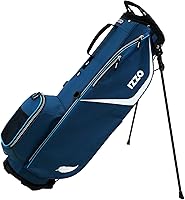
Best Golf Bag Divider Inserts: How to Choose
The best golf bag divider inserts are the ones that fit your bag, keep each club in its own lane, and stop shafts from crossing. Measure your bag first, choose fabric, plastic or tube dividers based on how you carry, and avoid inserts that force the top to bulge.
On this page (12 sections)
- How do golf bag divider inserts work in an existing bag?
- Why do clubs tangle in a bag without dividers?
- What types of golf bag dividers inserts should you compare?
- When should you add an insert instead of buying a new bag?
- How do you measure a golf bag before you buy divider inserts?
- Which insert fits a full set of golf clubs?
- Which insert fits a half set or a starter set?
- Are golf bag tubes better than flat divider inserts?
- How do you install golf bag dividers inserts without damaging the bag?
- How do you care for divider inserts and keep them clean?
- What mistakes should you avoid when you buy golf bag dividers inserts?
- Which golf bag dividers inserts are right for your bag and set?
The best golf bag divider inserts for clubs are the ones that match your bag opening and keep shafts from tangling without adding bulk. You do not need the most dividers, you need dividers that fit where your clubs already sit.
Most golfers add inserts because a single large compartment lets every club slide into one pile. A divider insert can create lanes, protect shafts during transport, and make each club easier to find at the tee.
To choose well, start with your bag, not with a product list. Measure the top, note how many clubs you carry, and decide if you want flat panels, tubes or a small organizer.
Our guide to golf bags can help you check whether a new bag would solve the problem better than an insert.
How do golf bag divider inserts work in an existing bag?
Divider inserts work by splitting one open space into smaller lanes for clubs. They sit inside the bag and stop shafts from leaning together in a random pile.
A flat insert is usually a thin panel that slides between clubs. It adds little weight, but it only separates the clubs directly beside it.
A tube gives each club a fixed wall, so it holds a club in place more firmly.
An organizer insert has pockets, racks or slots for smaller items as well as clubs. That can help with tees, gloves and scorecards, but those extra parts also use space you may need for a towel or water bottle.
Inserts differ from a bag with built in dividers because the bag itself does not change. If the top is soft, a rigid insert can hold it open or push it out of shape.
If the top is already stiff, the same insert may fit with little change.
Rule: measure the bag opening before you compare any insert type.
Why do clubs tangle in a bag without dividers?
Clubs tangle because grips, shafts and heads all move as you walk or lift the bag. Without a barrier, one club can pull the next club out of line.
The problem is worse in a cart bag with a wide opening. The bag may feel roomy, but that room gives shafts space to cross.
At the course, you may pull the wrong club or knock a headcover into the next slot.
A stand bag can have the same issue even with a smaller top. The legs shift the bag angle as you set it down, and clubs slide toward one side.
A divider helps keep the set in lanes while the bag moves.
Tangle also causes wear over time. Shafts can rub against heads, and grips can catch on zippers or straps.
You may not see damage at first, but repeated rubbing can mark older clubs.
Rule: if two club heads cross when you shake the bag gently, you need a divider or a different bag layout.
What types of golf bag dividers inserts should you compare?
You should compare flat panels, tubes, racks and organizer inserts by how much space each one takes. Each type solves a different part of the problem.
Flat panels are the thinnest option. They slide into a bag and create a wall between club groups, such as drivers on one side and irons on the other.
They suit golfers who carry a partial set or who want light separation.
Tubes are the firmest option. Each tube holds one club and keeps it upright, which can help during travel or cart use.
They also add the most bulk, so a bag with a narrow top may feel crowded.
Racks and organizers sit lower in the bag and sort clubs by type. They can help you see drivers, fairway woods, irons and putters at a glance.
They work best when the bag has enough depth for the rack to sit level.
Some inserts are made for disc golf rather than golf clubs. The ElectricWise set shows how a thin divider can sort items by type, but its size and shape are not made for golf shafts.
Rule: choose flat panels for light separation, tubes for fixed lanes, and organizers only when you need extra sorting.
When should you add an insert instead of buying a new bag?
Add an insert when your bag is sound but club order is the only problem. Buy a new bag when fit, weight, straps or storage are also failing.
An insert makes sense if your bag top has enough room and your clubs are mostly fine. It also makes sense if you carry fewer clubs than the bag was built for and want to stop them from sliding.
A new bag makes more sense if the top collapses, the dividers are torn beyond use, or the bag is too heavy for how you carry it. It also makes sense if you need more pockets, a better stand, or a full set layout that an insert cannot create.
Compare your options with our guide to the best golf club organizer for bag if storage and sorting are both part of the issue. That guide focuses on organizers that add pockets and racks, not only club lanes.
Rule: add an insert for order, and buy a new bag for fit, comfort or missing features.
How do you measure a golf bag before you buy divider inserts?
Measure the top opening, depth and club count before you shop. These three numbers tell you more than brand names.
First, measure the top opening from side to side and front to back. Soft tops can stretch, so measure them in the shape they hold when clubs are inside.
Note if the opening is round, oval or divided into two sections.
Next, measure the depth from the top to the bottom of the bag. A shallow insert may not reach the club heads, while a deep insert may bend at the base.
You want a divider tall enough to separate shafts but not so tall that it blocks your hand.
Then count the clubs you carry most often. A full set needs more lanes than a half set.
If you sometimes carry extra wedges, plan for the largest set you use in normal play.
Also check the base. A rigid insert needs a flat place to sit, and a flexible insert needs room to bend without pushing against the bag wall.
Take a photo of the empty top so you can compare it with product sizes later.
Rule: a divider that does not fit the opening will fight the bag every time you lift it.
Which insert fits a full set of golf clubs?
A full set usually needs individual lanes or several firm panels, not one thin wall. The more clubs you carry, the less one divider can do alone.
Look for an insert that gives each club a clear space at the head and enough separation at the grip. Tubes do this well, but they can crowd a bag that was not built for them.
Multiple flat panels can also work if they stay in place.
Check the top of your bag before you choose. If the opening has two sections, a divider in each section may work better than one large insert.
If the opening is one round space, you may need a rack or tube system made for that shape.
Our roundup of best 14 divider golf stand bags shows what a bag with built in lanes looks like. Use it as a reference for spacing, even if you plan to keep your current bag.
Rule: for a full set, prefer fixed lanes over a single soft panel.
Which insert fits a half set or a starter set?
A half set usually needs one or two flat dividers, since fewer clubs need less structure. You can keep drivers apart from irons and putters without filling the bag with tubes.
Flat inserts suit this use because they add separation without taking much room. You can move them as your set changes, and you can remove one if you carry fewer clubs for a short round.
A small organizer can also help a starter set. It can keep a new golfer from mixing clubs, tees and accessories in one pile.
The key is to choose a size that still leaves room for a towel and water bottle.
If you are buying a complete starter package, our guide to the best callaway golf set with bag can help you compare sets that already include a bag. That may be a better path than adding an insert to a bag you do not yet own.
Rule: for a half set, start with the fewest dividers that stop tangling, then add more only if needed.
Are golf bag tubes better than flat divider inserts?
Tubes are better when you want each club held in a fixed place during travel or cart rides. Flat inserts are better when you want light, flexible separation.
A tube surrounds one club and stops it from leaning into the next lane. That is useful in a trunk, on a cart, or in a bag that gets lifted often.
The trade off is bulk, because every tube adds a wall that takes space.
Flat inserts use less space and can be moved or removed in seconds. They are a good choice for a bag that already has a firm top or some built in structure.
They are less helpful if the bag is very soft and the insert has nowhere to brace.
You can read more about fixed lanes in our guide to best golf bag tubes. That guide explains when tubes help and when they make a bag too tight.
Rule: choose tubes for fixed lanes and flat inserts for flexible, low bulk separation.
How do you install golf bag dividers inserts without damaging the bag?
Install an insert by placing it in the empty bag, loading clubs one at a time, and checking the fit before you walk. This order shows problems early.
Start with the bag empty and standing upright. Slide the insert in slowly and look for places where it bends, pushes the top outward, or blocks a pocket zipper.
Do not force a rigid insert into a soft top.
Add clubs in the order you normally carry them. Put the longest clubs in first, then add shorter clubs and check that each head can move without hitting the next shaft.
If a club sticks, the insert may be too narrow or too tall for that lane.
Use the bag for a short walk around your home or yard. Listen for rubbing, watch the top shape, and check if the insert shifts when you lift the bag by its handle.
Adjust the position while the bag is still empty enough to move parts.
Rule: if an insert changes the shape of the top or blocks a zipper, remove it and choose a smaller or more flexible type.
How do you care for divider inserts and keep them clean?
Care for inserts by wiping them clean, letting them dry fully, and checking for cracks or bent edges. Small care steps keep dividers working longer.
Dust and grass can build up where clubs sit. Wipe flat panels and tubes with a damp cloth, then let them dry before you put them back in the bag.
Moisture left in a bag can cause odor and can damage leather grips over time.
Check plastic and 3D printed inserts for cracks at corners and stress points. A small crack can grow when the insert flexes, and a sharp edge can scratch a shaft.
Remove an insert if it develops a rough edge.
Fabric dividers need a different routine. Shake off loose dirt, spot clean stains, and let the fabric dry flat or in open air.
Do not store a damp insert folded inside a closed bag.
The ElectricWise dividers show one care idea from their design. They are made of PLA, measure 9.45 x 9.45 x 0.39 inches as a set, and weigh 0.15 kg as a package.
They are 2 mm thick, so they take little space, but that thin shape also means they are not built to hold golf club shafts.
Rule: dry inserts fully after cleaning, and retire any insert with a crack or rough edge.
What mistakes should you avoid when you buy golf bag dividers inserts?
Avoid buying dividers before you measure, based on club count alone, or in a shape your bag cannot hold. Most fit problems start with a skipped measurement.
One common mistake is to buy the maximum number of dividers. Extra dividers can crowd the top, make clubs hard to pull out, and add weight you do not need.
Start with fewer lanes and add only if clubs still cross.
Another mistake is to ignore depth. A divider that only reaches partway down the bag may let heads cross below it.
A divider that is too deep may bend and push against the base.
A third mistake is to copy a disc golf divider for golf clubs. Disc dividers are made to sort discs by type, and their height and width are set for that use.
Golf clubs are longer, have different head shapes, and need lanes that match the bag top.
Our guide to best golf bag with individual club dividers can help you see how built in individual lanes are spaced. Use those layouts as a reference when you judge whether an insert can do the same job.
Rule: measure first, buy fewer dividers than you expect to need, and do not use disc dividers for golf clubs.
Which golf bag dividers inserts are right for your bag and set?
The right choice depends on your bag opening, club count and how you carry the bag. Use these match ups to narrow your search before you compare brands.
If you carry a half set in a soft bag, start with one or two flat panels. They add light separation and can be moved as your set changes.
Remove them when you carry a partial set for practice.
If you carry a full set and want fixed lanes, look at tube systems or a bag with built in individual dividers. Tubes help in a cart or trunk, but check that your bag top can hold them without bulging.
If your main problem is mixed storage, look at an organizer with racks and pockets. It can sort clubs and accessories together, but it needs more depth and may reduce space for other gear.
The ElectricWise 3PCS set is not a match for golf clubs. It has 3 PLA dividers, 1 classification sticker set, and a thin 2 mm design made to classify discs such as drivers, mid-range and putters.
Its package weight is 0.15 kg, and its item dimensions are 9.45 x 9.45 x 0.39 inches. Those facts suit disc golf storage, not a golf bag club organizer insert for shafts and heads.
Rule: pick flat panels for a half set, tubes or built in lanes for a full set, and organizers when storage sorting matters most.
Frequently asked questions
What are golf bag divider inserts?
Golf bag divider inserts are pieces you add inside an existing bag to separate clubs. They can be flat panels, tubes, racks or organizers.
They do not replace a bag with built in dividers, but they can improve order in a bag you already own.
Can divider inserts fit any golf bag?
No. Fit depends on the size and shape of the bag opening, the number of club slots, and whether the insert is flexible or rigid.
Measure the opening and compare it with the insert before you order, since a hard insert can reshape a soft top.
Are tubes better than flat divider inserts?
Tubes give each club a fixed space and can work well for carrying, while flat inserts take little room and suit light organization. Tubes add bulk and weight, and they can make a bag tight.
Flat inserts suit a bag that already has some structure.
How do I keep dividers from making my bag heavy?
Choose thin, light materials and add fewer dividers than you think you need at first. Remove dividers you do not use, keep wet gear out of the bag, and check that the insert does not force zippers or straps to strain.