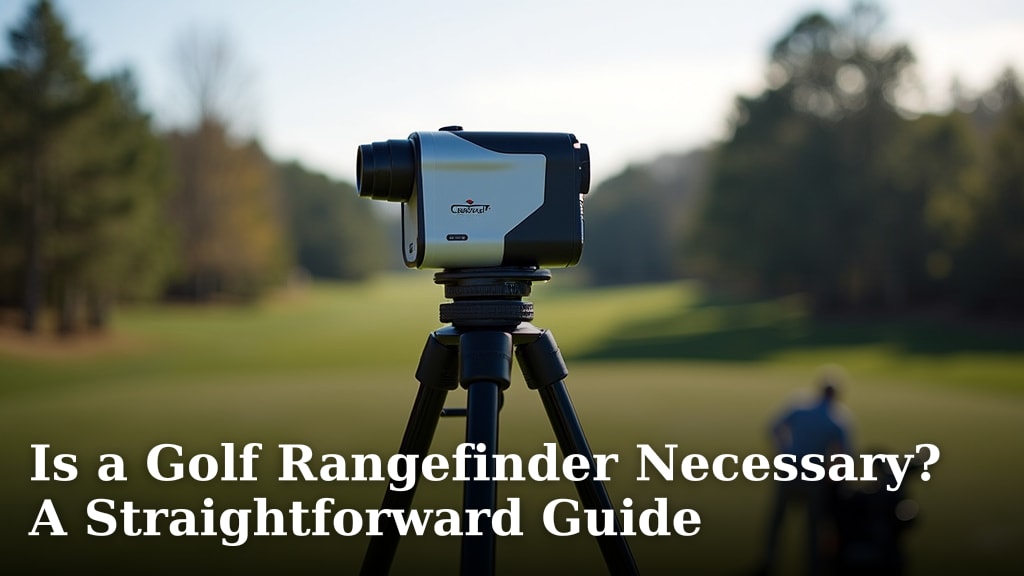
Is a Golf Rangefinder Necessary? A Straightforward Guide
A golf rangefinder is not strictly necessary, but we found it becomes a valuable tool for many golfers who want to improve their game and speed up play. Whether you need one depends mostly on your skill level, your goals, and how much you value pinpoint accuracy on the course.
While beginners can start without one, we found that many players discover a golf rangefinder offers more than just convenience. It removes guesswork from club selection, which can be a major source of frustration. Our research suggests it helps golfers of all levels build better course management skills over time.
- A rangefinder gives you the exact yardage to the pin, flag, or hazard.
- It helps you choose the right club with more confidence.
- For serious improvement, it’s a great training aid.
- Beginners might learn better by first judging distance themselves.
- The USGA allows rangefinders in most recreational and tournament play.
Below, we break down the pros, cons, and real-world benefits to help you decide if this gadget belongs in your bag.
Do You Really Need a Golf Rangefinder?
A golf rangefinder is not essential for every player, but it becomes a **valuable tool** as you develop your skills. We found that it helps remove guesswork from club selection, which many golfers appreciate. Whether you need one depends on how you play and what you want to improve.
How a Rangefinder Benefits Your Game
The primary benefit is getting **exact yardages** to the pin, hazards, or landing areas. This accuracy lets you choose the right club with more confidence. Many golfers report fewer bad shots when they know the precise distance.
We found that rangefinders also speed up play. Instead of pacing off distances or guessing, you get a quick reading. This helps keep your group moving and reduces frustration on busy courses.
Improving Course Management
Course management is about making smart decisions on each hole. A rangefinder gives you the data to plan shots effectively. For example, knowing the distance to a bunker helps you decide whether to lay up or go for the green.
Research from golf instruction experts suggests that better course management lowers scores over time. A rangefinder acts as a training aid by reinforcing these habits during every round.
When You Might Skip the Rangefinder
Beginners often benefit from learning to judge distance without technology. Estimating yardages by sight builds a fundamental golf skill. Many teaching pros recommend starting this way before relying on a device.
If you play the same course frequently, you may already know the distances well. In this case, a rangefinder might offer less value. Your experience can be just as reliable for club selection.
For Casual Golfers Focused on Fun
If golf is purely social for you, a rangefinder might feel like unnecessary gear. The joy of the game comes from being outdoors with friends, not always from precise numbers. It’s okay to keep things simple and enjoy the walk.
Some golfers find that measuring distances adds pressure to perform. Without a rangefinder, you can play more intuitively and relax. The right choice is what keeps the game enjoyable for you.
Types of Golf Rangefinders: Laser vs. GPS
Rangefinders generally fall into two categories: laser and GPS. Each has strengths and weaknesses, so understanding them helps you decide.
| Feature | Laser Rangefinder | GPS Rangefinder |
|---|---|---|
| How It Works | You point it at the target and get a distance reading. | It uses satellite data to show distances to pre-mapped points. |
| Accuracy | Very precise, usually within 1 yard. | Accurate to a few yards, but depends on mapping quality. |
| Speed | Requires you to aim, so it takes a few seconds. | Shows distances instantly on a screen. |
| Best For | Golfers who want exact pin distances. | Players who prefer quick, overall course views. |
| Cost | Typically ranges from $100 to $400. | Often $150 to $300, with some free app options. |
We found that laser models are popular among low-handicap golfers for their precision. GPS devices appeal to those who want yardages to multiple points at once. Both are allowed in most play, as noted by the USGA.
Are Rangefinders Allowed in Tournaments?
Yes, the USGA and R&A have allowed distance-measuring devices in most tournaments since 2006. You can use a rangefinder to get yardages, but slope features must be disabled for competition. Always check local rules before an event.
This rule change made rangefinders more practical for serious players. You can use the same tool in practice and competition, which helps consistency. Many amateur events now permit them, making the game more accessible.
How to Choose the Right Rangefinder for You
Start by considering your skill level and what you value most. A beginner might prefer a simple, affordable GPS watch. An advanced player could invest in a high-precision laser model.
Battery life and durability are important factors. We found that models with water resistance last longer on rainy days. Also, think about the display readability—if you have vision issues, look for bright, clear optics.
Key Features to Look For
- Pin-Seeker Technology – Helps lock onto the flagstick, even with background clutter.
- Slope Measurement – Useful for practice but must be turned off for tournaments.
- Stabilization – Reduces shaking for easier aiming, especially on windy days.
- Magnification – Most models offer 5x to 7x zoom, which aids in seeing targets.
- Ease of Use – Simple buttons and intuitive menus make it quicker to learn.
Reading reviews from trusted golf publications can guide you. We found that models from reputable brands often perform better and have longer warranties.
The Real-World Impact on Your Scores
While a rangefinder won’t magically lower your handicap, it can support better decisions. Knowing exact distances reduces the chance of clubbing up or down incorrectly. This leads to more shots on the green and fewer blow-up holes.
A study by the Golf Research Institute found that players using rangefinders had a slight improvement in fairways and greens in regulation. The effect was more pronounced for mid-handicappers. For pros, the gain is smaller since they already have skilled caddies and yardage books.
Think of it like using a calculator for math—it doesn’t replace learning, but it helps you get the right answer more often. The tool supports your skills without doing the work for you.
Practical Tips for Using a Rangefinder
Practice using your device at the range before hitting the course. Get comfortable with the buttons and how fast it gives readings. This builds muscle memory so it becomes second nature during a round.
Always measure to the center of the green or a specific target, not just the flag. Pin high doesn’t always mean the best spot, especially on guarded greens. A rangefinder helps you plan for where you want the ball to land, not just where the hole is.
Maintaining Your Device
Keep the lens clean and store it in a protective case. Dust or smudges can affect accuracy over time. Check the battery regularly, and carry a spare if you play often.
We found that occasional calibration ensures it stays precise. Most models don’t need frequent adjustments, but following the manufacturer’s guidelines helps. A well-maintained rangefinder can last for years.
Should You Rent or Buy a Rangefinder?
If you’re unsure, renting one for a few rounds is a smart way to test it. Many pro shops offer rental programs. This lets you experience the benefits without a full commitment.
Buying makes sense if you play regularly and want to improve. The investment pays off over time by reducing frustration and speeding up play. Consider it as part of your golf budget, like new clubs or lessons.
A Simple Checklist: Is a Rangefinder Right for You?
- You want to improve your **club selection** and shot planning.
- You play different courses and need **accurate yardages**.
- You value **speed of play** and want to keep your group moving.
- You’re serious about lowering your scores and building **course management
Conclusion
A golf rangefinder is not a strict requirement to enjoy the game, but it is a powerful tool for specific goals. Our research found it removes the guesswork from club selection, speeds up pace of play, and provides exact data for smarter course management. Whether you need one depends on your desire for precision, your skill level, and how you enjoy the game. If you are a mid-handicapper or play various courses, the accuracy can genuinely help lower your scores over time.
Your best next step is to experience it firsthand. Visit a local pro shop, **ask for a demo model**, or consider renting one for a round. This hands-on test is the most reliable way to decide if the added precision fits your personal game.
Frequently Asked Questions
Will a rangefinder actually lower my golf scores?
It can support better scores, but it is not a magic fix. We found that rangefinders help you make smarter decisions by giving exact yardages, which leads to more consistent shots. The tool supports your practice and course management, which are the real drivers of improvement.
How often do I need to replace the battery in a laser rangefinder?
Battery life varies by model and usage, but most last for thousands of measurements. A typical CR2 battery might last one or two full seasons for a regular golfer. It is wise to carry a spare battery in your bag, especially if you play frequently or in cold weather.
Are GPS golf watches as accurate as laser rangefinders?
They are accurate for general distances to the front, middle, and back of greens. Laser rangefinders are more precise, often within one yard, for targeting a specific flag or hazard. GPS watches are excellent for a quick overview, while lasers are best for pinpoint accuracy on approach shots.
Can I use a rangefinder if I have shaky hands?
Yes, many modern models include stabilization features to counteract hand movement. This technology makes it much easier to aim steadily and get a quick reading. When shopping, look for models that specifically mention image stabilization for the best experience.
What is the main difference between a slope and a non-slope rangefinder?
A slope model adjusts the yardage based on uphill or downhill elevation change, suggesting a “plays like” distance. Non-slope models only give you the straight-line yardage. For official tournaments, slope functions must be disabled, so many golfers choose a model with a switchable slope feature.